
Movement: Give Your Blood Sugar Somewhere to Go
Muscle is the biggest destination for the sugar in your blood after a meal. How much of it you have, and how often you use it, shapes how hard your insulin has to work.
Muscle is where most of your blood sugar goes
After a meal, your muscles take up roughly 70 to 80 percent of the glucose that leaves your bloodstream. Glucose gets into a muscle cell through doors called GLUT4 transporters, which sit inside the cell until something pulls them to the surface. Insulin is one of those signals. In insulin resistance, that signal is muffled, so your pancreas has to release more insulin to clear the same meal, and high insulin is the storage signal that keeps fat locked in place.
A working muscle has a second route. When a muscle contracts, calcium released inside the fiber and the drop in its fuel supply move GLUT4 to the surface on their own, without insulin. That route stays intact in insulin resistance and type 2 diabetes. So while you're walking or lifting, your muscles pull glucose out of your blood even if insulin's message is getting through poorly, and your body needs less insulin to do the job.
The effect outlasts the workout. A single session leaves the proteins that move GLUT4 primed, so insulin's signal gets through more easily for up to about 48 hours afterward. That window is why activity spread across the week does more for your blood sugar than one long session on Saturday.
Why muscle gets harder to keep in midlife
Your muscle fibers carry estrogen receptors. Estrogen activates satellite cells, the stem cells that repair muscle fibers and add to them after effort, and it helps keep inflammation in check. As estrogen falls through the menopause transition, those repair cells respond less readily, inflammation rises, and muscle mass drops measurably over the final stretch into early postmenopause. Women who stay active through those years carry more muscle on both sides of it.
Less muscle means less room to store glucose and fewer GLUT4 doors to let it in, so the same meal keeps your blood sugar and insulin higher for longer. It also means less strength for stairs, groceries, and catching your balance, and bone, which loses density faster after menopause, gets less of the pull from muscle that helps it hold on to mineral.
Strength training answers each of those. When a muscle works against a load close to what it can manage, the tension tells the fiber to build new protein, and that building stays elevated for up to two days after one session. Over months, muscle grows and strength climbs, at any age. Trained muscle also carries more GLUT4, which is why regular strength training lowers A1c and improves insulin sensitivity. Done consistently, it helps protect bone density at the spine and hip.
Walking, especially after you eat
Your blood sugar climbs most in the first hour after a meal. Walking during that hour sends the glucose into your leg muscles as it arrives, so the rise is lower and your pancreas releases less insulin to bring it back down. Ten minutes after each meal lowers the after-meal rise more than a single 30-minute walk at another time of day, and the difference is largest after dinner, when the meal is usually biggest and the evening is spent sitting.
Short breaks from sitting work by the same route. Two to five minutes of easy walking every 20 to 30 minutes lowers both glucose and insulin after a meal compared with sitting straight through. Standing up helps a little; walking helps more, because more muscle is contracting.
Recovery is where the change happens
The workout is the signal. The muscle protein, the extra GLUT4, and the new strength are built in the hours and days after it. That's why strength sessions for the same muscles go on days with a day between them.
Moderate to hard exercise raises cortisol for a short while, which is part of how your body releases stored fuel for the effort, and it settles afterward. The trouble comes from hard training stacked without recovery. Your body draws on one recovery budget, and short sleep, a heavy stress load, illness, and eating too little all spend from it alongside training. Pile hard interval sessions day after day and the mitochondria in your muscles, the parts that use fuel, work less well, and glucose tolerance gets worse, the opposite of what you're training for.
Signs you've outrun your recovery: tiredness that lasts for days, soreness that lingers, workouts that feel harder than they should, worse sleep, a short fuse, or catching every cold going around. The answer is rest and light movement until those settle. Build at least one easy day into every week, and let a walk be the whole plan on that day.
Where to start this week
- Walk after your biggest meal. Ten easy minutes after dinner, starting tonight. Add lunch or breakfast when that feels routine.
- Break up long sits. Every 30 minutes or so, get up and walk for two or three minutes: to refill your water, down the hall, or up a flight of stairs.
- Do two short strength sessions with a day between them. Work the big muscle groups: legs, hips, back, chest, shoulders, arms, and core. Sit-to-stands from a chair, wall push-ups, glute bridges, rows with a resistance band, and carrying heavy grocery bags are a full starting session. Pick a load that makes the last few repetitions hard while your form holds. When it gets easy, add repetitions, then weight.
- Build toward the weekly baseline over a few months. For adults, that's 150 to 300 minutes a week of moderate activity, a pace where you can talk but not sing, plus muscle-strengthening work for all the major muscle groups on two or more days. Every minute counts toward it, including the walks after meals.
- Plan one easy day. A walk, some stretching, nothing more. Your next strength session will be better for it.
How movement connects to the other pillars
Nutrition: new muscle is built from protein, which is why every RESET360 meal starts with it. A plate of protein, a real fat, and non-starchy vegetables also keeps the glucose arriving at your muscles slow and steady, so the walk after dinner has a smaller rise to handle.
Sleep: one night without sleep slows muscle protein building the next day by about a fifth and raises cortisol. The building a strength session sets off depends on the nights that follow it.
Stress: work, caregiving, and worry draw on the same recovery budget as hard training. In a heavy week, keep the walks, keep strength sessions shorter, and save the harder efforts for when things ease.
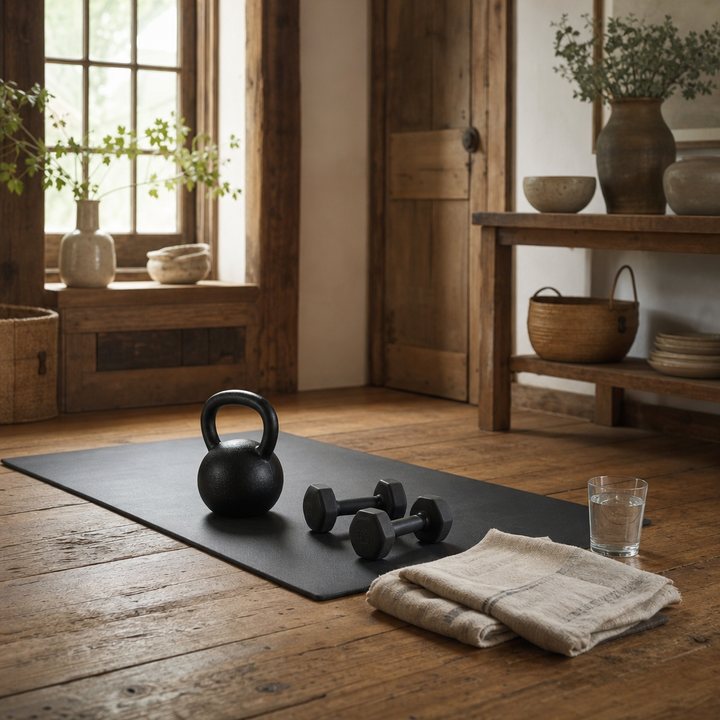
Environment: equipment you can see gets used. A kettlebell by the back door and walking shoes where you leave your keys turn a session into something you start instead of something you plan, and a walk outside in the morning brings the daylight that sets your body clock along with it.
Mindset: strength gives you proof you can measure. The weight you lift in week eight is heavier than the one you started with, and the stairs feel different. That evidence, collected week after week, is what makes movement something you keep.
Keep going
Next: Sleep
Start with the free guide
The RESET360 starter guide walks you through the plate, the daily rhythm, and your first week, sent straight to your inbox.