
Nutrition: Steady Blood Sugar at Every Meal
Every RESET360 meal is protein, a real fat, and non-starchy vegetables, eaten on a steady rhythm through the day. Here's what that does inside your body in midlife, and how to start this week.
What changes in midlife
Insulin is the hormone that moves sugar out of your blood and into your cells after you eat. With insulin resistance, your muscle, liver, and fat cells answer insulin more slowly, so your pancreas makes more of it to get the same job done. As long as it keeps up, blood sugar stays in the normal range, which is why insulin resistance can run for years behind ordinary lab results.
Midlife tilts women toward it. As estrogen falls through the menopause transition, your body responds less readily to insulin. Body composition shifts at the same time: in the years around your final period, fat gain speeds up, more of it settles deep around the waist, and muscle starts to decline. Muscle is where your body stores most of the sugar it takes in, so less muscle leaves less room to put it.
What insulin does with the food you eat
Carbohydrate raises blood sugar more than protein or fat, and your pancreas answers each rise with insulin. Insulin is a storage signal. While it's high, it moves sugar into your cells and tells your fat cells to hold on to the fat they have and take in more. As insulin falls between meals, fat cells release fat into your blood so your body can use it for fuel.
That switch works meal by meal. How much body fat you carry over months still comes down to how much energy you take in compared with how much you use, and steady blood sugar matters most for what it does to hunger. A meal that sends blood sugar up fast is often followed, two to four hours later, by a dip below where you started, and women with bigger dips get hungry sooner and eat more over the day. Protein and fat slow how quickly your stomach empties, so the sugar from the vegetables and fruit on the same plate reaches your blood gradually. Protein is also the most filling of the three.
What you may notice
- Hunger an hour or two after a mostly carbohydrate breakfast like cereal or toast.
- A slump in the middle of the afternoon, with a pull toward something sweet.
- A waistband that fits differently while your eating has barely changed.
- Darker, velvety skin at the back of the neck or in the armpits, or new skin tags, both linked to insulin resistance and worth showing your doctor.
Fasting glucose, A1c, and a lipid panel are the usual blood tests. Ask your care team what yours mean for you.
The RESET360 plate
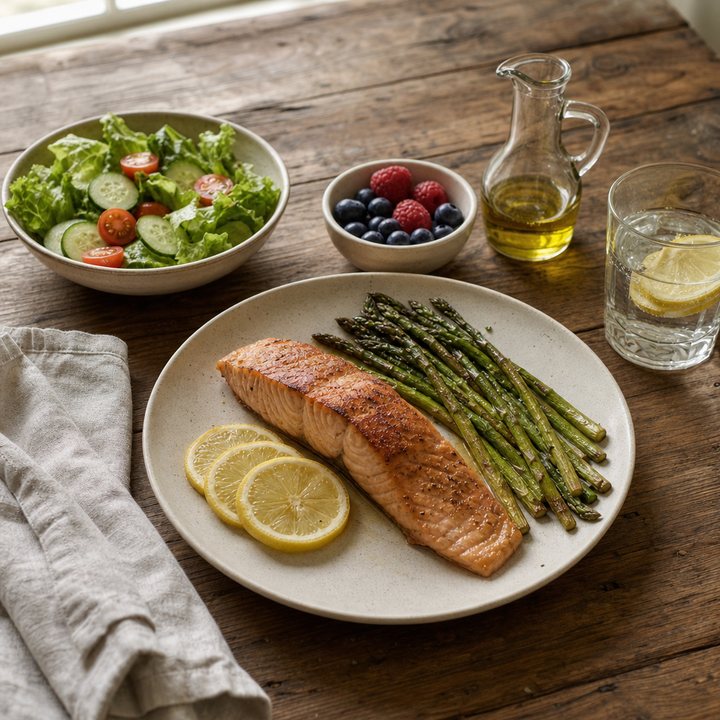
Every meal is protein, a real fat, and non-starchy vegetables. Build it around the protein and fat, and let vegetables fill the rest.
- Protein: beef, chicken, pork, fish, shrimp, eggs, plain Greek yogurt, cottage cheese, real cheese, tofu, and tempeh.
- Real fat: extra-virgin olive oil, avocado oil, butter, ghee, avocado, olives, nuts, seeds, and heavy cream.
- Non-starchy vegetables: leafy greens, broccoli, cauliflower, zucchini, peppers, mushrooms, asparagus, green beans, and snap peas, with edamame and lupini in modest portions.
- Fruit, when you want it: low-glycemic choices like berries, cherries, apples, and citrus, eaten whole and always with protein or fat.
Your carbohydrate comes from those vegetables and that fruit. Grains, legumes, starchy vegetables like potatoes and corn, plain milk, added sugar, and juice sit outside the plan because they carry more carbohydrate than it allows. Peanuts stay, along with edamame, lupini, green beans, snap peas, tofu, and tempeh. Processed foods and seed oils sit outside it because the plan is built entirely on whole food.
The daily rhythm
Eat within an hour of waking. If you practice intermittent fasting and wake without hunger, start when you naturally do. From your first meal, eat about every 3 to 4 hours, and stop about 2 hours before bed.
A real meal, with enough protein and fat, should carry you at least 3 hours; when it can't, eat more at that meal. The spacing keeps you ahead of the hunger that sends you to whatever is closest, and gives insulin time to come back down between meals. While insulin resistance is settling, hunger cues can run early or late, so the clock gives your day structure until they steady. The evening stop has its own reasons: the same dinner eaten close to bedtime raises blood sugar higher than it does earlier in the evening, and a full stomach when you lie down is a common trigger for nighttime heartburn. If heartburn wakes you, a longer gap helps.
Reading labels for sugar and seed oils
Whole food needs no label; anything packaged does. Read the ingredient list, which runs by weight from heaviest to lightest. If you don't recognize something as food, leave it on the shelf.
Sugar goes by many names: cane sugar, evaporated cane juice, dextrose, fructose, glucose, maltodextrin, corn syrup, high-fructose corn syrup, malt syrup, honey, maple syrup, and agave. Many end in "-ose" or "syrup." On the Nutrition Facts panel, the Added Sugars line should read 0 grams. On the front of the box, "no sugar added" can still mean plenty of natural sugar, and "sugar-free" usually means sugar alcohols or artificial sweeteners.
Seed oils to spot: canola, soybean, corn, sunflower, safflower, cottonseed, grapeseed, and anything called simply "vegetable oil." Most are pressed from heated seeds, then extracted with a solvent and refined, which makes them some of the most processed items on the shelf. They turn up in bottled dressings, standard mayonnaise, roasted nuts, and flavored creamers. Olive oil, avocado oil, butter, and ghee take their place.
Move at your own pace
You move through the roadmap one swap at a time, moving on when the current swap feels natural. When whole foods leave you feeling great, Step 2 is your plate.
- Drinks first. Swap soda, diet drinks, and juice for water, sparkling water, tea, coffee, or bone broth. Sweetened drinks are a leading source of added sugar, and that sugar arrives with no protein, fat, or fiber to slow it. Diet drinks are sweetened with artificial sweeteners, which makes them processed drinks.
- Processed to whole. Every processed food comes out, and whole food takes its place, one item at a time: a pork chop for microwave pulled pork, a block of real cheese for processed slices. Anything still in a bag, a box, or a can has whole-food ingredients, like frozen vegetables that are only vegetables.
- The full reset. Grains, legumes, and starchy vegetables, whichever of them you still eat, give way to more non-starchy vegetables, protein, and real fat. This is the next step for anyone who wants to keep going: low-carbohydrate eating, which keeps insulin low so your body can draw on stored fat between meals. This is the full RESET360 plate.
Start this week
- Replace one sweetened drink a day with water, unsweetened tea, or coffee with heavy cream.
- Build breakfast around protein and fat, such as eggs scrambled in butter with spinach, or plain Greek yogurt with berries and walnuts, and eat it within an hour of waking.
- Read the labels on your salad dressing, mayonnaise, and coffee creamer. Swap any with sugar or seed oil for olive oil and vinegar, avocado-oil mayonnaise, or heavy cream.
- As you cut carbohydrate, salt your food. Insulin tells your kidneys to hold on to sodium, so as insulin comes down, your kidneys let go of sodium and water. That accounts for most of the quick early drop on the scale and can bring headaches, tiredness, or lightheadedness. If you have high blood pressure, heart disease, or kidney disease, ask your doctor how much salt is right for you.
How nutrition connects to the other pillars
Movement: working muscles pull sugar from your blood with less need for insulin, and strength training builds the muscle that stores it.
Sleep: a few short nights make your cells less responsive to insulin, so the same breakfast raises blood sugar further.
Stress: cortisol signals your liver to release sugar, raising blood sugar without a bite of food.
Environment: a kitchen stocked with whole food makes the plate the easy choice.
Mindset: every swap puts something on your plate as it takes something off, and seeing it that way is what makes the next swap feel possible.
Keep going
Next: Movement
Start with the free guide
The RESET360 starter guide walks you through the plate, the daily rhythm, and your first week, sent straight to your inbox.