
Celery Root Purée
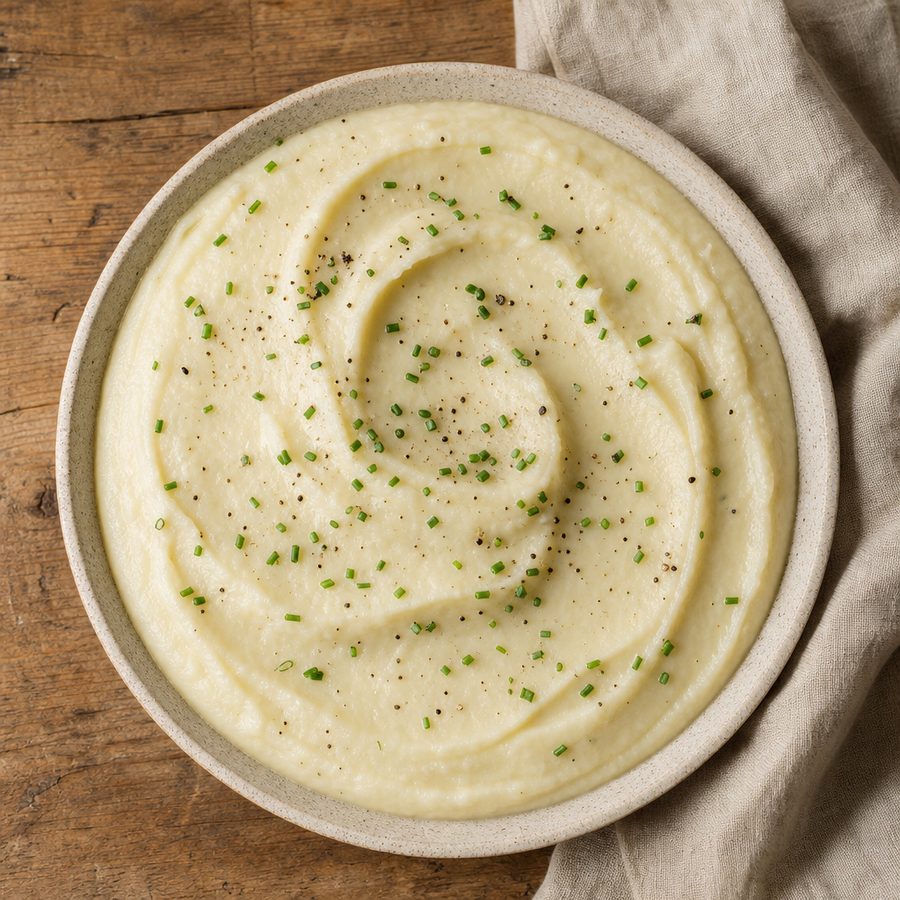
Celery root simmered until soft, then blended with cream and butter into a silky purée that tastes faintly of celery and hazelnut.
Why you'll love Celery Root Purée
Celery root, or celeriac, is the knobby, hairy root you walk past in the produce section, and under that skin is one of the best purées there is. It tastes mild and nutty, like celery with the sharpness taken out, and it blends silky with cream and butter. It is on the RESET360 non-starchy list, so this is the purée you reach for under a seared steak or scallops.
The texture comes from the blender. Celery root is more fibrous than a potato, so mashing by hand leaves it stringy and a little grainy. A blender or food processor breaks those fibers down completely, and the warm cream and butter go in while it runs so they emulsify into the purée instead of sitting on top. Drying the cooked cubes in the pot for a minute before blending keeps the result thick rather than watery.
It is quiet food, and that is the point. A spoonful of nutmeg and a few chives are all it needs, and it makes a plate of seared fish, roast chicken, or braised short ribs feel like a restaurant dinner.
Quick overview: This Celery Root Purée takes 15 min of hands-on time and about 40 min in all and makes 4 servings, each about 2/3 cup. You'll need a pot, a saucepan, a blender, and a food processor.
Ingredients
- 1 large celery root (about 2 lb), peeled and cut into 1-inch cubes
- 3 cloves garlic, peeled
- 2 sprigs fresh thyme
- 1 tsp fine sea salt, divided
- 1/2 cup heavy cream Label: cream, with no gums or carrageenan
- 2 tbsp butter
- a small pinch of ground nutmeg
- freshly ground black pepper
- 1 tbsp chopped chives
Instructions
- Peel the root: Cut a slice off the top and bottom of the celery root so it sits flat, then cut away the skin from top to bottom with a sharp knife, following the curve. Celery root has deep crevices, so cut generously; you will lose about a quarter of the weight. Cut the flesh into 1-inch cubes.
- Simmer until very soft: Put the cubes, garlic, and thyme in a pot, cover with cold water by an inch, and add 1/2 teaspoon of the salt. Bring to a boil, then simmer for 18 to 22 minutes, until a cube breaks apart when pressed with a spoon. It needs to be softer than you would want a boiled potato, or the purée stays fibrous.
- Drain and dry: Drain well and discard the thyme stems. Return the celery root and garlic to the empty pot over low heat for 1 minute, stirring, to cook off the surface water so the purée comes out thick.
- Warm the cream: Warm the cream and butter together in a small saucepan or the microwave until the butter melts. Warm dairy blends in smoothly, while cold cream cools the purée and can make it tighten.
- Blend: Transfer the celery root and garlic to a blender or food processor, add the warm cream mixture, the nutmeg, and the remaining 1/2 teaspoon of salt, and blend for 1 to 2 minutes, scraping down the sides, until completely smooth and silky.
- Season and serve: Taste and add pepper and more salt if it needs it. Spoon into a warm bowl or swoosh onto plates and finish with the chives.
Storage and leftovers
Refrigerate in a sealed container for up to 4 days. It firms as it chills.
Reheat gently in a saucepan over low heat with a splash of cream or water, stirring often, until hot and loose again. It freezes well for up to 3 months; thaw overnight in the refrigerator and whisk while reheating.
Variations
- Brown butter: Brown the butter in a small pan until it smells nutty and the milk solids turn golden, then blend it in with the cream.
- Roasted garlic: Use a whole head of roasted garlic, squeezed from its skins, in place of the boiled cloves for a deeper, sweeter purée.
- Celery root and cauliflower: Replace a third of the celery root with cauliflower florets, simmered in the same pot, for a lighter, milder purée.
- Herb oil finish: Spoon a little olive oil blended with parsley and a pinch of salt over the top just before serving.
Notes and tips
- Pick a heavy root: Choose a celery root that feels heavy for its size and firm all over. Light ones are often spongy in the center.
- Use a knife, not a peeler: A vegetable peeler cannot keep up with the crevices. A sharp chef's knife is faster and safer.
- Blend longer than you think: The first 30 seconds look smooth, and another minute takes it from smooth to silky.
- Hold it warm: Keep it covered in a heatproof bowl set over a pot of barely simmering water for up to an hour before dinner.
Nutrition and mindful eating
- Celery root sits on the RESET360 non-starchy list, so it gives you the comfort of a purée without the starch of potatoes.
- It brings fiber, potassium, and a good amount of vitamin K, and its mild, nutty flavor means it carries the cream and butter rather than hiding under them.
- Heavy cream and butter are the real fat here. Fat slows how fast a meal empties from your stomach, which is part of why a spoonful of this beside a protein holds you for hours.
- Nutmeg and thyme do the seasoning with almost no salt beyond what goes in the cooking water.
- As you eat, notice how the silky texture satisfies the same craving mashed potatoes usually answer, and pay attention to how long the meal carries you: a real dinner should keep you comfortable until bedtime.
Frequently asked questions
Have a question about this Celery Root Purée? Start here, with the questions people ask most.
What does celery root taste like?
Like mild celery with a nutty, slightly sweet edge. Cooked and puréed, the celery flavor softens into something closer to a delicate root vegetable.
Why is my purée stringy?
It needed more cooking or more blending. Simmer until the cubes fall apart when pressed, and blend for a full 1 to 2 minutes.
Can I use milk instead of cream?
Whole milk works and makes a looser, lighter purée. Use a little less and add it gradually until it reaches the texture you like.
What should I serve it with?
Seared scallops, a steak, roast chicken, braised short ribs, or salmon. Anything with pan juices is good spooned over it.
You might also like
Start with the free guide
The RESET360 starter guide walks you through the plate, the daily rhythm, and your first week, sent straight to your inbox.