
Chimichurri
Finely chopped parsley and garlic in olive oil and red wine vinegar, sharpened with dried oregano and a little chile.
Why you'll love Chimichurri
Chimichurri is the sauce Argentina puts on grilled beef, and it is built to stand up to it. Parsley, garlic, oregano, and red pepper flakes go into olive oil sharpened with red wine vinegar, and the result is bright, garlicky, and herby enough to cut through a charred steak in every bite.
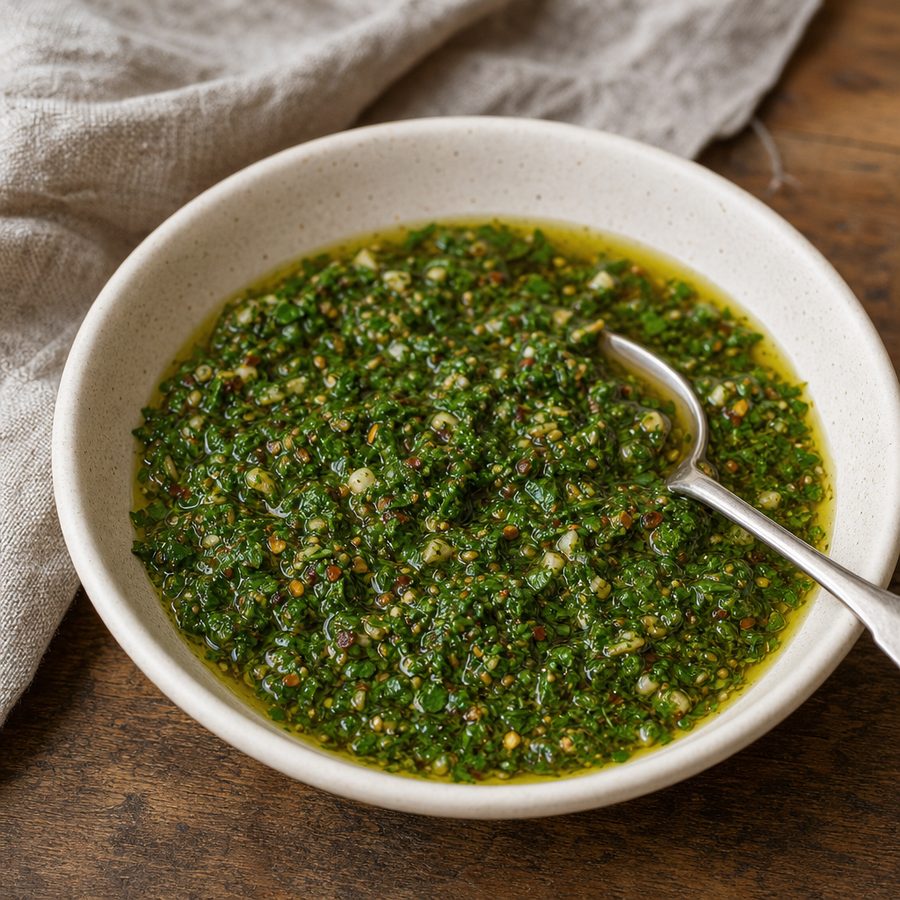
Chopping by hand is what gives it its texture. A knife leaves the parsley in tiny distinct pieces suspended in the oil, green and fresh, where a blender bruises the leaves into a paste. A short rest before serving lets the vinegar soften the garlic and the dried oregano soak up some oil and bloom.
This is the chimichurri on the Grilled Steak Salad, at the same proportions, enough to dress the greens and spoon over the steak with some left for the table. It goes just as well on chicken thighs, fish, eggs, and roasted vegetables.
Quick overview: This Chimichurri comes together in 30 min and makes 6 servings, each 2 tablespoons.
Ingredients
- 1 packed cup flat-leaf parsley leaves and tender stems
- 3 cloves garlic
- 2 tbsp red wine vinegar
- 1/2 tsp fine sea salt
- 2 tsp dried oregano
- 1/2 tsp red pepper flakes
- 6 tbsp olive oil
Instructions
- Dry the parsley: Wash the parsley and dry it completely in a salad spinner or between towels. Wet leaves turn to mush under the knife and water left on them keeps the oil from coating the herbs.
- Chop the garlic: Mince the garlic as finely as you can, then scrape it into a bowl. Small pieces spread the garlic through the sauce so no one bite is too strong.
- Chop the parsley: Gather the parsley into a tight pile and slice through it with a sharp knife, then rock the knife back and forth over it until the pieces are fine, about the size of a grain of rice. A sharp knife cuts the leaves cleanly, which keeps them green and fresh tasting.
- Season the vinegar: Add the vinegar and salt to the garlic and stir until the salt dissolves. Salt dissolves in vinegar and stays gritty in oil, so this is the moment to season. Stir in the oregano and red pepper flakes so they soak in the vinegar and soften.
- Add the parsley and oil: Stir in the parsley, then the olive oil. The herbs should be loosely suspended in the oil, spoonable, with a little oil pooling at the edges.
- Rest, then taste: Let the chimichurri sit at room temperature for at least 15 minutes, while you cook the steak or whatever it is going on. The vinegar mellows the garlic and the dried oregano opens up. Taste and add a pinch more salt or a splash more vinegar if it needs it.
Storage and leftovers
Keep chimichurri in a sealed jar in the refrigerator and use it within 4 days. Garlic held in oil belongs in the refrigerator, and the parsley loses its color by then anyway. The olive oil may turn cloudy or firm up when cold, so take it out about 20 minutes before serving and stir.
To keep it longer, freeze it in an ice cube tray, then move the cubes to a freezer bag for up to 3 months. Thaw cubes in the refrigerator. The color dulls a little but the flavor holds.
Variations
- Cilantro chimichurri: Use half cilantro and half parsley for a brighter, more citrusy sauce, the way the Grilled Steak Salad suggests.
- With shallot: Stir in 1 finely chopped small shallot with the garlic, as many Argentine cooks do, for a little sweetness and crunch.
- Red chimichurri: Add 1 teaspoon paprika and another 1/4 teaspoon red pepper flakes for a warmer, deeper red sauce.
- Fresh oregano: Use 1 tablespoon finely chopped fresh oregano in place of the dried for a greener, more floral flavor.
Notes and tips
- Chop by hand for texture: Hand-chopped chimichurri keeps its bright color and distinct pieces of herb. The tender stems are fine to use, since they carry plenty of flavor.
- Dress the greens lightly: For the Grilled Steak Salad, 3 tablespoons dresses the greens. Spoon the rest over the steak and pass any left at the table.
- Stir before serving: The herbs settle as it sits. Stir from the bottom each time you spoon some out.
- Make it an hour ahead: An hour at room temperature is the longest it needs, and the flavor is at its best that day.
Nutrition and mindful eating
- Parsley is a leafy green, and a full cup brings vitamin K, vitamin C, and a lot of fresh flavor to a few spoonfuls of sauce.
- Olive oil is the fat in chimichurri, mostly monounsaturated, and it carries the garlic and herbs across your tongue so every bite of steak or salad tastes of them.
- Vinegar and garlic give the sauce a sharp edge that balances the richness of grilled meat, which lets a modest spoonful make the whole plate taste finished.
- As you eat, notice how the vinegar and garlic wake up each bite of steak and greens, and pay attention to how full and steady you feel through the afternoon after a meal of protein, vegetables, and olive oil.
Frequently asked questions
Have a question about this Chimichurri? Start here, with the questions people ask most.
Can I make it in a food processor?
Yes. Pulse the parsley and garlic in short bursts until finely chopped, stopping before they turn to a paste, then stir in the rest by hand. Processor chimichurri is darker and smoother, and hand-chopped has more texture.
Why dried oregano?
Dried oregano is what Argentine cooks traditionally use in chimichurri. It soaks up the vinegar and oil and gives the sauce its earthy, slightly peppery backbone.
Can I use it as a marinade?
Yes. Rub a few tablespoons over steak or chicken and refrigerate it for 1 to 4 hours, then keep a fresh portion for spooning over at the table.
What else is it good on?
Grilled chicken thighs, salmon, shrimp, fried or scrambled eggs, roasted cauliflower, and grilled zucchini or eggplant.
You might also like
Start with the free guide
The RESET360 starter guide walks you through the plate, the daily rhythm, and your first week, sent straight to your inbox.