
Creamy Mustard Dressing
Whole-milk Greek yogurt and Dijon mustard whisked with red wine vinegar, garlic, and olive oil into a thick, tangy dressing that clings to bitter greens.
Why you'll love Creamy Mustard Dressing
This is the dressing from the Radicchio Salad with Creamy Mustard Dressing, made in a double batch. Bitter leaves like radicchio, endive, and escarole want a dressing with some weight to it, and this one has it: thick yogurt for creaminess and tang, Dijon for heat, and enough olive oil to make it rich and pourable.
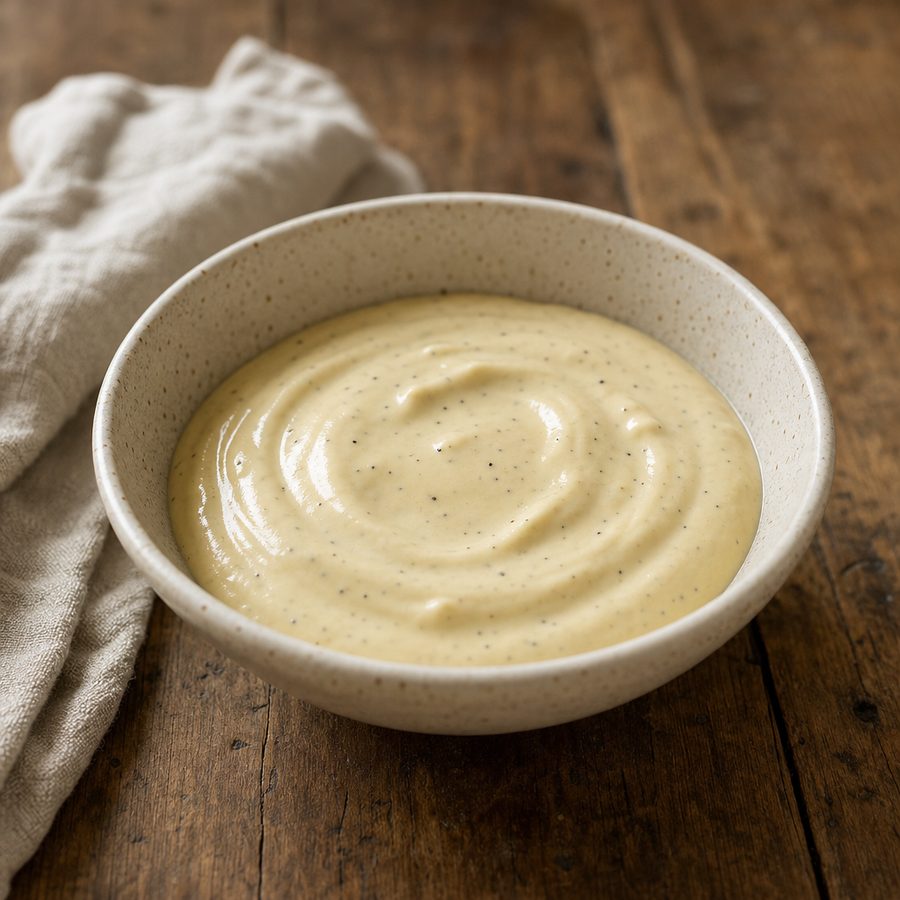
Yogurt and mustard both help hold an emulsion, so when the oil goes in slowly the dressing turns smooth and stays together in the jar. The red wine vinegar and a clove of garlic keep it sharp, and that sharpness is what lets it stand up to bitter leaves.
Whole-milk Greek yogurt matters here. Its fat makes the dressing creamy and round, and strained yogurt is thick enough to coat each leaf in a thin, even layer. Use it on romaine and chicories, as a dip for raw vegetables, or spooned over roast chicken or salmon.
Quick overview: This Creamy Mustard Dressing comes together in 10 min and makes 9 servings, each 2 tablespoons (makes a generous 1 cup).
Ingredients
- 1 large clove garlic (or 2 small), finely grated
- 1/2 cup plain whole-milk Greek yogurt
- 2 tbsp Dijon mustard Label: mustard seed, vinegar, water, and salt
- 2 tbsp red wine vinegar
- 1/2 tsp fine sea salt
- 6 tbsp olive oil
- freshly ground black pepper, about 1/4 tsp
Instructions
- Grate the garlic: Grate the garlic on a fine grater straight into a medium bowl. Grated garlic melts into the dressing and spreads its flavor evenly through the batch.
- Whisk the base: Add the yogurt, mustard, vinegar, and salt and whisk until completely smooth. The salt dissolves into the vinegar and yogurt here, so the whole batch is evenly seasoned.
- Stream in the oil: Whisk constantly while you add the olive oil in a thin, slow stream. The yogurt and mustard hold the oil in tiny droplets, and the dressing turns glossy, pale, and creamy. If it starts to look greasy, stop pouring and whisk hard until it comes back together, then go on.
- Adjust the thickness: It should fall slowly from a spoon. If it seems too thick to pour, whisk in cold water a teaspoon at a time. Season with pepper and taste it on a leaf of whatever you are dressing.
- Dress dry leaves: Toss it with greens that have been dried well in a salad spinner, using your hands so every leaf is coated. A thick dressing clings best to dry leaves.
Storage and leftovers
Keep the dressing in a sealed jar in the refrigerator for up to 4 days. It thickens as it chills, so whisk or shake it before using and loosen it with a teaspoon of water if needed.
Spoon out what you need and return the jar to the refrigerator right away, since dressings made with yogurt and raw garlic keep best cold.
Variations
- Anchovy: Mash 2 anchovy fillets into a paste and whisk them in with the yogurt for a Caesar-like depth.
- Herbed: Stir in 2 tablespoons chopped chives or parsley just before serving.
- Horseradish: Whisk in 1 to 2 teaspoons prepared horseradish for a sharper dressing that suits roast beef and beets.
- Tahini: Use 2 tablespoons tahini in place of the yogurt and thin it with cold water for a dairy-free version.
Notes and tips
- On the radicchio salad: About 1/2 cup dresses one Radicchio Salad with Creamy Mustard Dressing for four.
- Use strained yogurt: Greek yogurt is strained and thick, which gives the dressing its body. Plain whole-milk yogurt makes a thinner, more pourable dressing.
- Pour the oil slowly: A thin stream is what keeps the dressing creamy. A squeeze bottle or a measuring cup with a spout makes it easy.
- Pair it with bitter leaves: Radicchio, endive, escarole, and romaine all stand up to its weight. Tender lettuces do better with a vinaigrette.
Nutrition and mindful eating
- Whole-milk Greek yogurt brings protein and live cultures to a salad, making the dressing a fermented food on the plate.
- The yogurt's fat and the olive oil make this dressing satisfying, and fat in a salad helps your body absorb the fat-soluble vitamins in the greens.
- Bitter greens like radicchio and endive owe their bite to plant compounds in their leaves, and a creamy, tangy dressing makes that bitterness taste balanced and pleasant.
- As you eat, notice how the cool, tangy dressing softens the bitterness of the leaves from one bite to the next, and how a salad with a creamy dressing and a protein beside it holds you through the afternoon.
Frequently asked questions
Have a question about this Creamy Mustard Dressing? Start here, with the questions people ask most.
Can I make it dairy-free?
Yes. Use 2 tablespoons tahini in place of the yogurt and whisk in cold water until it pours.
Can I use regular yogurt or sour cream?
Yes. Plain whole-milk yogurt makes a thinner dressing, and sour cream makes a richer, milder one.
Why did my dressing turn greasy?
The oil went in faster than the yogurt and mustard could hold it. Put a spoonful of yogurt in a clean bowl and slowly whisk the dressing into it, and it comes back together.
What can I serve it with?
Radicchio or romaine salads, raw vegetables for dipping, roast chicken, pork chops, steak, or salmon.
You might also like
Start with the free guide
The RESET360 starter guide walks you through the plate, the daily rhythm, and your first week, sent straight to your inbox.