
Dijon Herb Glazed Salmon
Salmon fillets spread with a Dijon, garlic, lemon, and fresh herb glaze and roasted on one pan with caramelized fennel and leeks.
Why you'll love Dijon Herb Glazed Salmon
Dijon mustard and salmon are one of the classic French pairings: the sharp, bright mustard cuts through the richness of the fish, and a handful of parsley, dill, and thyme makes the whole fillet taste green and fresh. Here the glaze is Dijon thickened with butter and olive oil and sharpened with garlic, lemon zest, and lemon juice, and it bakes into a savory crust that browns at the edges while the salmon underneath stays moist.
Mustard is what makes the glaze cling. Ground mustard seed carries mucilage, a natural thickener that holds oil and lemon juice together in a creamy emulsion, so the mixture spreads like a paste and stays on the fish in the oven instead of running off into the pan. The vegetables get a 15-minute head start on a pan heated with the oven, because fennel and leeks need about twice as long as salmon to soften and caramelize, and then everything finishes together.
Fennel and leeks are at their best in the fall, and roasting turns fennel's anise flavor mellow and sweet. Dinner is protein, a real fat, and a pan of vegetables in about 45 minutes, with one pan to wash.
Quick overview: This Dijon Herb Glazed Salmon takes 15 min of hands-on time and about 45 min in all and makes 4 servings, each 1 fillet with vegetables. You'll need a sheet pan.
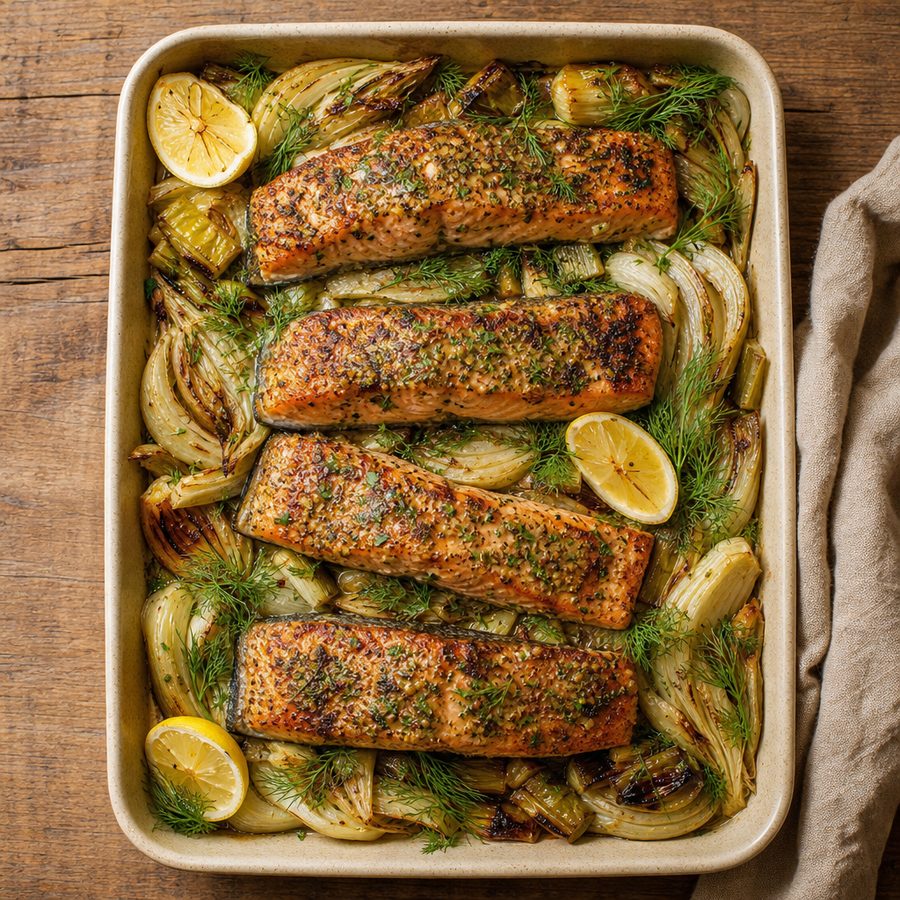
Ingredients
- 2 medium fennel bulbs, trimmed, cored, and cut into 1/2-inch wedges, fronds saved
- 2 medium leeks, white and light green parts, halved lengthwise, cut into 2-inch pieces, and rinsed
- 3 tbsp olive oil, divided
- 1 tsp fine sea salt, divided
- 4 skin-on salmon fillets (6 oz each)
- 3 tbsp Dijon mustard Label: mustard seed, vinegar, water, and salt
- 1 tbsp butter, melted
- 2 cloves garlic, finely grated
- 1 tsp finely grated lemon zest
- 1 tbsp fresh lemon juice
- 1/2 lemon, cut into wedges, to serve
- 2 tbsp finely chopped parsley
- 1 tbsp finely chopped fresh dill
- 1 tsp fresh thyme leaves
- 1/2 tsp freshly ground black pepper
Instructions
- Heat the pan with the oven: Set a large rimmed sheet pan on the middle rack and heat the oven to 425°F (220°C) with the pan inside. A hot pan sears the vegetables the moment they land, so they brown instead of steaming.
- Roast the vegetables: Toss the fennel and leeks with 2 tablespoons of the olive oil and 1/2 teaspoon of the salt. Carefully pull out the hot pan, spread the vegetables in one layer, and roast for 15 minutes, until the undersides are browned and the fennel is starting to soften.
- Mix the glaze: While the vegetables roast, stir the Dijon, melted butter, remaining 1 tablespoon of olive oil, garlic, lemon zest, lemon juice, parsley, dill, thyme, and pepper in a small bowl until thick and creamy. Stir until the oil disappears into the mustard, which is the emulsion that lets the glaze cling.
- Glaze the salmon: Pat the salmon dry with paper towels and season the flesh with the remaining 1/2 teaspoon of salt. Spread the glaze thickly over the top and sides of each fillet. A dry surface holds the glaze in place, while a wet one lets it slide.
- Roast together: Take out the pan, stir the vegetables, and push them to the edges. Lay the salmon skin side down in the center and roast for 10 to 12 minutes, until the thickest part reads 145°F and the flesh flakes easily with a fork. For more color, turn on the broiler for the last 1 to 2 minutes and watch closely, since the garlic and mustard brown fast.
- Rest and serve: Let the salmon rest on the pan for 3 minutes so its juices settle. Scatter the chopped fennel fronds over everything and serve with lemon wedges.
Storage and leftovers
Refrigerate leftover salmon and vegetables in a sealed container for up to 3 days. Eat the salmon cold, flaked over greens, or warm it gently, covered, in a 275°F (135°C) oven for 10 to 15 minutes, since high heat dries it out.
The glaze can be mixed up to 3 days ahead and kept covered in the refrigerator. Stir it before spreading.
Variations
- Halibut or cod: Use thick fillets of halibut or cod and roast them 8 to 12 minutes, depending on thickness, until they reach 145°F.
- Brussels sprouts: Use 1 pound of halved Brussels sprouts in place of the leeks, roasting them cut side down with the fennel.
- Horseradish: Stir 1 teaspoon prepared horseradish into the glaze for a sharper bite.
- Pistachio crust: Press 1/3 cup finely chopped pistachios over the glaze before roasting for a crunchy top.
Notes and tips
- Read the Dijon label: Choose a Dijon whose label reads mustard seed, vinegar, water, and salt.
- Rinse leeks after cutting: Grit hides between a leek's layers. Cut the leeks first, swish the pieces in a bowl of cold water, and lift them out so the grit stays at the bottom. Dry them well so they roast instead of steam.
- Match the thickness: Choose center-cut fillets of similar thickness so they finish at the same time. Thin tail pieces cook in 6 to 8 minutes.
- Keep the skin on: The skin protects the fillet from the hot pan and keeps the underside moist. It slips off easily after cooking if you prefer to leave it.
Nutrition and mindful eating
- Salmon brings protein along with the long-chain omega-3 fats and vitamin D, and roasting it just to 145°F keeps it moist and tender.
- Fennel and leeks fill the pan with non-starchy vegetables and fiber, and roasting draws out their natural sweetness so they need nothing more than oil and salt.
- Olive oil, butter, and the salmon's own fat are the real fats on this plate, and fat carries the flavor of the herbs and helps you absorb the vitamin D.
- Mustard, garlic, lemon, and herbs bring big flavor with very little salt.
- As you eat, notice the sharp mustard against the rich fish and sweet fennel, and check in through the evening: a dinner of protein, fat, and vegetables should carry you comfortably to bedtime, 3 hours or more, with no pull toward something sweet afterward.
Frequently asked questions
Have a question about this Dijon Herb Glazed Salmon? Start here, with the questions people ask most.
Can I use frozen salmon?
Yes. Thaw it overnight in the refrigerator and pat it very dry before glazing, since thawed fish releases extra water.
Should I eat the skin?
It is up to you. Roasted skin side down, it softens rather than crisps, so many people slide the fillet off it at the table.
How do I know the salmon is done?
The thickest part reads 145°F on an instant-read thermometer and flakes easily when pressed with a fork.
Can I make the glaze ahead?
Yes. Mix it up to 3 days ahead and keep it covered in the refrigerator.
You might also like
Start with the free guide
The RESET360 starter guide walks you through the plate, the daily rhythm, and your first week, sent straight to your inbox.