
Garlicky Sautéed Broccoli Rabe
Broccoli rabe blanched, then sautéed in garlic-infused olive oil with chile flakes, finished with golden garlic chips, sherry vinegar, and pecorino.
Why you'll love Garlicky Sautéed Broccoli Rabe
Broccoli rabe, also called rapini, is the leafy, bitter green that southern Italian cooks treat like a treasure. It grows best in cool weather, so March is one of its best months, with tender stalks and plenty of small florets. Cooked with a lot of garlic and a pinch of chile, its bitterness turns pleasant and grown-up, the way coffee or dark greens are.
Two steps make it work. A quick boil in salted water first softens the thick stems and draws out some of the sharpest bitterness, so the stems and leaves finish tender together in the skillet. Then the garlic is sliced thin and cooked slowly in the oil until it turns into crisp, golden chips. Those chips come out of the pan to stay crunchy, and the oil they leave behind is full of garlic flavor for the greens.
A splash of sherry vinegar and a shower of pecorino at the end balance the bitterness with tang and salt. It belongs next to pork, steak, chicken, or a fried egg.
Quick overview: This Garlicky Sautéed Broccoli Rabe takes 10 min of hands-on time and about 25 min in all and makes 4 servings, each about 3/4 cup. You'll need a pot and a skillet.
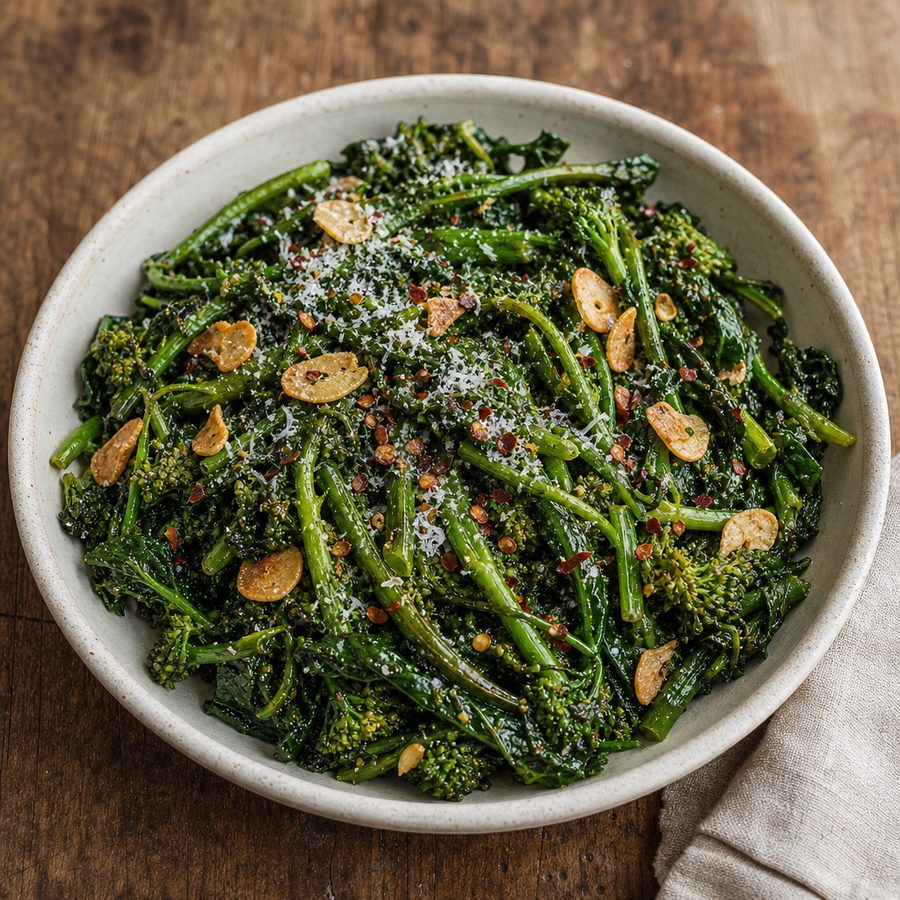
Ingredients
- 2 bunches broccoli rabe (about 2 lb), tough stem ends trimmed
- fine sea salt, for the blanching water and to taste
- 1/4 cup olive oil
- 8 to 10 cloves garlic, thinly sliced
- 1/2 tsp red pepper flakes
- 2 tsp sherry vinegar
- 1/4 cup finely grated pecorino romano
- freshly ground black pepper
Instructions
- Boil the water: Bring a large pot of water to a boil and salt it well, about 1 tablespoon for every 4 quarts.
- Prepare the rabe: Trim the bottom inch from the stems. Cut any stems thicker than a pencil in half lengthwise, then cut the bunches into 2-inch lengths. Even pieces cook in the same time.
- Blanch: Add the broccoli rabe to the boiling water and cook for 1 to 2 minutes, just until the stems turn bright green and bend. Drain it in a colander and press out as much water as you can with the back of a spoon. Water left on the greens would spatter in the oil and keep them from taking on the garlic.
- Make the garlic chips: Put the olive oil and sliced garlic in a large skillet, then set it over medium-low heat. Starting in cold oil lets the garlic heat slowly and evenly. Cook, stirring, for 4 to 6 minutes, until the slices are pale gold. Lift them onto a paper towel with a slotted spoon right away; they keep darkening for a minute off the heat and turn bitter if they go brown.
- Sauté the greens: Turn the heat to medium-high, add the red pepper flakes to the garlic oil for 10 seconds, then add the broccoli rabe. Toss it in the oil with tongs and cook for 3 to 4 minutes, until the stems are tender when pierced and the leaves are glossy. Season with a pinch of salt.
- Finish: Take the pan off the heat, sprinkle the sherry vinegar over the greens, and toss. Pile onto a platter and top with the garlic chips, pecorino, and black pepper. Serve hot or warm.
Storage and leftovers
Refrigerate leftovers in a covered container for up to 3 days. Keep the garlic chips in a small dry container at room temperature for up to 2 days so they stay crisp.
Reheat in a skillet over medium heat for 2 to 3 minutes, then add the chips and a little more pecorino. Leftovers are also good chopped and folded into scrambled eggs.
Variations
- With anchovy: Melt 2 minced anchovy fillets into the garlic oil before adding the chile flakes for a deeper, savory flavor.
- Toasted pine nuts: Scatter 2 tablespoons toasted pine nuts over the top with the garlic chips.
- Lemon: Use fresh lemon juice in place of the sherry vinegar and add a little grated lemon zest.
- With fresh sausage: Brown 8 oz fresh pork sausage (ground pork, salt, and spices, with no curing salt) in the skillet first, set it aside, and fold it back in with the greens for a one-pan dinner.
Notes and tips
- Look for small florets: Choose bunches with firm, slender stems, deep green leaves, and tight buds. Yellow flowers mean the rabe is older and more bitter.
- Slice the garlic evenly: Slices of the same thickness turn gold at the same time. A sharp knife and a steady hand, or a mandoline, does it.
- Use the big pot: Plenty of water stays at a boil when the greens go in, so the rabe blanches quickly and keeps its color.
- Blanch ahead: Blanch and drain the rabe up to 2 days ahead and refrigerate it. The sauté then takes 5 minutes.
Nutrition and mindful eating
- Broccoli rabe is a cruciferous green, a cousin of turnips, with vitamin K, vitamin A, folate, and calcium in every serving.
- Its bitterness comes from plant compounds called glucosinolates, the same family found in broccoli and cabbage, and a quick blanch mellows the sharpest edge.
- Olive oil is the real fat here, and it carries the vitamin K and vitamin A from the greens into your body.
- Garlic, chile, and pecorino bring so much flavor that the greens need only a pinch of salt.
- As you eat, notice how the bitter greens, crisp garlic, and salty cheese balance each other, and pay attention to whether a plate with this beside your protein leaves you settled and satisfied for the evening.
Frequently asked questions
Have a question about this Garlicky Sautéed Broccoli Rabe? Start here, with the questions people ask most.
Is broccoli rabe the same as broccolini?
They are different plants. Broccolini is a cross of broccoli and Chinese broccoli, mild and sweet. Broccoli rabe is related to turnips, leafier, and pleasantly bitter.
Do I have to blanch it?
Blanching is what makes the stems tender and tames the bitterness. If you like it very bitter and crunchy, you can sauté it raw with a splash of water and a lid for 5 to 6 minutes.
Can I use parmesan?
Yes. Parmesan is milder and nuttier than pecorino, and both work.
What should I serve it with?
Pork tenderloin, a seared steak, roast chicken, or fish. It is also good under a fried egg for breakfast.
You might also like
Start with the free guide
The RESET360 starter guide walks you through the plate, the daily rhythm, and your first week, sent straight to your inbox.