
Shrimp Moqueca, Brazilian Coconut Stew
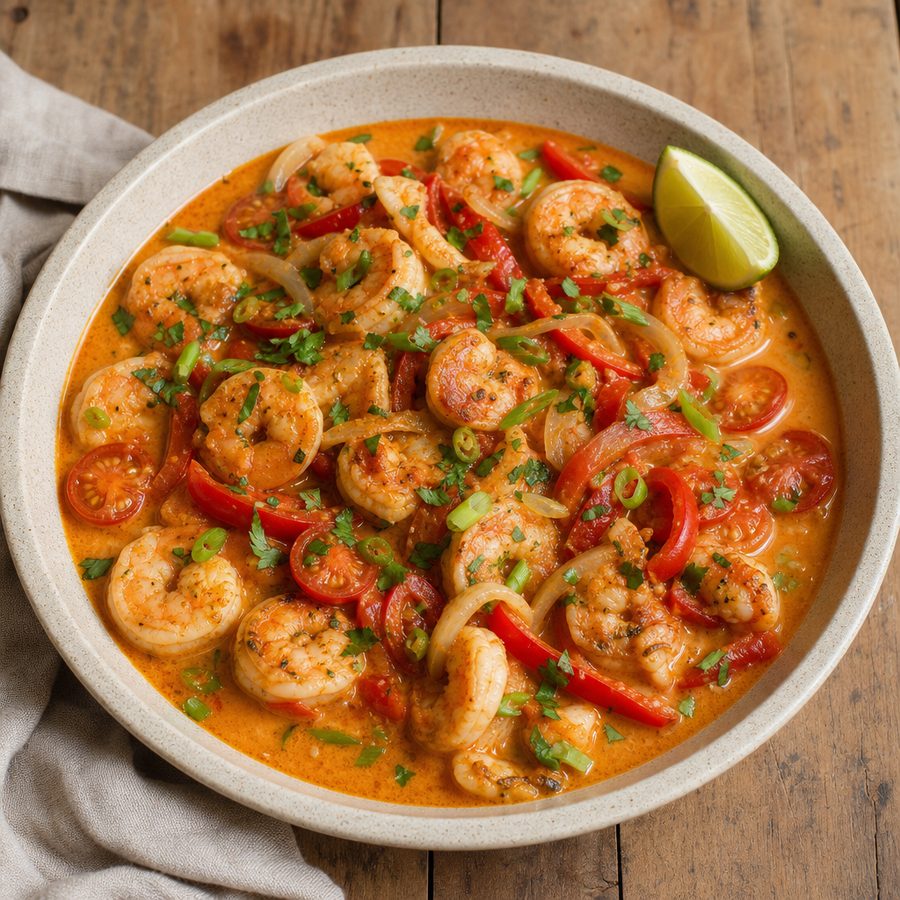
Bahian shrimp stew of coconut milk, red palm oil, sweet peppers, tomatoes, and lime, the base pressure-cooked in minutes and the shrimp poached in last.
Why you'll love Shrimp Moqueca, Brazilian Coconut Stew
Moqueca is the seafood stew of Brazil's coast, and the version from Bahia, in the northeast, simmers shrimp or fish in coconut milk and dendê, the red palm oil of Bahian cooking, with onion, sweet peppers, tomatoes, garlic, cilantro, and lime. It tastes bright and rich at once. The coconut milk gives it a round, creamy body, the tomatoes and lime keep it tart, the dendê turns the sauce a deep red-gold and gives it a savory, slightly floral richness, and the peppers and onion melt into it before the shrimp go in for the last few minutes.
The shrimp sit in lime, garlic, and salt for 15 minutes before they cook, the way a moqueca traditionally starts. The salt seasons them through and the lime gives them a tart edge that carries into the finished stew. Keep the soak to 30 minutes at most. Acid firms shrimp the way heat does, which is how aguachile cooks with no stove at all, and shrimp left in lime too long turn tough once they meet the hot sauce.
The Instant Pot does the slow part fast. Three minutes at pressure collapses the onion, peppers, and tomatoes into a sauce that would need 20 minutes or more of simmering on the stove, and the coconut milk and shrimp go in afterward on the sauté setting. Coconut milk is thick enough to scorch on the bottom of the insert under pressure, and shrimp need only a few minutes of gentle heat, so both wait until the pressure is off.
Quick overview: This Shrimp Moqueca, Brazilian Coconut Stew takes 25 min of hands-on time and about 50 min in all and makes 4 servings, each about 1 3/4 cups. You'll need an Instant Pot.
Ingredients
- 1 1/2 lb large raw shrimp (21 to 25 per pound), peeled and deveined
- 3 tbsp fresh lime juice (from about 2 limes), divided, plus wedges to serve
- 5 cloves garlic, minced, divided
- 1 tsp fine sea salt, divided
- 1 tbsp olive oil
- 1 medium onion, halved and thinly sliced
- 1 jalapeño, seeded and minced
- 3/4 cup chicken broth Label: chicken, water, vegetables, herbs, and salt, with no sugar, natural flavors, or oil
- 2 red bell peppers, cut into thin strips
- 10 oz cherry tomatoes, halved
- 1/2 cup chopped cilantro, divided
- 1 can (13.5 oz) full-fat coconut milk, shaken well Label: coconut and water, with no gums or sugar
- 2 tbsp unrefined red palm oil (dendê) Label: unrefined red palm oil, and nothing else; look for sustainably sourced (RSPO-certified)
- 2 scallions, thinly sliced
Instructions
- Marinate the shrimp: Toss the shrimp in a bowl with 2 tablespoons of the lime juice, 2 of the minced garlic cloves, and 1/2 teaspoon of the salt. Refrigerate for 15 minutes, and no longer than 30, while you build the sauce, since the lime keeps firming the shrimp the longer they sit.
- Soften the aromatics: Set the Instant Pot to Sauté on Normal and heat the olive oil until it shimmers. Add the onion and cook for 4 minutes, stirring often, until it softens and turns translucent. Add the remaining garlic and the jalapeño and stir for 30 seconds, until fragrant, keeping them moving so the garlic does not brown.
- Deglaze and layer: Pour in the broth and scrape the bottom of the insert with a wooden spoon until nothing is stuck to it. Scraping it clear is what keeps the Instant Pot from showing its overheat warning. Press Cancel, then add the peppers, tomatoes, the remaining 1/2 teaspoon of salt, and half the cilantro, and stir once.
- Pressure-cook the base: Lock the lid, set the valve to Sealing, and cook at high pressure for 3 minutes. Quick-release the pressure, carefully, with a towel over the valve. The peppers should be silky and the tomatoes collapsed into the broth.
- Add the coconut milk: Set the Instant Pot to Sauté on Normal again, stir in the coconut milk and the red palm oil, and bring it to a gentle simmer, 3 to 4 minutes. The palm oil goes in now, after pressure cooking, so its flavor stays bright and its color turns the whole pot red-gold. Lower the setting to Less if it begins to bubble hard, since a hard boil can make coconut milk separate.
- Poach the shrimp: Add the shrimp and any lime juice in the bowl, push them under the sauce, and simmer for 3 to 4 minutes, stirring once, until they curl, turn pink and opaque all the way through, and reach 145°F (63°C) in the thickest one. Press Cancel as soon as they are done, because shrimp go from tender to rubbery in a minute or two.
- Finish and serve: Stir in the remaining 1 tablespoon of lime juice and taste for salt. Ladle into bowls and top with the rest of the cilantro and the scallions, with lime wedges on the side.
Storage and leftovers
Refrigerate leftovers in a sealed container within 2 hours of cooking, for up to 2 days. The shrimp are at their best the day the stew is made.
Reheat gently in a saucepan over medium-low heat just until hot, so the shrimp stay tender. To freeze, make the stew through the coconut milk, cool it, and freeze it for up to 3 months; thaw it in the refrigerator, bring it to a simmer, and poach fresh shrimp in it.
Variations
- Fish moqueca: Use 1 1/2 lb of firm white fish, such as cod or halibut, cut into 2-inch chunks, in place of the shrimp. Marinate it the same way and simmer it for 5 to 6 minutes, until it flakes easily and reaches 145°F (63°C).
- Shrimp and fish: Use 3/4 lb each of shrimp and white fish, adding the fish 2 minutes before the shrimp.
- With more heat: Add a second jalapeño, or a serrano for sharper heat, with the garlic.
- With collard greens: Stir 2 cups of thinly sliced collard greens into the coconut milk and simmer them for 3 minutes before the shrimp go in.
Notes and tips
- Find dendê: Unrefined red palm oil is sold as dendê in Brazilian markets and as red palm oil in natural food stores and online. The label should read only unrefined red palm oil, ideally marked sustainably sourced or RSPO-certified. It is semi-solid at room temperature, so warm the jar in a bowl of hot water to measure it, and keep it in a cool, dark cupboard.
- Shake the can: Coconut milk separates in the can. Shake it hard or whisk it in a bowl before it goes in so the sauce turns out smooth.
- Check the coconut milk label: It should read coconut and water. Full-fat coconut milk gives the stew its creamy body.
- Thaw frozen shrimp the right way: Thaw them overnight in the refrigerator, or seal them in a bag and set it in a bowl of cold water for 20 to 30 minutes. Pat them dry before they go into the lime.
Nutrition and mindful eating
- Shrimp bring protein along with selenium, vitamin B12, and iodine, and they cook through in minutes, which keeps them tender.
- Red bell peppers are one of the richest vegetable sources of vitamin C, and here two whole peppers go into four bowls.
- Tomatoes carry lycopene, the red pigment that gives them their color. Cooking them and eating them with fat, here red palm oil and coconut milk, makes more of it available to your body. The red in the palm oil is carotenoids too, the same family as the orange in carrots.
- Coconut milk is the real fat in this stew. Fat slows how quickly your stomach empties, which is part of why a bowl of moqueca holds you steady for hours.
- As you eat, notice the tart lime against the round, creamy coconut, and eat the shrimp first, then the peppers and tomatoes. Check in later: a bowl should keep you comfortably full for at least 3 to 4 hours, with your energy even through the afternoon or evening.
Frequently asked questions
Have a question about this Shrimp Moqueca, Brazilian Coconut Stew? Start here, with the questions people ask most.
What is moqueca?
A Brazilian seafood stew from the coast, best known in two versions. Bahian moqueca simmers seafood in coconut milk with peppers, tomatoes, and red palm oil, and the version from Espírito Santo uses olive oil and annatto. This recipe is the Bahian one.
Why does the coconut milk go in after pressure cooking?
Thick liquids sink and scorch on the bottom of the insert under pressure, which triggers the overheat warning. Pressure-cooking the vegetables in thin broth and stirring the coconut milk in afterward keeps the bottom clear and the sauce smooth.
Can I use frozen shrimp?
Yes. Most shrimp at the seafood counter were frozen and then thawed at the store, so a bag of frozen shrimp is often the freshest choice. Thaw them in the refrigerator overnight or in a sealed bag in cold water, and pat them dry.
What do I serve with it?
Cauliflower rice is the closest match for the rice moqueca is usually served with in Brazil. Collard greens sautéed with garlic, a common Brazilian side, or sliced avocado also go well with it.
You might also like
Start with the free guide
The RESET360 starter guide walks you through the plate, the daily rhythm, and your first week, sent straight to your inbox.