
Korean Beef and Kimchi Breakfast Bowl with Sesame Spinach
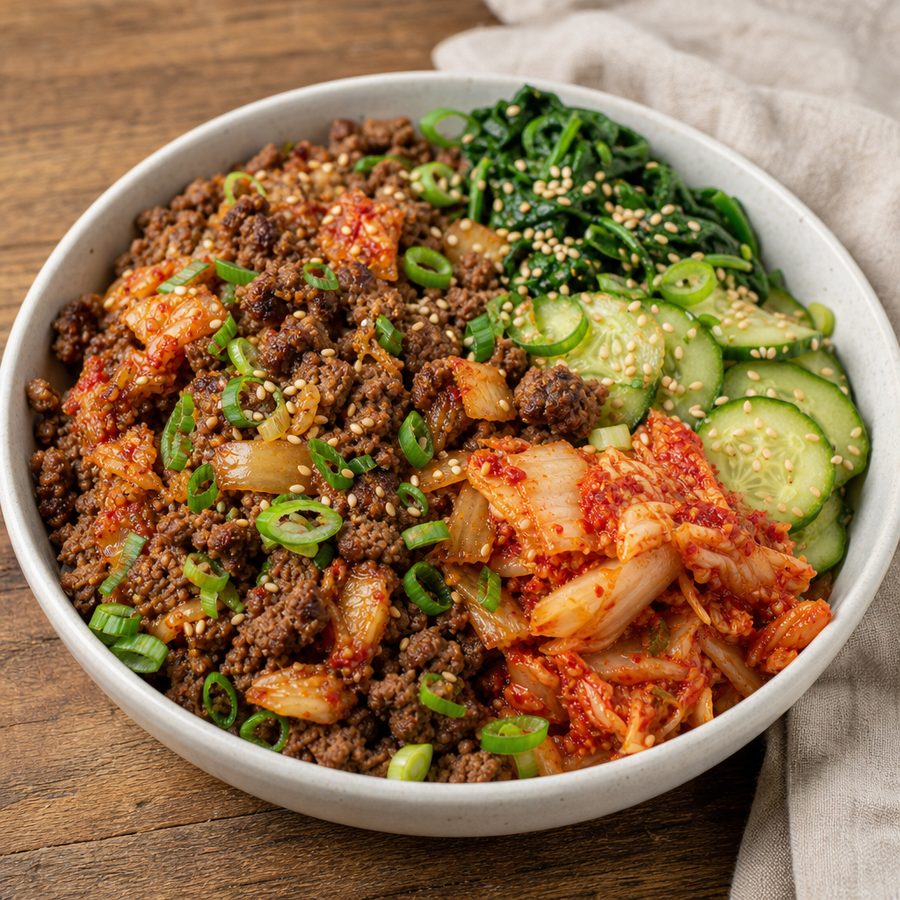
Ground beef browned with garlic, ginger, and tamari, served with seared and fresh kimchi, garlicky sesame spinach, and vinegared cucumber.
Why you'll love Korean Beef and Kimchi Breakfast Bowl with Sesame Spinach
A Korean breakfast table looks a lot like dinner: rice, soup, and a spread of small vegetable dishes called banchan, with kimchi at the center. This bowl takes the parts that hold you, savory beef and banchan, and puts them together in one bowl. Ground beef is browned hard in a skillet with garlic, ginger, scallion, and tamari, and it sits beside sesame spinach, cool vinegared cucumber, and kimchi two ways.
Half the kimchi is seared in the beef pan until its edges caramelize, which mellows its sourness and turns it savory and a little sweet. The other half goes into the bowl straight from the jar, crunchy, sour, and full of the live cultures that heat would take away. Together they give you both sides of kimchi in one bite.
The spinach is sigeumchi namul, one of the most common banchan. It is wilted, squeezed hard, and dressed with toasted sesame oil, garlic, and sesame seeds, and the squeezing is what matters: dry spinach soaks up the seasoning instead of watering it down. Everything comes out of one skillet in about 30 minutes.
Quick overview: This Korean Beef and Kimchi Breakfast Bowl with Sesame Spinach takes 15 min of hands-on time and about 35 min in all and makes 4 servings, each 1 bowl. You'll need a skillet.
Ingredients
- 4 tsp sesame seeds
- 1 lb fresh spinach, washed
- 4 tsp toasted sesame oil, divided
- 5 cloves garlic, minced, divided
- 1/4 tsp fine sea salt
- 1 small English cucumber, thinly sliced
- 1 tbsp unseasoned rice vinegar Label: rice vinegar and water, unseasoned (seasoned rice vinegar has sugar)
- 1 tbsp avocado oil
- 1 1/4 lb ground beef
- 1 tbsp finely grated fresh ginger
- 3 scallions, thinly sliced, whites and greens kept separate
- 1 tsp gochugaru (Korean chile flakes) Label: red pepper, and salt if any
- 2 tbsp certified gluten-free tamari Label: water, soybeans, and salt
- 1 1/2 cups napa cabbage kimchi, chopped, divided, plus 2 tbsp of its brine Label: napa cabbage, chile pepper, garlic, ginger, salt, and fish sauce or salted shrimp, with no sugar, from the refrigerated case
Instructions
- Toast the sesame: Toast the sesame seeds in a large dry skillet over medium heat, shaking the pan, for 2 to 3 minutes, until golden and fragrant. Tip them onto a plate right away so the hot pan does not carry them past done.
- Wilt the spinach: Add 2 tablespoons of water to the same skillet over medium-high heat and add the spinach a few handfuls at a time, turning it with tongs, for 2 to 3 minutes, just until it collapses and turns bright green. Tip it into a colander and run cold water over it to stop the cooking.
- Squeeze and season the spinach: Squeeze the spinach in your fists, a handful at a time, until no more water runs out, then chop it roughly. Toss it in a bowl with 2 teaspoons of the sesame oil, one of the garlic cloves, the salt, and half the sesame seeds. Squeezed spinach takes up the oil and garlic, while wet spinach dilutes them.
- Dress the cucumber: Toss the cucumber with the rice vinegar and set it aside. A few minutes in vinegar turns it crisp, cool, and lightly pickled.
- Brown the beef: Wipe out the skillet and heat the avocado oil over medium-high heat. Add the beef, press it into an even layer, and leave it alone for 3 minutes, until the underside is deeply browned. Then break it into crumbles and cook 3 to 4 minutes more, until no pink remains and it reaches 160°F (71°C). That first undisturbed sear is where the flavor comes from.
- Season the beef: Add the remaining garlic, the ginger, the scallion whites, and the gochugaru and stir for 1 minute, until fragrant. Stir in the tamari and the remaining 2 teaspoons of sesame oil, and cook 30 seconds more, until the beef looks glossy.
- Sear half the kimchi: Push the beef to one side of the skillet. Add half the kimchi to the cleared side and cook it, turning once, for 2 to 3 minutes, until the edges brown and caramelize. Pour in the kimchi brine and stir everything together, scraping up the browned bits from the pan.
- Build the bowls: Divide the beef and seared kimchi among four bowls and add the sesame spinach, the drained cucumber, and the remaining fresh kimchi beside it. Scatter with the scallion greens and the rest of the sesame seeds and serve hot.
Storage and leftovers
Refrigerate the beef, spinach, and cucumber in separate sealed containers for up to 3 days. Kimchi keeps in its jar in the refrigerator, and it grows more sour the longer it ferments.
Reheat the beef and seared kimchi in a skillet over medium heat for 3 to 4 minutes, until steaming. The sesame spinach is traditionally eaten cool or at room temperature, so it needs no reheating. Freeze the cooked beef on its own for up to 3 months.
Variations
- With an egg: Top each bowl with a fried or 7-minute egg and let the yolk run over the beef.
- Cauliflower rice: Serve the beef and kimchi over cauliflower rice sautéed in a little sesame oil, the way you would over rice.
- Sesame bean sprouts: Make a second banchan of bean sprouts, blanched for 1 minute and dressed exactly like the spinach.
- Thinly sliced steak: Use 1 1/4 lb sirloin, sliced very thin across the grain, in place of the ground beef, searing it in two batches for 1 to 2 minutes a side.
Notes and tips
- Read the kimchi label: Many jars of kimchi carry sugar. Look in the refrigerated case for one whose label reads napa cabbage, chile, garlic, ginger, salt, and fish sauce or salted shrimp, with no sugar.
- Gochugaru: Gochugaru is a sun-dried Korean chile flake, fruity and bright with a mild heat. Look for a label of red pepper, and salt if any. It keeps its color and flavor for months in the freezer.
- Use older kimchi for searing: Kimchi that has been open a few weeks is more sour and softer, and it caramelizes beautifully in the pan. Save the fresher, crunchier kimchi for serving straight from the jar.
- Squeeze the spinach hard: A pound of spinach shrinks to a ball about the size of a fist once squeezed. That small ball is what you want.
- Check the tamari label: Certified gluten-free tamari should read water, soybeans, and salt.
Nutrition and mindful eating
- Beef brings protein, iron, zinc, and B12, and browning it well develops deep savory flavor, so a modest amount seasons the whole bowl.
- Kimchi is a fermented food. The half served straight from the jar keeps its live cultures and crunch, and the seared half adds caramelized, savory depth.
- Spinach brings folate, vitamin K, and magnesium, and dressing it with sesame oil helps your body take up its fat-soluble vitamins.
- Ginger, garlic, scallion, and sesame give the bowl its warmth and aroma, and the vinegared cucumber brings cool, sharp crunch between richer bites.
- As you eat, notice the contrast between the hot, savory beef, the sour crunch of fresh kimchi, and the cool sesame spinach, and pay attention to how long this bowl holds you: protein, fat, and vegetables together should carry you at least 3 to 4 hours, with your energy steady through the morning.
Frequently asked questions
Have a question about this Korean Beef and Kimchi Breakfast Bowl with Sesame Spinach? Start here, with the questions people ask most.
Is kimchi part of RESET360?
Yes. Fermented foods are in, and kimchi made with a real-food label of cabbage, chile, garlic, ginger, salt, and fish sauce or salted shrimp, with no sugar, fits the plan.
Why cook only half the kimchi?
Heat mellows kimchi and makes it savory and caramelized, and it also kills the live cultures. Keeping half raw gives you the crunch, sourness, and cultures alongside the cooked flavor.
Can I use frozen spinach?
Yes. Thaw a 1-lb bag, squeeze it very dry, and season it as written. It skips the wilting step.
Is beef for breakfast unusual in Korea?
A Korean breakfast is often a full savory meal of soup, rice, and banchan, sometimes with grilled meat or fish, so a savory beef bowl fits right in.
You might also like
Start with the free guide
The RESET360 starter guide walks you through the plate, the daily rhythm, and your first week, sent straight to your inbox.