
Lemon-Shallot Dressing with Sumac
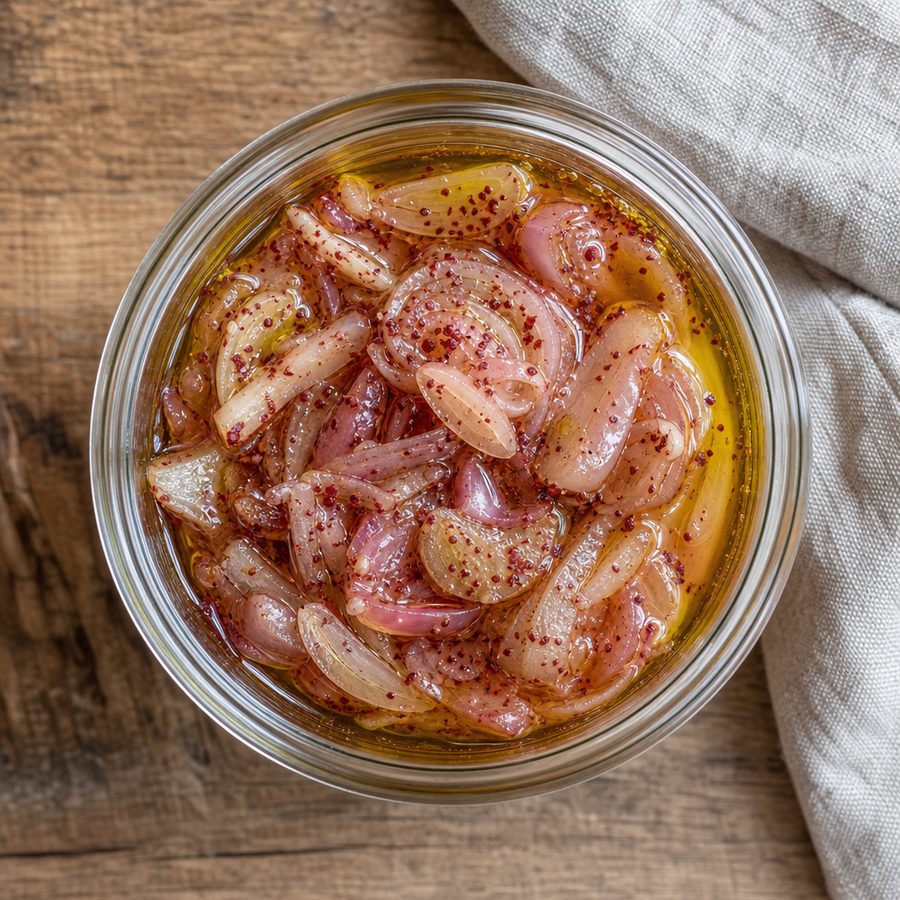
Thin slices of shallot soaked in lemon juice, salt, and tart, crimson sumac, then whisked with olive oil for herb salads, cucumbers, and grilled meats.
Why you'll love Lemon-Shallot Dressing with Sumac
This is the dressing that coats the Mixed Herb Salad with Sumac. Sumac is a dried, ground berry used across the Middle East, deep red and tart, with a flavor close to lemon but rounder and fruitier. Paired with fresh lemon juice, it gives the dressing two layers of sourness, one sharp and bright and the other soft and almost berry-like.
The method is the one behind the sumac onions served with kebabs: the shallot sits in lemon, salt, and sumac before any oil goes in. In 10 minutes the acid and salt soften the shallot's raw bite, the slices turn pink at the edges, and the sumac blooms in the liquid and gives up its color and flavor.
It is three parts olive oil to two parts lemon, bright enough for tender herbs and sturdy enough for grilled lamb, chicken skewers, or a tray of roasted vegetables.
Quick overview: This Lemon-Shallot Dressing with Sumac comes together in 15 min and makes 6 servings, each 2 tablespoons (makes about 3/4 cup).
Ingredients
- 1 medium shallot (or 2 small), halved and very thinly sliced
- 1/4 cup fresh lemon juice (from about 2 lemons)
- 1/2 tsp fine sea salt
- 1 tbsp ground sumac, plus more for serving Label: sumac, and salt if any
- 6 tbsp olive oil
- freshly ground black pepper, about 1/4 tsp
Instructions
- Slice the shallot: Halve the shallot through the root, peel it, and slice it into the thinnest half-moons you can manage. Thin slices soften all the way through in the lemon.
- Soak with lemon and sumac: Stir the shallot with the lemon juice, salt, and sumac in a small bowl and let it sit for 10 minutes, stirring once. The acid and salt soften the shallot's sharp bite, and the sumac blooms and stains the liquid a deep red.
- Whisk in the oil: Whisk the olive oil into the shallot mixture and season with pepper. The oil settles over the red juice as it sits, so stir it right before spooning it on and every portion gets shallot and both layers.
- Dress and finish: Pour it over the salad right before eating and toss gently with your hands until just coated. Finish with an extra pinch of sumac over the top for color and a last hit of tartness.
Storage and leftovers
Keep the dressing in a sealed jar in the refrigerator for up to 3 days. The shallots keep softening and turn pinker as they sit, and the lemon tastes brightest on the first day.
Let it stand at room temperature for 10 minutes and stir it well before using, since olive oil firms in the cold.
Variations
- With garlic: Grate 1 small clove of garlic into the lemon along with the shallot.
- Red onion: Use 1/2 small red onion, sliced paper-thin, in place of the shallot for a sharper, more classic kebab-shop flavor, and let it soak for 15 minutes.
- Aleppo heat: Stir in 1/2 teaspoon Aleppo pepper for a gentle, fruity warmth.
- Herbed: Stir in 2 tablespoons chopped fresh mint or parsley just before serving.
Notes and tips
- On the herb salad: Half the batch, a generous 1/3 cup, dresses one Mixed Herb Salad with Sumac for four. Dress it at the table, since tender herbs wilt within minutes.
- Buy sumac by its color: Good sumac is a deep burgundy and smells tart. The label should list sumac, and salt if any. If yours lists salt, start with 1/4 teaspoon of salt in the dressing and taste.
- Spoon on the shallots: The soaked shallots are part of the dressing. Spoon them onto the salad with the liquid.
- Slice thin: A very sharp knife or a mandoline with its guard gives the thinnest slices, which soften fastest.
Nutrition and mindful eating
- Sumac is a dried, ground berry, and its tart flavor and deep red color come from plant compounds called polyphenols, the same broad family that colors berries and pomegranates.
- Lemon juice and sumac together give a lot of brightness from a small amount, so a light coating makes a whole bowl of herbs taste seasoned.
- Olive oil is the real fat here, and fat in the dressing helps your body take in the vitamins A and K that leafy herbs carry.
- As you eat, notice how the sour, fruity sumac wakes up the herbs and how a salad dressed this way tastes beside grilled meat or fish, and check in later on how steady your energy feels after a meal built on herbs, protein, and olive oil.
Frequently asked questions
Have a question about this Lemon-Shallot Dressing with Sumac? Start here, with the questions people ask most.
What does sumac taste like?
Tart and fruity, like lemon with a rounder, softer edge and a faint dryness on the tongue, a little like cranberry.
Where do I find sumac?
In Middle Eastern markets, the spice aisle of many grocery stores, and spice shops online. Choose one that is deep red and fragrant.
Can I use red onion in place of the shallot?
Yes. Red onion is sharper, so slice it paper-thin and let it soak in the lemon for 15 minutes before adding the oil.
What else can I put it on?
Grilled lamb, chicken skewers, sliced tomatoes and cucumbers, roasted cauliflower, or fried eggs.
You might also like
Start with the free guide
The RESET360 starter guide walks you through the plate, the daily rhythm, and your first week, sent straight to your inbox.