
Miso Glaze
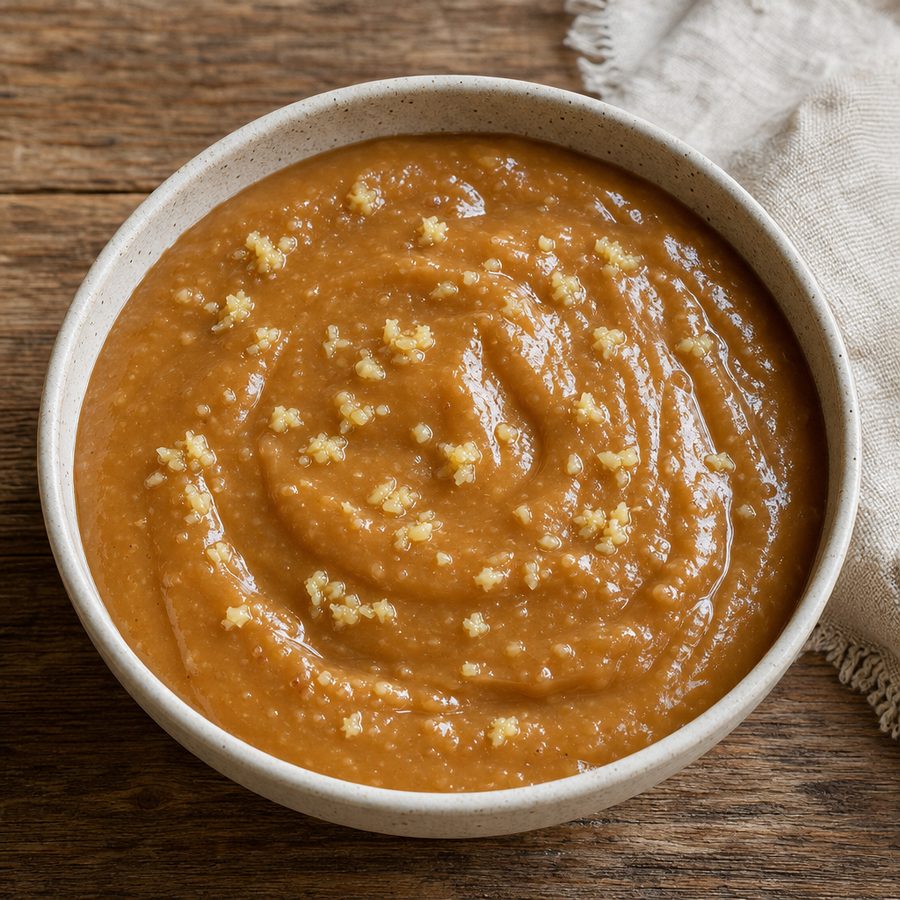
A savory glaze of white miso, toasted sesame oil, rice vinegar, coconut aminos, ginger, and garlic that turns sticky and dark in the last minutes of a hot roast.
Why you'll love Miso Glaze
This is the glaze from the Miso-Glazed Cauliflower, written out on its own so it can go on anything that roasts or broils. White miso is soybeans fermented with koji, and the long fermentation breaks the bean's protein down into free glutamates, the same savory compounds that give aged parmesan its depth. Two tablespoons season a whole sheet pan, so the glaze brings the salt, the savor, and the shine in one spoonful.
It works because of when it goes on. Miso and coconut aminos both carry natural sugars, and at 425°F (220°C) those sugars caramelize within minutes and scorch soon after. Brushed on for the last 5 to 7 minutes, the glaze has just enough time to tighten, turn sticky, and darken at the edges while the food underneath finishes cooking. Rice vinegar and fresh ginger keep it bright against the deep, salty miso.
It takes five minutes and one small bowl, so it is ready before the oven is hot. Use it on cauliflower, salmon, cod, chicken thighs, eggplant, or broccoli.
Quick overview: This Miso Glaze comes together in 5 min and makes 4 servings, each about 1 1/2 tablespoons (makes about 1/3 cup, enough for one large head of cauliflower).
Ingredients
- 2 tbsp white miso Label: soybeans, rice koji, and salt, with nothing else
- 2 tsp toasted sesame oil
- 1 tbsp unseasoned rice vinegar Label: rice vinegar and water, unseasoned (seasoned rice vinegar has sugar)
- 2 tsp coconut aminos Label: coconut sap and salt
- 1 tsp finely grated fresh ginger
- 1 clove garlic, finely grated
- 1 tbsp warm water
Instructions
- Grate the aromatics: Grate the ginger and garlic on a fine rasp so they turn to pulp and melt into the glaze. Chopped pieces sit on the surface of the food and scorch in a hot oven before the glaze has set.
- Loosen the miso: Put the miso in a small bowl and whisk in the warm water a little at a time until smooth. Miso is a stiff paste, and warm water loosens it quickly, so everything else blends in evenly and no lumps of straight salt end up on the food.
- Whisk in the rest: Add the sesame oil, rice vinegar, coconut aminos, ginger, and garlic and whisk until the glaze is glossy and pours slowly from the whisk, about as thick as heavy cream. If it is stiffer than that, whisk in another teaspoon of warm water. A glaze that pours spreads in a thin, even coat, and a thin coat browns evenly.
- Brush it on late: Roast or broil the vegetable, fish, or meat most of the way through first, then brush or toss it with the glaze and give it the last 5 to 7 minutes at 425°F (220°C). It is done when it looks sticky and the first few spots turn dark brown. The sugars in the miso and coconut aminos go from caramel to burnt in about a minute, so pull the food out as soon as you see those spots.
- For the cauliflower: For the Miso-Glazed Cauliflower, roast the florets plain for 20 minutes, drizzle the whole batch of glaze over them, toss them right on the hot pan, and return them to the oven for 5 to 7 minutes.
Storage and leftovers
Refrigerate the glaze in a covered jar for up to 5 days. The garlic and ginger grow sharper as it sits, so it tastes best in the first few days. Whisk it again before using, since the sesame oil separates on standing.
Opened miso keeps for months in the refrigerator, so one tub covers many batches. Press plastic wrap against the surface of the miso before closing the tub so it stays moist.
Variations
- With heat: Whisk in a pinch of red pepper flakes for a slow warmth under the savory glaze.
- Lime: Use fresh lime juice in place of the rice vinegar for a sharper, brighter glaze.
- Tamari: Use 1 1/2 teaspoons tamari in place of the coconut aminos for a saltier, deeper glaze with less sweetness.
- For salmon: Roast salmon fillets at 425°F (220°C) for 8 minutes, brush the glaze over the tops, and roast 4 to 6 minutes more, until the glaze bubbles and the fish flakes at the thickest part.
Notes and tips
- Choose white miso: White miso, sometimes sold as shiro, is the mildest and sweetest. Red and brown miso are fermented longer and taste saltier and stronger, so use half as much.
- Find miso in the refrigerated case: Tubs of miso sit near the tofu. Some add dashi, alcohol, or sweeteners, so read the label before you buy.
- Double it: The batch doubles easily and keeps 5 days, so one jar in the refrigerator covers two pans of vegetables or a pan of vegetables and a few salmon fillets in the same week.
- Whisk until smooth: A lump of miso on a floret tastes like a lump of salt. Keep whisking until no streaks remain.
Nutrition and mindful eating
- Miso is a fermented food, and the weeks it spends with koji are where its flavor comes from: the soybean's protein breaks down into free glutamates, so a small amount seasons a whole pan and the dish needs no salt of its own.
- At two tablespoons for a full sheet pan, miso works as a seasoning, the way tamari does, which is how RESET360 uses soy.
- Toasted sesame oil is the fat in the glaze, and fat is what carries the ginger and sesame aromas across your tongue, which is why a thin coat tastes so full.
- Ginger and garlic bring a sharp, warm bite that keeps the deep miso tasting bright.
- As you eat, notice how the savory, caramelized edges change a plain roasted vegetable or a fillet of fish, and check in an hour later on whether a plate seasoned this deeply still has you comfortably full.
Frequently asked questions
Have a question about this Miso Glaze? Start here, with the questions people ask most.
Why is miso part of RESET360 when legumes are off the plan?
Miso is soybeans fermented with koji, and RESET360 makes room for fermented foods. Two tablespoons season a whole sheet pan, so it works as a seasoning, the way tamari does, rather than as a serving of beans.
Can I use red or brown miso?
Yes, at half the amount. Darker miso is fermented longer, so it is saltier and stronger. Thin it with an extra teaspoon of water so the glaze still pours.
Why does the glaze go on at the end?
Miso and coconut aminos carry natural sugars that caramelize at high heat and then scorch. Most vegetables and proteins need longer in the oven than the glaze can take, so they cook plain first and the glaze gets the last 5 to 7 minutes.
What else can I glaze with it?
Salmon, cod, chicken thighs, eggplant, broccoli, green beans, and halved Brussels sprouts all take it well. Cook each most of the way through first, then glaze for the last few minutes.
You might also like
Start with the free guide
The RESET360 starter guide walks you through the plate, the daily rhythm, and your first week, sent straight to your inbox.