
Roasted Balsamic Brussels Sprouts
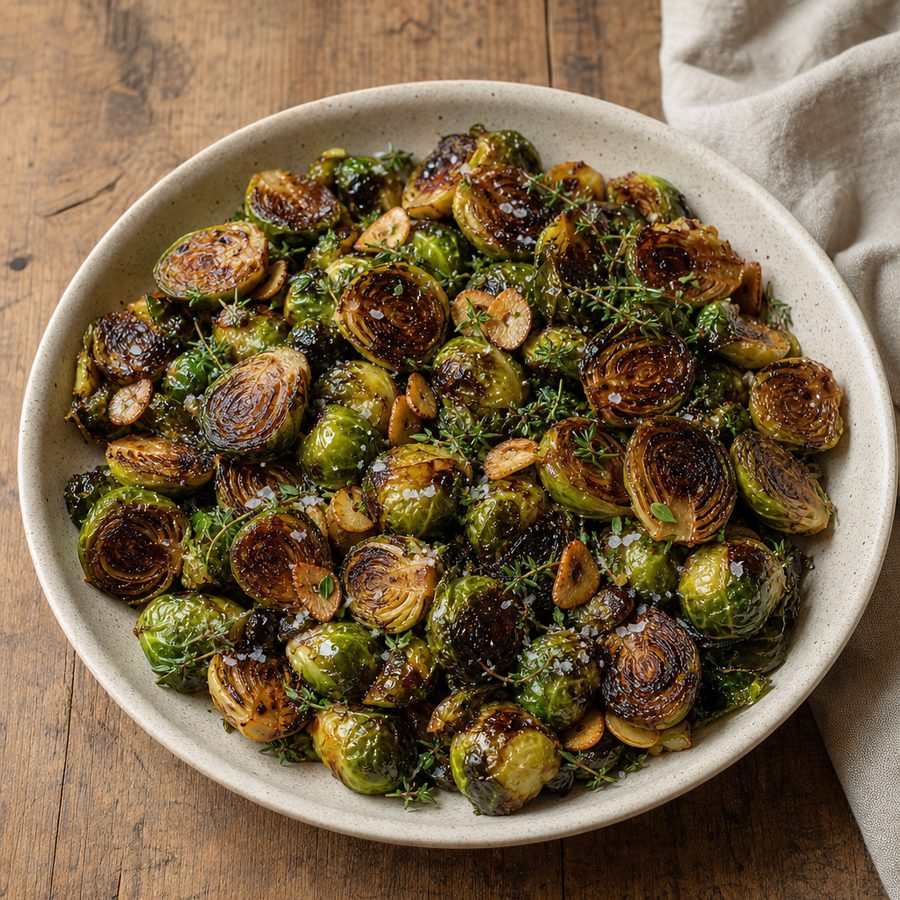
Brussels sprouts roasted cut side down until deeply browned, then tossed in the hot pan with balsamic vinegar, thyme, and a pinch of flaky salt.
Why you'll love Roasted Balsamic Brussels Sprouts
Brussels sprouts are a cold-weather crop, and the ones at the market in January are dense, tight, and sweet. Roasted hot with their cut faces pressed against the pan, they turn crisp and nutty at the edges and tender inside, and a splash of balsamic vinegar over the hot sprouts sizzles into a tangy glaze that clings to every leaf.
Two things make them brown instead of soft. The pan heats with the oven, so the cut faces sear the moment they land, and the sprouts stay put, cut side down, for the first twenty minutes. Browning turns their sharp, sulfurous edge into something sweet and toasty. The balsamic goes on at the very end, after the pan comes out, because its natural grape sugars would scorch if they roasted the whole time.
Put them next to a steak, roast chicken, or pork chops. A small amount of good balsamic seasons the whole pan.
Quick overview: This Roasted Balsamic Brussels Sprouts takes 10 min of hands-on time and about 35 min in all and makes 4 servings, each about 1 cup. You'll need a sheet pan.
Ingredients
- 1 1/2 lb Brussels sprouts, trimmed and halved (quartered if large)
- 3 tbsp olive oil
- 1/2 tsp fine sea salt, plus flaky salt to finish
- 1/2 tsp black pepper
- 3 cloves garlic, thinly sliced
- 2 tbsp balsamic vinegar of Modena
- 2 tsp fresh thyme leaves
Instructions
- Heat the pan with the oven: Set a large rimmed sheet pan on the middle rack and heat the oven to 425°F (220°C) with the pan inside. A hot pan sears the cut faces on contact.
- Season the sprouts: Toss the sprouts with the olive oil, salt, and pepper in a large bowl until every piece is glossy. Oil in every crevice is what browns the loose outer leaves into crisp chips.
- Roast cut side down: Carefully pull out the hot pan and spread the sprouts in one layer, turning each one cut side down. Roast for 20 minutes without stirring, until the cut faces are deep brown and a knife slides into the largest sprout with a little resistance.
- Add the garlic: Scatter the sliced garlic over the sprouts, toss once, and roast for 3 to 5 minutes more, until the garlic turns pale gold. Garlic added at the start would scorch and turn bitter before the sprouts were done.
- Glaze with balsamic: Take the pan out, drizzle the balsamic over the hot sprouts, add the thyme, and toss right on the pan. The heat of the pan reduces the vinegar in seconds into a light glaze.
- Serve: Pile onto a platter, scrape any glaze from the pan over the top, and finish with a pinch of flaky salt. Serve hot.
Storage and leftovers
Refrigerate leftovers in a sealed container for up to 4 days.
Reheat on a sheet pan in a 400°F (200°C) oven for 8 to 10 minutes to bring back the crisp edges. The microwave warms them but softens them. They are also good cold, halved and tossed into a salad.
Variations
- With parmesan: Shave a little parmesan over the hot sprouts right after the balsamic.
- With toasted hazelnuts: Scatter 1/4 cup chopped toasted hazelnuts over the platter for crunch.
- Red onion: Roast a red onion cut into thin wedges alongside the sprouts for extra sweetness.
- Lemon and chili: Use fresh lemon juice in place of the balsamic and add a pinch of red pepper flakes with the garlic.
Notes and tips
- Choose tight, heavy sprouts: Firm, bright green sprouts with tightly closed leaves are the sweetest. Yellow or loose leaves mean they have been stored a while.
- Match the sizes: Halve small sprouts and quarter big ones so every piece finishes at the same time.
- Read the balsamic label: Look for balsamic vinegar of Modena whose label lists cooked grape must and vinegar alone. Thick bottled balsamic glaze is usually sweetened and thickened, so use the plain vinegar.
- Dry them well: Wash the sprouts ahead and dry them thoroughly. Water on the leaves turns to steam and stops the browning.
Nutrition and mindful eating
- Brussels sprouts are cruciferous vegetables with fiber, vitamin C, and vitamin K, and roasting turns their bitterness into a sweet, nutty flavor.
- Olive oil is the real fat on this side, and it is what crisps the outer leaves and carries the garlic and thyme.
- Balsamic vinegar brings tang and a little natural sweetness from grape must, and two tablespoons season the whole pan.
- Served beside a protein, the fiber in the sprouts slows the meal down and keeps your energy even through the evening.
- As you eat, notice the contrast between the crisp, browned leaves and the tangy glaze, and pay attention to whether a vegetable with this much flavor leaves you satisfied without wanting a starch on the plate.
Frequently asked questions
Have a question about this Roasted Balsamic Brussels Sprouts? Start here, with the questions people ask most.
Why do my sprouts come out soggy?
Usually the pan was crowded, the sprouts were wet, or the pan started cold. Use a hot pan, dry sprouts, and space between each one.
Does balsamic vinegar have sugar?
It carries a little natural sugar from the cooked grape must it is made from. Two tablespoons spread across four servings is a seasoning, and it is eaten with fat and fiber.
Can I use frozen Brussels sprouts?
Fresh sprouts brown far better. Frozen ones release water as they thaw, so roast them straight from the freezer on a very hot pan and expect softer results.
Can I make them ahead?
Roast them up to a day ahead, then reheat on a hot sheet pan for 8 to 10 minutes and add the balsamic and thyme right before serving.
You might also like
Start with the free guide
The RESET360 starter guide walks you through the plate, the daily rhythm, and your first week, sent straight to your inbox.