
Roasted Duck Salad with Pears and Hazelnuts
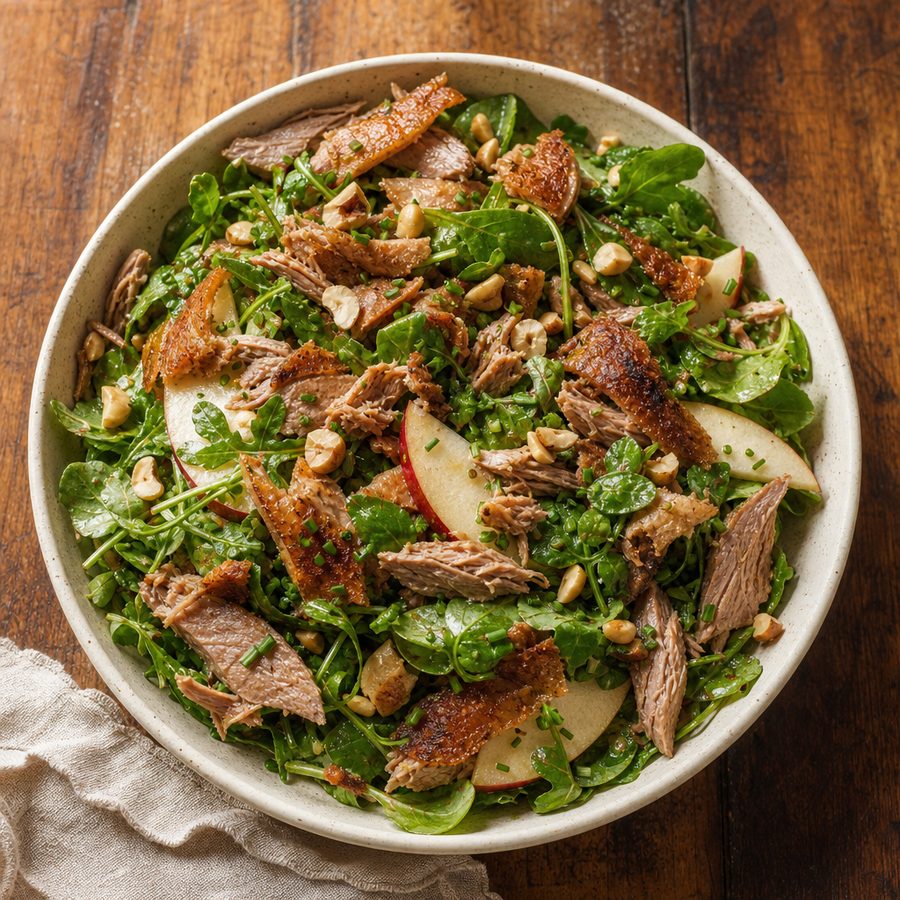
Slow-roasted duck legs with crackling skin, pulled over watercress and arugula with sliced pears, toasted hazelnuts, and a Dijon cider vinaigrette.
Why you'll love Roasted Duck Salad with Pears and Hazelnuts
Duck, pears, and hazelnuts are a French bistro combination for good reason: rich, savory meat, cool sweet fruit, and the toasty crunch of nuts, all held together by a sharp mustard vinaigrette. Fall brings the best pears of the year, firm Bosc and blushing Red Anjou, and they slice into thin, juicy wedges that stand up to the duck. Peppery watercress and arugula cut through the richness so every forkful tastes bright.
Duck legs reward a slow roast. A thick layer of fat sits under the skin, and an hour and a half at a moderate oven melts it out while the meat cooks gently in it, the way confit works without the tub of fat. Pricking the skin gives that fat a way out, and a final blast of high heat turns what is left of the skin into crisp, crackling shards. Pulled from the bone and piled warm on cold greens, the meat is tender and deeply savory.
It is a lunch worth planning for. Roast the legs on Sunday, keep the pulled meat and the vinaigrette in the refrigerator, and the salad comes together in ten minutes through the week. Save the rendered fat in a jar for roasting vegetables.
Quick overview: This Roasted Duck Salad with Pears and Hazelnuts takes 20 min of hands-on time and about 2 hr 10 min in all and makes 4 servings, each 1 duck leg's meat over about 2 cups greens. You'll need a sheet pan and a baking dish.
Ingredients
- 4 duck legs (about 2 1/2 lb)
- 1 tsp fine sea salt, divided
- 1/2 tsp freshly ground black pepper
- 4 sprigs fresh thyme
- 2 cloves garlic, smashed
- 1/3 cup hazelnuts
- 1 small shallot, finely minced
- 1 1/2 tbsp apple cider vinegar
- 2 tsp Dijon mustard Label: mustard seed, vinegar, water, and salt
- 1/2 tsp finely grated orange zest
- 3 tbsp olive oil
- 1 bunch watercress (about 4 oz), thick stems trimmed
- 3 cups baby arugula
- 2 firm-ripe pears, such as Bosc or Red Anjou, cored and thinly sliced, skin on
- 2 tbsp chopped chives
Instructions
- Dry and season the legs: Heat the oven to 350°F (175°C). Pat the duck legs very dry with paper towels. Prick the skin all over with the tip of a sharp knife, holding the blade almost flat so it pierces the skin and fat without reaching the meat. Season both sides with 3/4 teaspoon of the salt and the pepper. The small holes let the fat under the skin melt out as the legs roast, which is what leaves the skin thin and crackling.
- Roast low: Scatter the thyme and garlic in a baking dish just large enough to hold the legs, set the legs on top skin side up, and roast for 1 1/2 hours, or up to 1 3/4 hours for large legs, until the skin is golden and the meat twists easily away from the bone. The moderate heat gives the fat time to render while the meat cooks gently in it. The meat passes the 165°F (74°C) safe point for poultry long before it turns tender, so tenderness is the test here.
- Crisp the skin: Raise the oven to 425°F (220°C) and roast 10 to 15 minutes more, until the skin is deep brown and crisp. Lift the legs onto a board to rest. Pour the clear fat from the baking dish into a heatproof jar and save it for roasting vegetables.
- Toast the hazelnuts: While the oven is hot, spread the hazelnuts on a small sheet pan and toast them for 5 to 7 minutes, until the skins crack and the nuts smell toasty. Rub them in a clean kitchen towel to loosen most of the papery skins, then chop them coarsely. Toasting deepens their flavor, so a small handful seasons the whole salad.
- Whisk the vinaigrette: In a large salad bowl, whisk the shallot, vinegar, Dijon, orange zest, and the remaining 1/4 teaspoon of salt and let it sit for 5 minutes, then whisk in the olive oil until the dressing thickens. A few minutes in vinegar softens the raw bite of the shallot, and the mustard holds the oil and vinegar together.
- Pull the duck: When the legs are cool enough to handle, pull the meat from the bones in bite-size pieces and chop the crisp skin. Discard the bones and any soft fat.
- Toss and serve: Add the watercress, arugula, and pears to the bowl and toss gently until everything glistens. Divide among four plates, pile the warm duck and crisp skin on top, and finish with the hazelnuts and chives. Warm duck over cold, crisp greens is the contrast that makes the salad, so dress the greens right before serving.
Storage and leftovers
Refrigerate the pulled duck and chopped skin in a sealed container for up to 3 days. Warm the meat in a dry skillet over medium heat for 3 to 4 minutes, which crisps the skin again, before piling it on the greens.
Keep the vinaigrette in a sealed jar in the refrigerator and use it within 4 days, since it holds raw shallot. Slice the pears and dress the greens just before eating, because cut pears brown and dressed greens wilt within the hour. The rendered duck fat keeps in a sealed jar in the refrigerator for up to 1 month.
Variations
- Apples: Use a crisp, tart apple with the skin on in place of the pears.
- Walnuts: Use toasted walnuts in place of the hazelnuts.
- Goat cheese: Crumble 2 oz of fresh goat cheese over the top for a creamy, tangy note.
- Bitter leaves: Tear a few radicchio leaves into the greens for a pleasant bitterness against the rich duck.
Notes and tips
- Find duck legs: Duck legs are sold fresh at many butcher counters and frozen at most large grocery stores and Asian markets. Thaw frozen legs overnight in the refrigerator.
- Dry the skin overnight: For the crispest skin, salt the legs the night before and leave them uncovered on a plate in the refrigerator, which dries the surface.
- Save the fat: A spoonful of the rendered duck fat roasts Brussels sprouts, turnips, or radishes to a deep golden brown.
- Choose your pears: A pear that gives slightly near the stem is ready. Rock-hard pears taste starchy and flat, and soft ones turn mushy in the dressing.
Nutrition and mindful eating
- Duck leg brings protein, iron, and B vitamins, and a slow roast renders much of the fat from under the skin, leaving rich, tender meat.
- Pears eaten with the skin are on the RESET360 low-glycemic list, and the duck and hazelnuts beside them bring the protein and fat that keep their sweetness gentle.
- Watercress and arugula are peppery greens from the same family as cabbage, and their bite cuts through the richness of the duck.
- Hazelnuts and olive oil add monounsaturated fat, and toasting the nuts deepens their flavor.
- As you eat, notice the warm, savory duck against the cool, sweet pear, and check in through the afternoon: a salad built on protein and fat should hold you 4 hours or more, steady and satisfied.
Frequently asked questions
Have a question about this Roasted Duck Salad with Pears and Hazelnuts? Start here, with the questions people ask most.
How do I know the duck is done?
Duck is safe at 165°F (74°C), and legs need to cook well past that to turn tender. They are ready when the meat twists easily away from the bone; if it still clings, give them another 15 minutes.
Can I roast the duck ahead?
Yes. Roast the legs up to 3 days ahead, pull the meat, and refrigerate it. Warm it in a dry skillet to crisp the skin again before serving.
Can I use duck breast?
Duck breast cooks quickly and suits a different method. This salad is built on the slow-roasted leg, whose meat pulls into tender shreds.
What else can I do with the duck fat?
Roast vegetables in it, sear pork chops in it, or warm a spoonful with garlic to dress cooked greens.
You might also like
Start with the free guide
The RESET360 starter guide walks you through the plate, the daily rhythm, and your first week, sent straight to your inbox.