
Sautéed Summer Squash with Basil
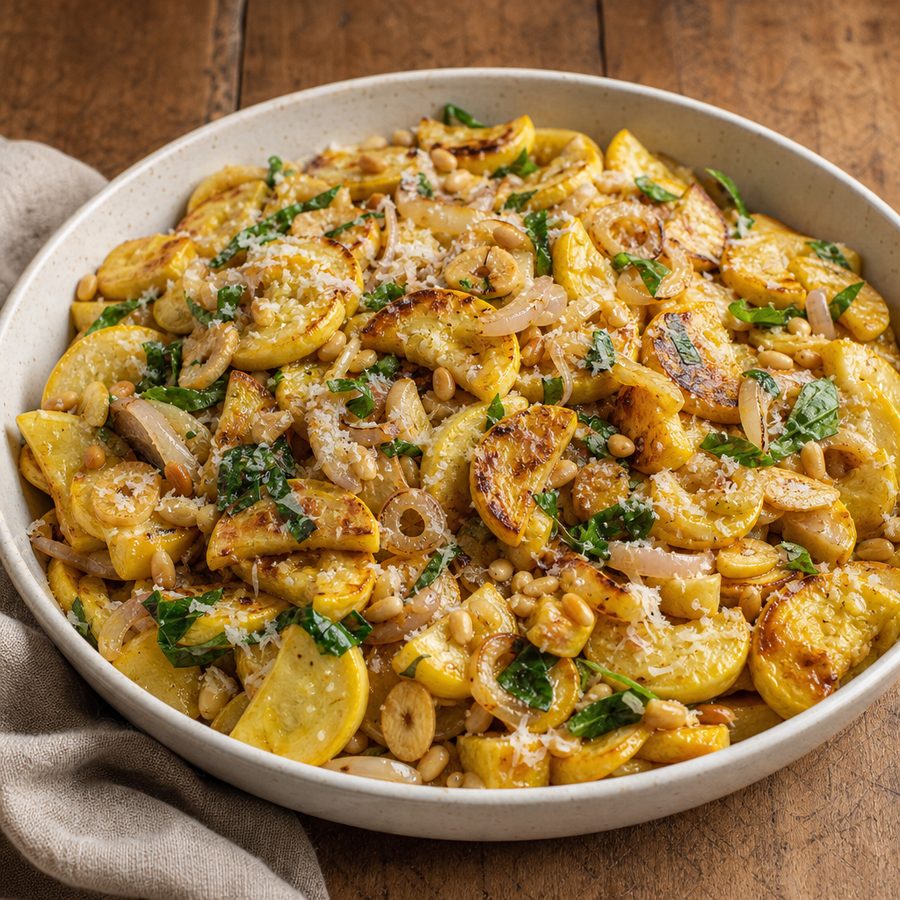
Yellow summer squash seared golden in olive oil, finished with garlic, butter, lemon, and torn basil, and topped with parmesan and toasted pine nuts.
Why you'll love Sautéed Summer Squash with Basil
By August, summer squash piles up at every farm stand, and this is the quickest way to make it taste special. Yellow squash sears in olive oil until the cut faces turn golden, then gets a little butter, garlic, lemon, a handful of torn basil, parmesan, and toasted pine nuts: the flavors of pesto, built right in the pan.
The method comes down to heat, space, and when the salt goes in. Squash holds a lot of water, and the moment it crowds a pan or meets salt, that water comes out and the squash stews. A hot pan, two batches, and salt at the very end let the outside caramelize while the inside turns just tender. The garlic goes in after the sear so it never scorches, and the basil goes in off the heat, torn by hand, so it stays green and fragrant.
It takes fifteen minutes and goes beside nearly any protein: seared salmon, roast chicken, pork chops, steak, or a couple of eggs.
Quick overview: This Sautéed Summer Squash with Basil takes 10 min of hands-on time and about 25 min in all and makes 4 servings, each about 1 cup. You'll need a skillet.
Ingredients
- 2 tbsp pine nuts
- 2 tbsp olive oil, divided
- 1 1/2 lb yellow summer squash (about 4 medium), halved lengthwise and cut into 1/2-inch half-moons
- 1 tbsp butter
- 1 shallot, thinly sliced
- 2 cloves garlic, thinly sliced
- a pinch of red pepper flakes
- 1/2 tsp finely grated lemon zest
- 2 tsp fresh lemon juice
- 1/2 tsp fine sea salt
- freshly ground black pepper
- 1/2 cup basil leaves
- 1/4 cup finely grated parmesan
Instructions
- Toast the pine nuts: Toast the pine nuts in a large (12-inch) dry skillet over medium heat, shaking the pan, for 3 to 4 minutes, until golden in spots. Tip them onto a plate right away, since pine nuts go from golden to burnt in seconds.
- Sear the first batch: Raise the heat to medium-high and add 1 tablespoon of the olive oil. When it shimmers, add half the squash in a single layer, cut sides down, and leave it for 3 minutes, until golden underneath. Toss and cook 1 to 2 minutes more, until the edges are just tender and the centers still have a little bite. Move it to a bowl.
- Sear the second batch: Add the remaining tablespoon of oil and repeat with the rest of the squash. Working in two batches keeps the pan hot enough to brown; a full pan drops the heat and the squash simmers in its own juice.
- Add the aromatics: Return all the squash to the skillet, lower the heat to medium, and push it to the sides. Add the butter, shallot, garlic, and red pepper flakes to the center and cook for about 1 minute, stirring, until the garlic smells sweet and just begins to color, then toss everything together. Adding the garlic after the sear keeps it golden and sweet.
- Finish off the heat: Take the pan off the heat. Add the lemon zest and juice, the salt, and some pepper and toss. Tear in the basil and toss once more so it wilts slightly in the warmth. Salting now, after the browning, seasons the squash while keeping its water inside.
- Serve: Pile the squash onto a platter and scatter the parmesan and pine nuts over the top. Serve warm or at room temperature.
Storage and leftovers
Refrigerate leftovers in a sealed container for up to 3 days. The squash softens as it sits, so warm it for a minute or two in a hot pan, or fold it cold into an omelet or a salad.
Keep the pine nuts separate if you are making it ahead so they stay crunchy. Thawed squash turns watery, so this side stays out of the freezer.
Variations
- Zucchini or pattypan: Use zucchini, pattypan, or a mix of summer squash, cut to the same size.
- Thyme and goat cheese: Add 1 teaspoon of fresh thyme leaves with the garlic in place of the basil, and crumble soft goat cheese over the top in place of the parmesan.
- With cherry tomatoes: Add a cup of halved cherry tomatoes with the aromatics and cook just until they slump.
- Seeds for nuts: Use toasted sunflower seeds in place of the pine nuts.
Notes and tips
- Cut it thick: Half-moons about 1/2 inch thick have enough body to brown on the outside before the inside turns soft.
- Choose small squash: Squash 6 to 8 inches long with glossy, unblemished skin have small seeds and firm flesh. Halve larger ones and scoop out the seeds, which hold most of the water.
- Dry the squash: Pat the cut squash dry before it goes in the pan, since surface water turns to steam.
- Tear the basil: Torn basil bruises less along its edges than chopped basil, so it stays green longer.
Nutrition and mindful eating
- Summer squash is mostly water, with fiber, vitamin C, and potassium, and its yellow skin carries lutein, a carotenoid that your body absorbs better with the olive oil and butter in the pan.
- Olive oil and butter are the real fat on this side, and fat carries the garlic, lemon, and basil through every bite.
- Pine nuts and parmesan bring crunch, a little protein, and savory depth, so a vegetable side tastes complete.
- Served beside a protein, a fiber-rich vegetable and fat slow how quickly the meal leaves your stomach, which keeps your energy steady.
- As you eat, notice the caramelized edges against the bright lemon and basil, and check in later: served with a protein, this plate should carry you at least 3 to 4 hours with no pull toward bread or something sweet.
Frequently asked questions
Have a question about this Sautéed Summer Squash with Basil? Start here, with the questions people ask most.
How is yellow squash different from zucchini?
They are close cousins in the same summer squash family. Yellow squash has thinner skin and slightly sweeter, more tender flesh, so it cooks a little faster.
Can I make it ahead?
It is best right out of the pan. To get ahead, cut the squash up to a day early and keep it in a towel-lined container in the refrigerator.
Why salt at the end?
Salt pulls water out of squash within minutes. Added at the start, it floods the pan and the squash steams; added at the end, it seasons the browned outside.
What can I serve it with?
Seared salmon, roast chicken, pork chops, steak, or a couple of fried eggs.
You might also like
Start with the free guide
The RESET360 starter guide walks you through the plate, the daily rhythm, and your first week, sent straight to your inbox.