
Sautéed Swiss Chard with Garlic and Lemon
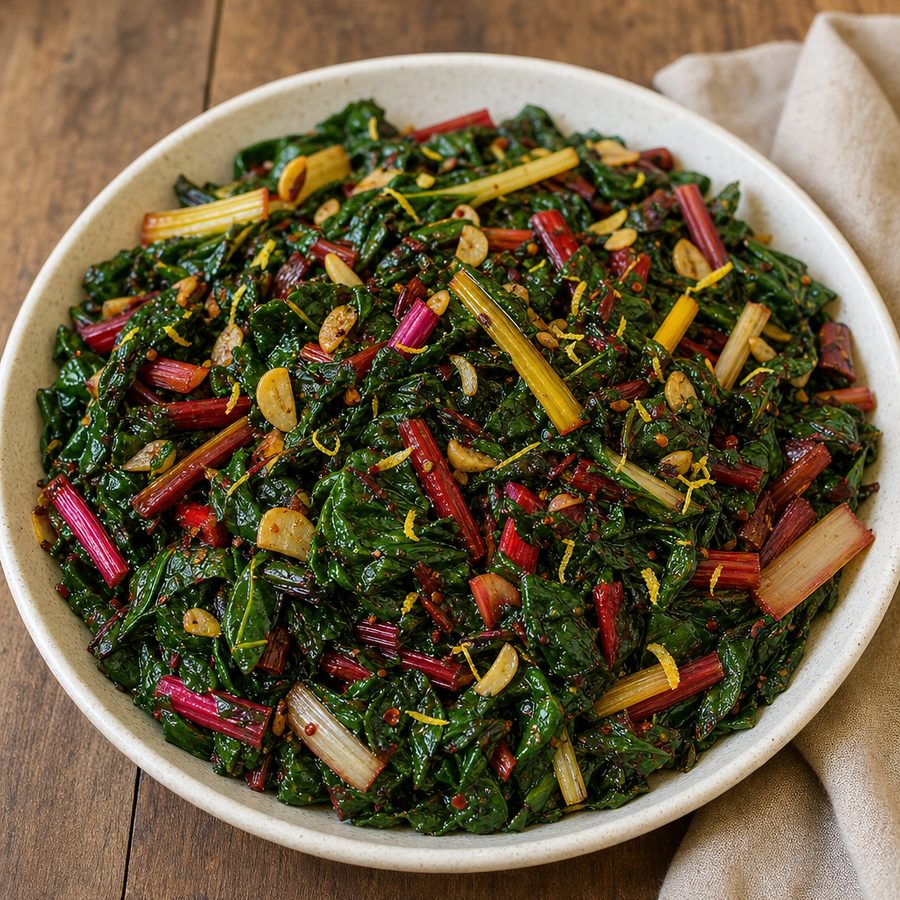
Rainbow chard cooked stems first, then leaves, in olive oil with golden slivered garlic and chili, finished with lemon zest and juice off the heat.
Why you'll love Sautéed Swiss Chard with Garlic and Lemon
Swiss chard is at its peak in September, with big, glossy leaves and stems in red, yellow, and white. It is two vegetables in one bunch: tender leaves that wilt in a minute and crunchy stems that need closer to five. Cooking them separately in the same pan is the whole technique, and it means the stems turn sweet and tender while the leaves stay silky and bright.
The garlic is sliced thin and cooked gently in the olive oil until it turns pale gold, which mellows its bite and flavors the oil that coats every leaf. Lemon goes in at the very end, off the heat. Acid dulls the green of cooked leaves if it simmers with them, so adding it last keeps the chard vivid, and its brightness balances chard's earthy, mineral edge.
It takes 15 minutes from bunch to bowl and goes beside nearly anything: roast chicken, a seared steak, salmon, or a pork chop.
Quick overview: This Sautéed Swiss Chard with Garlic and Lemon takes 10 min of hands-on time and about 20 min in all and makes 4 servings, each about 3/4 cup. You'll need a skillet.
Ingredients
- 2 large bunches Swiss chard, rainbow if you can find it (about 1 1/2 lb)
- 3 tbsp extra-virgin olive oil, divided
- 5 cloves garlic, thinly sliced
- a pinch of red pepper flakes
- 1/2 tsp fine sea salt
- 2 tbsp water
- 1 tsp finely grated lemon zest
- 1 tbsp fresh lemon juice
- freshly ground black pepper
Instructions
- Separate stems and leaves: Wash the chard well and shake off most of the water; a little left on the leaves helps them steam. Cut the stems away from the leaves. Slice the stems 1/4 inch thick and tear or cut the leaves into 2-inch pieces, keeping the two in separate piles.
- Warm the garlic: Put 2 tablespoons of the olive oil, the garlic, and the red pepper flakes in a large, deep skillet and set it over medium-low heat. Cook for 3 to 4 minutes, stirring now and then, until the garlic is soft and pale gold. Starting the garlic in cool oil lets it soften and sweeten before it colors. Lift it out with a slotted spoon onto a plate, so it stays golden while the chard cooks.
- Cook the stems: Raise the heat to medium, add the sliced stems and a pinch of the salt to the garlic oil, and cook for 4 to 5 minutes, stirring, until they are tender with a little crunch left. The stems are dense and fibrous, so they get a head start.
- Wilt the leaves: Add the leaves by the handful, turning them with tongs as each batch collapses, then add the water and the rest of the salt. Cover and cook for 1 to 2 minutes, then uncover and toss until the leaves are fully wilted and most of the liquid has cooked off. Chard releases a lot of water, and cooking it off keeps the dish from pooling on the plate.
- Finish with lemon: Take the pan off the heat. Return the garlic, add the lemon zest, lemon juice, the remaining tablespoon of olive oil, and a few grinds of pepper, and toss. The raw olive oil added at the end gives the chard a fresh, fruity finish. Taste and add salt or lemon if it needs it, and serve warm.
Storage and leftovers
Refrigerate leftovers in a sealed container for up to 3 days. Reheat briefly in a skillet over medium heat, or eat at room temperature with an extra squeeze of lemon.
Uncooked chard keeps for about 5 days wrapped loosely in a damp towel in a bag in the refrigerator crisper. Cooked chard turns watery when frozen, so it is best eaten from the refrigerator.
Variations
- With parmesan: Shave a little parmesan over the top just before serving.
- With anchovy: Melt 2 anchovy fillets into the oil after you lift out the garlic, before the stems go in, for a deep savory note.
- Toasted pine nuts: Scatter 2 tablespoons of toasted pine nuts over the finished chard for crunch.
- Other greens: Kale, collards, or mustard greens work the same way. Strip out tough ribs and add 3 to 4 minutes to the leaves.
Notes and tips
- Look for firm stems: Choose bunches with crisp, unbroken stems and leaves that stand up. Limp chard has been sitting.
- Wash it in a sink of water: Swish the leaves in a sink full of cold water and lift them out, so grit sinks to the bottom and stays there.
- Use a big pan: Two bunches of raw chard fill a skillet to the brim and cook down to about 3 cups. A wide, deep skillet holds it all as it wilts.
- Slice the garlic evenly: Thin, even slices cook at the same rate and turn golden together, with no dark, bitter edges.
Nutrition and mindful eating
- Swiss chard brings vitamin K, vitamin A, magnesium, and potassium, and its leaves and stems give two textures in one vegetable.
- Chard has an earthy, mineral flavor, and the lemon at the end brightens it so the greens taste fresh.
- Olive oil is the real fat in this side. It carries the garlic and chili through every leaf and makes the greens satisfying beside a protein.
- A full serving of greens adds fiber and volume to a plate, which slows how quickly the meal leaves your stomach and keeps your energy even.
- As you eat, notice the soft leaves against the crisp-tender stems and the brightness of the lemon, and pay attention to how a large spoonful of greens beside your protein leaves you comfortably full.
Frequently asked questions
Have a question about this Sautéed Swiss Chard with Garlic and Lemon? Start here, with the questions people ask most.
Can I eat chard stems?
Yes. They are crunchy and mildly sweet, a little like celery, and they only need a few minutes longer than the leaves.
Why does my chard taste bitter?
Older, larger leaves can be sharper. Cooking the garlic gently, salting well, and finishing with lemon all balance it. Young chard is the mildest.
What is the difference between rainbow and regular chard?
Only the color of the stems. Rainbow chard is a mix of red, yellow, pink, and white stems, and they all cook and taste much the same.
Can I make it ahead?
It is best fresh, but you can wash and cut the stems and leaves up to 2 days ahead and keep them separately in the refrigerator.
You might also like
Start with the free guide
The RESET360 starter guide walks you through the plate, the daily rhythm, and your first week, sent straight to your inbox.