
Shallot Vinaigrette
Finely minced shallot mellowed in red wine vinegar, then whisked with Dijon and olive oil into a classic, sharp French vinaigrette.
Why you'll love Shallot Vinaigrette
This is the vinaigrette from the Raw Asparagus Salad with Shallot Vinaigrette, and it is the one worth knowing by heart. The proportions are the classic French ones, three parts olive oil to one part vinegar, with a spoonful of Dijon to hold them together and a minced shallot for a sweet, savory sharpness.
The shallot sits in the vinegar with the salt for 10 minutes before anything else goes in. The acid softens the shallot's raw heat and brings out its sweetness, and the salt dissolves completely in the vinegar, where it seasons evenly. The mustard goes in next and the oil last, in a slow stream, so the mustard can coat each droplet and the vinaigrette thickens slightly and clings.
It is bright enough for raw vegetables shaved thin, like asparagus, fennel, or zucchini, and gentle enough for butter lettuce. Spoon it over warm green beans, roasted leeks, or a piece of seared fish.
Quick overview: This Shallot Vinaigrette comes together in 15 min and makes 6 servings, each 2 tablespoons (makes about 3/4 cup).
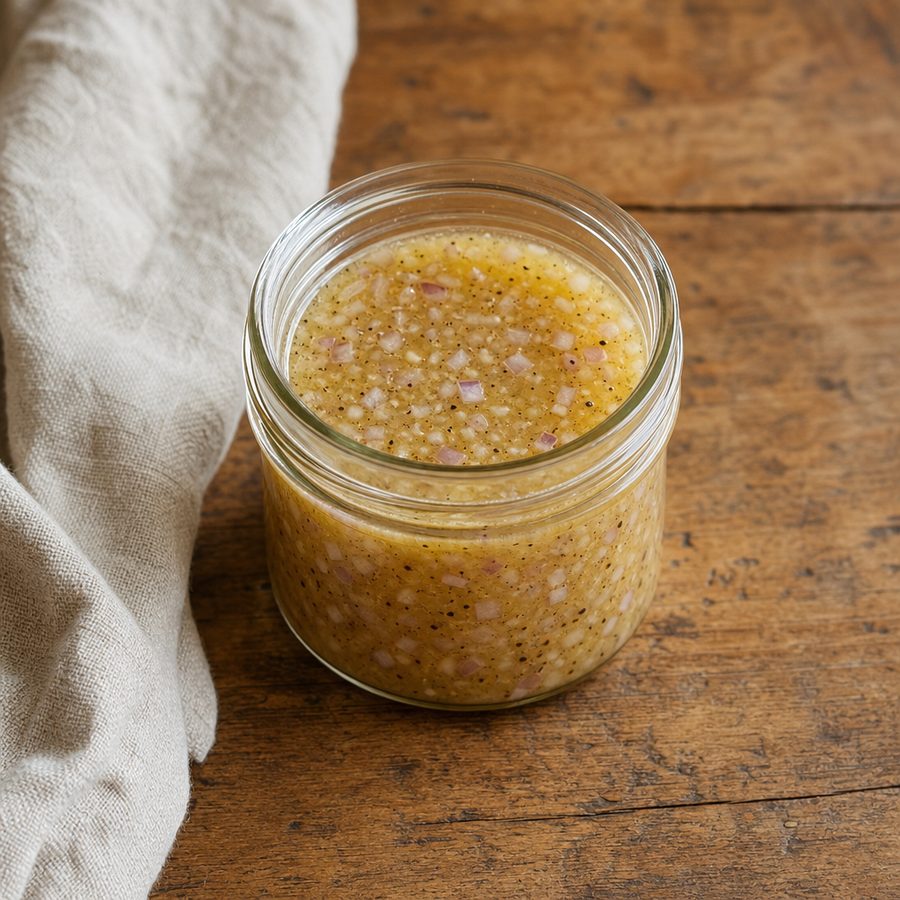
Ingredients
- 1 medium shallot, finely minced (about 1/4 cup)
- 2 tbsp red wine vinegar
- 1/2 tsp fine sea salt
- 2 tsp Dijon mustard Label: mustard seed, vinegar, water, and salt
- 6 tbsp olive oil
- freshly ground black pepper, about 1/4 tsp
Instructions
- Mince the shallot: Peel the shallot and mince it very fine, into pieces about the size of a peppercorn. Small pieces soften evenly in the vinegar and spread through the vinaigrette.
- Soak in the vinegar: Stir the shallot, vinegar, and salt together in a small bowl and let it sit for 10 minutes. The vinegar mellows the shallot, and the salt dissolves completely.
- Add the mustard: Whisk the Dijon into the shallot and vinegar until smooth. The mustard is what holds the oil and vinegar together, so it needs to be fully mixed in before the oil arrives.
- Whisk in the oil: Whisk constantly while you pour in the olive oil in a thin, slow stream, until the vinaigrette turns opaque and thickens slightly. Or seal everything in a jar and shake it hard for 30 seconds.
- Season and taste: Season with pepper, then taste it on a leaf or a piece of vegetable, which tells you more than a spoonful alone. Add a few drops of vinegar if it tastes flat, or a little more oil if it tastes sharp.
Storage and leftovers
Keep the vinaigrette in a sealed jar in the refrigerator for up to 4 days. The shallot keeps softening, and the vinaigrette tastes a little milder each day.
Olive oil firms up in the cold. Let the jar stand at room temperature for 10 to 15 minutes, then shake it hard to bring the vinaigrette back together.
Variations
- Lemon: Use fresh lemon juice in place of the vinegar and add 1/2 teaspoon finely grated lemon zest.
- Herbed: Stir in 1 tablespoon chopped chives or parsley, or 1 teaspoon fresh thyme leaves, just before serving.
- Garlic: Grate half a small clove of garlic into the vinegar with the shallot.
- Whole-grain mustard: Use whole-grain mustard in place of the Dijon for a milder vinaigrette with whole seeds through it.
Notes and tips
- On the asparagus salad: Half the batch, about 1/3 cup, dresses one Raw Asparagus Salad with Shallot Vinaigrette for four.
- Make it in the salad bowl: Whisk the vinaigrette in the bottom of the salad bowl, pile the greens on top, and toss at the table. The leaves stay crisp until the last second.
- Use the ratio as a guide: Three to one is a starting point. Sturdy raw vegetables can take a little more vinegar, and tender lettuces like a little more oil.
- Buy firm shallots: Choose shallots that feel firm and heavy, with dry, papery skins.
Nutrition and mindful eating
- Shallots belong to the onion family, and their sharp sulfur compounds mellow in vinegar into a sweet, savory flavor that seasons a whole salad.
- Dijon mustard is ground mustard seed, and a spoonful brings heat and holds the oil and vinegar together so the dressing coats evenly.
- Olive oil is the real fat in the vinaigrette, and it helps your body absorb fat-soluble vitamins, like the vitamin K in asparagus and greens.
- As you eat, notice how the sharp vinaigrette makes raw or lightly cooked vegetables taste bright and clean, and whether a salad dressed this way beside your protein leaves you comfortably full for hours.
Frequently asked questions
Have a question about this Shallot Vinaigrette? Start here, with the questions people ask most.
Why soak the shallot in vinegar first?
Ten minutes in vinegar and salt softens the shallot's raw heat and brings out its sweetness, so it tastes mellow in the finished vinaigrette.
Can I use a different vinegar?
Yes. Sherry vinegar makes it rounder and nuttier, and apple cider vinegar makes it fruitier. Use the same amount.
Why does my vinaigrette separate?
Oil and vinegar drift apart over time, even with mustard. Shake or whisk it right before using. Another teaspoon of Dijon helps it hold longer.
Can I use onion in place of shallot?
Yes. Use about 2 tablespoons very finely minced red onion, which is sharper than shallot, and let it soak the full 10 minutes.
You might also like
Start with the free guide
The RESET360 starter guide walks you through the plate, the daily rhythm, and your first week, sent straight to your inbox.