
Goat Birria
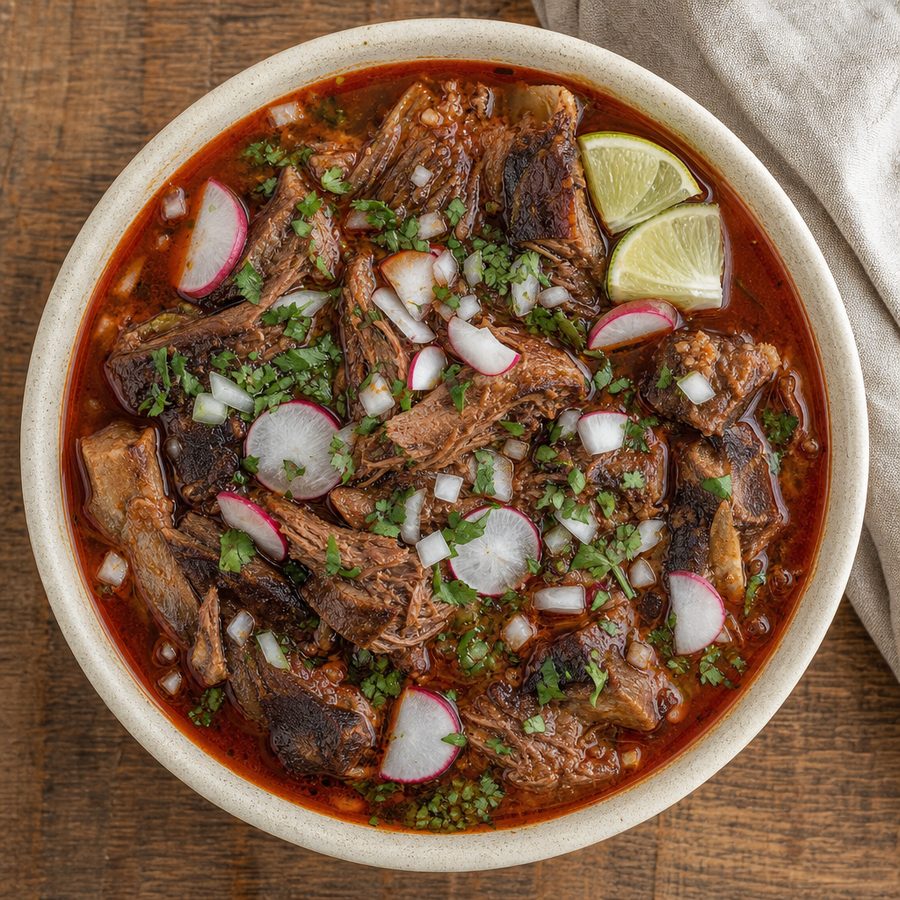
Goat slow-cooked in a guajillo and ancho chile broth until it falls from the bone, served in its deep red consommé with onion, cilantro, and lime.
Why you'll love Goat Birria
Birria comes from Jalisco, in western Mexico, where it is traditionally made with goat. The meat is cooked for hours in a sauce of dried chiles, vinegar, garlic, and warm spices until it falls from the bone, and what is left in the pot becomes the second half of the dish: a brick-red consommé that tastes of toasted chile, clove, and meat, ladled over every bowl. Goat suits the long cook. It is a fine-grained red meat with very little marbling and plenty of connective tissue, and a day in liquid melts that tissue into gelatin, which gives the consommé the body you feel on your lips.
The chiles carry the flavor, so they get the most care. Guajillos bring a bright, tart red, and anchos bring a deep, dried-fruit sweetness. A few seconds in a dry skillet wakes up their oils, a soak in hot broth softens their leathery skins, and after blending, the sauce goes through a sieve, which holds back the bits of skin and leaves a silky consommé. Vinegar in the sauce keeps that rich broth tasting bright after eight hours of cooking.
In Jalisco, birria is traditionally cooked in a sealed pot or an earth oven, and a slow cooker gives the same low, steady, moist heat with nothing to watch. Serve it in bowls with plenty of consommé, chopped onion, cilantro, radish, and lime, or pile the meat into butter lettuce cups and keep a small cup of consommé beside each plate for dipping and sipping.
Quick overview: This Goat Birria takes 40 min of hands-on time and about 9 hr in all and makes 6 servings, each about 1 1/4 cups meat and consommé. You'll need a slow cooker, a skillet, a blender, and a fine sieve.
Ingredients
- 4 lb bone-in goat shoulder or leg, cut into 3-inch pieces (or 2 1/2 lb boneless goat)
- 1 1/2 tsp fine sea salt, plus more to taste
- 6 dried guajillo chiles Label: dried guajillo chiles, and nothing else
- 3 dried ancho chiles
- 3 cups beef bone broth, divided Label: beef bones, water, vegetables, herbs, and salt, with no sugar, natural flavors, or oil
- 1 tbsp avocado oil
- 1 medium white onion, roughly chopped
- 8 cloves garlic, peeled
- 1 cup crushed tomatoes Label: tomatoes, and salt if any
- 2 tbsp apple cider vinegar
- 1 tsp ground cumin
- 2 tsp dried oregano, Mexican if you can find it
- 1/2 tsp black peppercorns
- 1/4 tsp ground cloves
- 1 cinnamon stick (about 3 inches)
- 3 bay leaves
- 1/2 small white onion, finely chopped, to serve
- 1/2 cup chopped cilantro, to serve
- 6 radishes, thinly sliced, to serve
- 2 limes, cut into wedges, to serve
- 1 head butter lettuce, leaves separated, for lettuce cups (optional)
Instructions
- Salt the goat: Pat the goat dry and rub it all over with the salt. If you have time, do this the night before and refrigerate it uncovered on a plate. Salt given a few hours draws moisture out, dissolves into it, and is pulled back into the meat, so it seasons the goat through instead of only the surface.
- Toast the chiles: Pull the stems off the guajillos and anchos, split them open, and shake out the seeds. Heat a large skillet over medium heat and press the chiles flat against it, a few at a time, for 15 to 20 seconds a side, until they turn pliable, smell toasty, and darken slightly. Pull them the moment you smell them, because a scorched chile turns the whole consommé bitter.
- Soak the chiles: Put the toasted chiles in a heatproof bowl. Pour 1 cup of the broth into the skillet, bring it to a simmer, and pour it over the chiles. Set a small plate on top to keep them under and let them soak for 20 minutes, until soft and floppy. The hot broth rehydrates the skins and carries their flavor into the liquid you will blend.
- Sear the goat: Wipe out the skillet, add the avocado oil, and heat it over medium-high until it shimmers. Sear the goat in batches, without crowding, for 3 to 4 minutes a side, until deep brown, and move each batch to the slow cooker. Browning builds the roasted, savory flavor that the moist heat of a slow cooker never develops on its own.
- Soften the onion and garlic: Lower the heat to medium, add the chopped medium onion and the garlic cloves to the fat left in the skillet, and cook for 4 to 5 minutes, stirring and scraping up the browned bits, until the onion is soft and the garlic is golden in spots.
- Blend the adobo: Scrape the onion and garlic into a blender. Add the chiles with all of their soaking broth, the crushed tomatoes, vinegar, cumin, oregano, peppercorns, and cloves, and blend on high for a full minute, until completely smooth and brick red.
- Strain over the goat: Set a fine sieve over the slow cooker and pour the adobo through it, pressing with the back of a spoon until only a dry paste of chile skin is left. Discard the paste. Rinse the blender with the remaining 2 cups of broth and pour that over the goat too, then tuck in the cinnamon stick and bay leaves. The slow cooker should be half to two-thirds full, which is the range where it heats evenly and the meat comes up to temperature quickly.
- Slow-cook: Cover the slow cooker and cook on low for 8 to 9 hours or on high for 5 to 6 hours, without lifting the lid, until the meat pulls away from the bone with a fork. The goat passes 145°F (63°C), the safe temperature for goat, early in the cook; it needs to sit near 200°F (93°C) for hours before its collagen melts and it turns tender.
- Skim and shred: Lift the goat onto a cutting board and pull out the cinnamon and bay leaves. Tilt the slow cooker and spoon off most of the red fat floating on the consommé, leaving a thin layer, since that fat carries much of the chile flavor and color. Pull the meat into large shreds, discarding the bones, and return it to the consommé. Taste the consommé and add salt a pinch at a time until it tastes full and round.
- Serve: Ladle the meat and plenty of consommé into bowls and top with the finely chopped onion, cilantro, and radishes, with lime wedges to squeeze over. For lettuce cups, spoon the meat into butter lettuce leaves, top them the same way, and serve a small cup of hot consommé on the side for dipping and sipping.
Storage and leftovers
Divide the meat and consommé into shallow containers so they cool quickly, and refrigerate within 2 hours of cooking, for up to 4 days. The fat rises and sets on top as it chills; lift off as much as you like before reheating. Keep the onion, cilantro, radish, and lime separate and prepare them fresh when you serve.
Freeze the meat in its consommé for up to 3 months. Thaw it overnight in the refrigerator and reheat it in a saucepan over medium heat until it is steaming hot all the way through, 165°F (74°C).
Variations
- Lamb birria: Use bone-in lamb shoulder in place of the goat. It cooks in the same time and gives a richer, slightly fattier consommé, so skim a little more before serving.
- Beef birria: Use 3 lb of bone-in beef short ribs or 2 1/2 lb of chuck roast cut into large chunks, cooking on low for 8 hours.
- With more heat: Blend 1/4 to 1/2 teaspoon of cayenne into the adobo. Guajillos and anchos are mild, so this is where the heat comes from.
- Birria bowls: Spoon the meat and a little consommé over sautéed cabbage or cauliflower rice, and top with sliced avocado along with the onion and cilantro.
Notes and tips
- Thaw the goat first: Put the meat in the slow cooker fully thawed. Frozen meat takes too long to warm through on low heat and spends hours between 40°F and 140°F (4°C and 60°C), where bacteria multiply fastest.
- Buy whole dried chiles that bend: Good dried chiles are supple and leathery, with a deep color and no cracks. Brittle chiles that snap are old and taste dusty. Their label should read only the chile.
- Use Mexican oregano if you can: Mexican oregano comes from a different plant than the Mediterranean kind, and it tastes more citrusy and grassy, which suits the chiles. It is sold in Mexican markets and the international aisle of many grocery stores.
- Skim it cold for the clearest consommé: If you are cooking a day ahead, chill the consommé overnight. The fat sets into a disk you can lift off in one piece, and you can stir back as much as you want.
- Keep the lid on: Each time the lid comes off, a slow cooker loses heat it takes a long time to win back. Check the goat at the end of the cook window.
Nutrition and mindful eating
- Goat brings complete protein along with heme iron, zinc, and vitamin B12. Heme iron, the form found in meat, is absorbed more readily than the iron in plants, which makes a bowl of birria a dependable source of it.
- The consommé carries the gelatin that hours of slow cooking pull from the goat's bones and connective tissue. Gelatin is protein, and it is what gives the broth its body and makes a bowl of it feel like a meal.
- Dried anchos and guajillos are rich in carotenoids, the red and orange pigments behind the consommé's color, some of which your body turns into vitamin A. Carotenoids dissolve in fat, so the thin layer of red fat left on the broth helps you absorb them.
- The raw onion, radish, cilantro, and lettuce bring crunch, fiber, and a cool contrast to the soft meat, so the bowl holds protein, a real fat, and non-starchy vegetables together.
- As you eat, notice how the meat and the warm consommé together fill you, and try the meat first, then the vegetables. Check in through the afternoon: a bowl of birria should carry you at least 3 to 4 hours with steady energy and no pull toward something sweet.
Frequently asked questions
Have a question about this Goat Birria? Start here, with the questions people ask most.
Where do I buy goat?
Halal butchers and Mexican, Caribbean, Indian, and African markets usually carry it, fresh or frozen, and many will cut a shoulder or leg into pieces for you. Ask for bone-in pieces from the shoulder or leg, which have the connective tissue that makes the consommé rich.
What if I can't find guajillo chiles?
Use 2 more anchos in their place. The consommé turns darker and sweeter, with more of a raisin flavor and less of the guajillo's bright tartness, and it is still deeply flavored birria.
How spicy is birria?
Gently. Guajillos and anchos are mild chiles, prized for color and fruity depth more than heat, so the consommé tastes warm and rich. For more heat, blend 1/4 to 1/2 teaspoon of cayenne into the adobo.
Can I make it ahead?
Yes, and it improves overnight. Cook it fully, chill the meat in its consommé, lift off the set fat, and reheat it until steaming hot. Prepare the onion, cilantro, radish, and lime just before serving.
You might also like
Start with the free guide
The RESET360 starter guide walks you through the plate, the daily rhythm, and your first week, sent straight to your inbox.