
Harissa
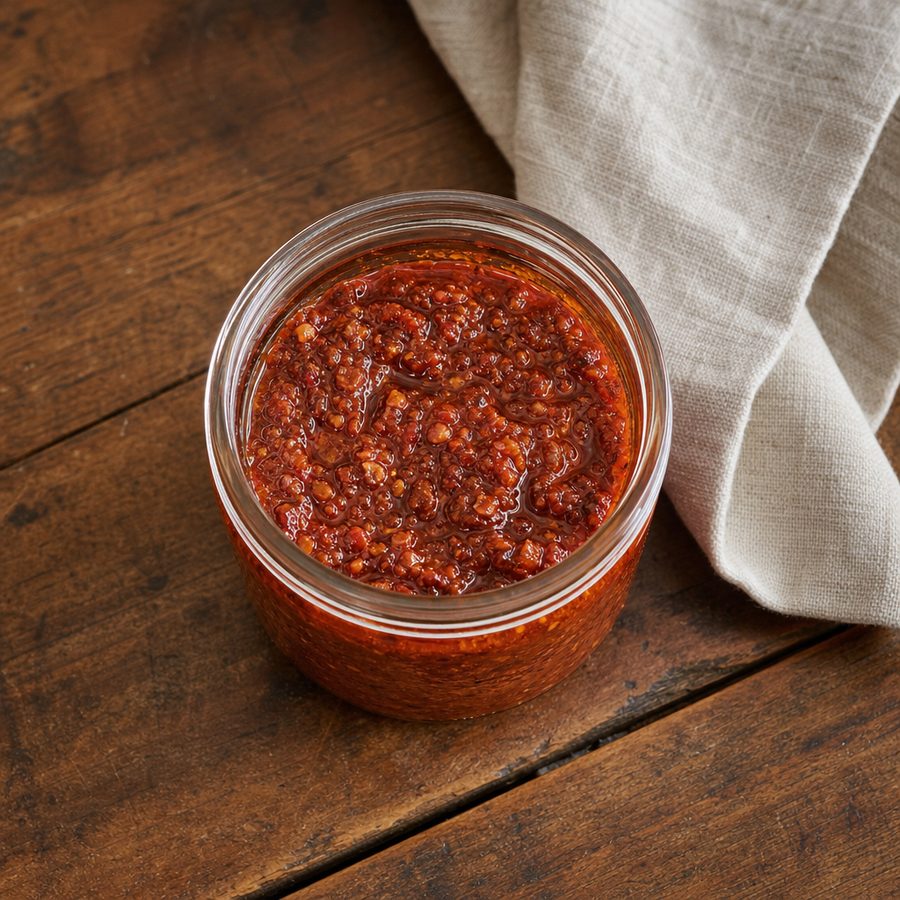
A bright red, garlicky chili paste of paprika, red pepper flakes, cumin, coriander, tomato paste, lemon, and olive oil, stirred together in ten minutes.
Why you'll love Harissa
Harissa is the chili paste of Tunisia, deep red, garlicky, and warm with cumin and coriander. This is the harissa from the Harissa Salmon with Cauliflower, doubled: half a batch goes on the salmon, and the other half is the spice base for the Lamb and Harissa Soup. Jarred harissa often carries sugar or seed oils, and this one is spices, garlic, tomato paste, lemon, olive oil, and salt.
Paprika brings the deep red color and sweet pepper flavor that dried chiles give a traditional harissa, and red pepper flakes bring the heat. Stirring the olive oil into the tomato paste a little at a time is what turns it into a thick, glossy paste that clings to fish and vegetables, and a short rest lets the ground spices soak up the oil so the flavor comes together.
A spoonful seasons eggs, chicken thighs, roasted cauliflower, or a bowl of whole-milk Greek yogurt for a dip.
Quick overview: This Harissa comes together in 15 min and makes 16 servings, each 1 tablespoon.
Ingredients
- 4 tsp sweet paprika
- 2 tsp red pepper flakes
- 2 tsp ground cumin
- 2 tsp ground coriander
- 1 tsp fine sea salt
- 6 cloves garlic, finely grated
- 1/4 cup tomato paste Label: tomatoes, and salt if any
- 2 tbsp fresh lemon juice
- 6 tbsp olive oil
Instructions
- Grate the garlic: Grate the garlic on a fine grater or rasp into a medium bowl. A fine paste disappears into the harissa, while chopped garlic leaves sharp raw pieces.
- Mix the spices: Add the paprika, red pepper flakes, cumin, coriander, and salt and stir them into the garlic.
- Build the paste: Stir in the tomato paste and lemon juice until smooth. Then stir in the olive oil about a tablespoon at a time, working each addition in before adding the next, until the harissa is thick and glossy. Adding the oil slowly lets the paste take it in rather than leaving a pool of oil on top.
- Let it rest: Let the harissa sit for 10 minutes. The ground spices soak up the oil and lemon, the pepper flakes soften, and the flavor turns rounder and deeper.
- Divide the batch: Spoon half into a small jar for this week and refrigerate it. Spoon the other half into an ice cube tray in tablespoon portions and freeze it, then move the frozen cubes to a freezer bag.
- Use it in the salmon or the soup: For Harissa Salmon with Cauliflower, use 1/2 cup: toss 1 tablespoon with the cauliflower and spread the rest over the fillets. For Lamb and Harissa Soup, stir 1/2 cup into the softened onion in place of the garlic, spices, and tomato paste, with 2 extra cloves of minced garlic, and cook it for 2 minutes, until it darkens slightly. The paste carries a little more heat than the soup's own spice mix, so use the milder version below if you like the soup gentle.
Storage and leftovers
Keep harissa in a covered jar in the refrigerator and use it within 4 days. Raw garlic held in oil is the reason for the short window: refrigeration keeps it safe for that long, and freezing keeps it longer.
Freeze tablespoon portions for up to 3 months. Thaw a cube in the refrigerator, or drop it frozen straight into a soup pot or a hot skillet.
Variations
- Milder: Use 1/2 teaspoon red pepper flakes and add 1 teaspoon sweet paprika, for a harissa with all the color and less heat.
- Aleppo pepper: Use 1 tablespoon Aleppo pepper in place of the red pepper flakes for a fruitier, gentler warmth.
- Roasted red pepper: Blend the finished harissa with 1/2 cup drained jarred roasted red peppers for a looser, sweeter paste. Choose peppers whose label lists red peppers, water, salt, and vinegar or citric acid, with no oil or sugar.
- Ancho: Soak 1 dried ancho chile in hot water for 20 minutes, remove the stem and seeds, and blend it into the finished harissa for a darker, raisiny depth.
Notes and tips
- Check the tomato paste label: It should list tomatoes, and salt if any.
- Smell the paprika: Paprika loses its color and flavor as it ages. If yours smells faint or looks brown, open a fresh tin.
- Taste it on food: Taste the harissa on a piece of cauliflower or cucumber rather than on its own, since a spoonful straight tastes much hotter than it will on the plate.
- Use a clean spoon: Dip into the jar with a clean, dry spoon each time so the harissa stays fresh for its full 4 days.
Nutrition and mindful eating
- Paprika and chile owe their red color to carotenoids, which dissolve in fat, so the olive oil carries both their color and their flavor into the food.
- Tomato paste is tomatoes cooked down to a concentrate, and it brings lycopene, a pigment your body absorbs best alongside fat, like the olive oil here.
- Cumin, coriander, garlic, and paprika bring a deep, warm flavor with no sugar at all.
- As you eat, notice how a spoonful of harissa changes a plain piece of fish or a bowl of soup, how the heat builds and then fades, and whether that warmth slows you down and keeps your attention on the meal.
Frequently asked questions
Have a question about this Harissa? Start here, with the questions people ask most.
How spicy is it?
Medium. For a milder harissa, use 1/2 teaspoon red pepper flakes and add sweet paprika, as in the variation.
Can I use store-bought harissa?
Yes, if the label lists chiles, garlic, spices, olive oil, and salt, with no sugar or seed oils.
Why does it keep only 4 days in the refrigerator?
Raw garlic is a low-acid food, and covered in oil it sits away from air, which are the conditions in which botulism bacteria can grow. Refrigeration slows them down for about 4 days, so freeze anything you will not use in that time.
What else can I put it on?
Fried or soft-boiled eggs, chicken thighs before roasting, roasted carrots or cauliflower, grilled lamb, or whole-milk Greek yogurt as a dip for cucumber and radishes.
You might also like
Start with the free guide
The RESET360 starter guide walks you through the plate, the daily rhythm, and your first week, sent straight to your inbox.