
Preserved Lemons
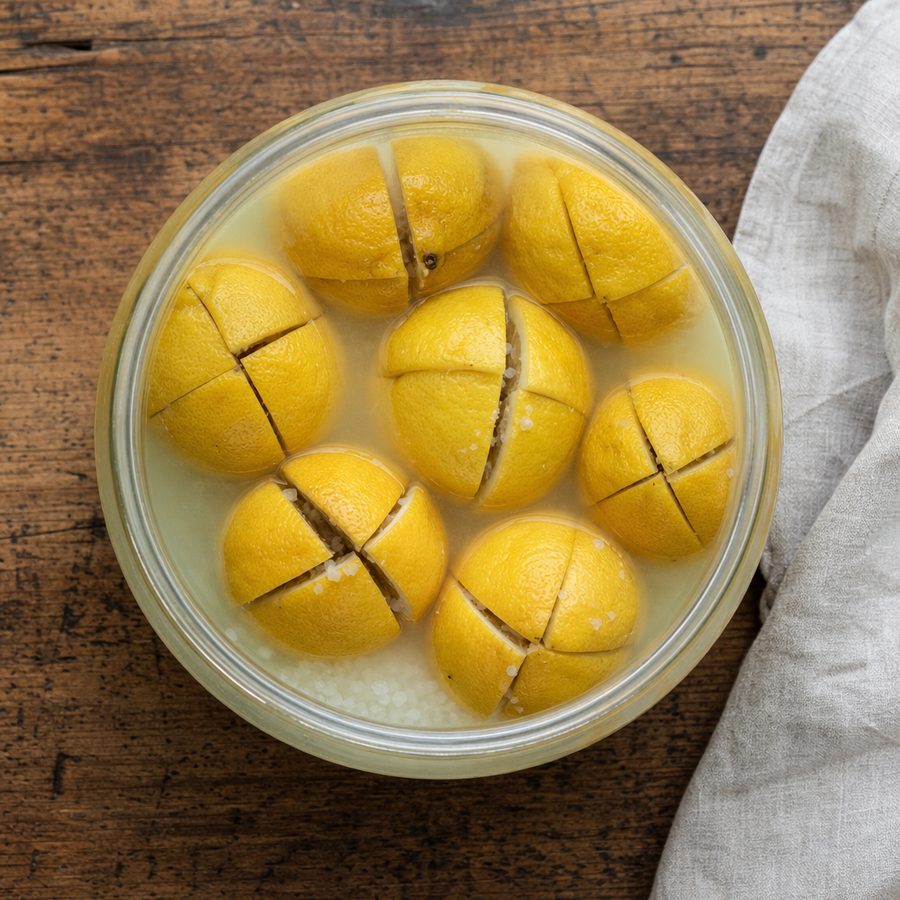
Whole lemons packed with salt and covered in fresh lemon juice, then left in the refrigerator for about a month until the rinds turn soft, silky, and deeply lemony.
Why you'll love Preserved Lemons
Preserved lemons are a cornerstone of Moroccan cooking: whole lemons kept in salt and their own juice until the rinds turn soft, silky, and intensely lemony, with the sharpness of fresh juice mellowed into something rounder. This is the preserved lemon for the Chicken Thighs with Preserved Lemon and Fennel, where one rinsed, sliced rind gives the whole braise its bright, savory flavor.
The method is only lemons, salt, and lemon juice, and the work takes half an hour. Salt packed into the cut lemons draws out their juice, and the salty, very acidic brine softens the rind and the bitter white pith over several weeks. Keeping the lemons fully under the brine and in the refrigerator while they soften is the careful way to do it: the cold slows yeasts and molds while the salt and acid do their work.
One jar gives you six lemons, enough for a braise every few weeks and a spoonful of chopped rind in dressings, salads, and olives in between.
Quick overview: This Preserved Lemons takes 30 min of hands-on time and about 28 days in all and makes 24 servings, each 1/4 lemon.
Ingredients
- 6 lemons (about 1 1/2 lb), organic or unwaxed if you can find them
- 1/2 cup coarse sea salt or kosher salt, plus more as needed
- about 1 cup fresh lemon juice, from 5 or 6 more lemons
Instructions
- Clean the jar: Wash a 1-quart glass jar and its lid in hot, soapy water, rinse well, and let them air-dry, or run them through the dishwasher. Choose a plastic lid or a coated canning lid, since salt and lemon juice corrode bare metal.
- Scrub the lemons: Scrub the lemons under warm running water with a vegetable brush to remove any wax and dirt, since you will eat the rind. Dry them and trim off the little stem nub at the top.
- Cut: Stand each lemon on its base and cut it into quarters from the top down to about 1/2 inch from the bottom, so the quarters stay joined.
- Salt the lemons: Spread 1 tablespoon of the salt in the bottom of the jar. Working over a bowl to catch the juice, open each lemon gently and pack about 1 tablespoon of salt inside, rubbing it over the cut flesh.
- Pack tightly: Press the lemons into the jar one at a time, pushing hard with a clean spoon or your fist so they flatten, release their juice, and pack tightly. Sprinkle a little more salt between the layers and pour in any juice and salt left in the bowl.
- Cover with juice: Pour in fresh lemon juice until the lemons are completely covered, leaving about 1/2 inch of space at the top. Rind that sits above the brine is where mold can start, so if a lemon floats, press it under with a small clean glass weight or a zip-top bag filled with salted water.
- Rest in the refrigerator: Seal the jar, label it with the date, and refrigerate it. For the first week, turn the jar upside down once a day and back again to move the salt and juice around. Leave the lemons for at least 4 weeks, until the rinds are soft, slightly translucent, and slice easily with a knife. In the cold this takes about a month, sometimes a week or two longer.
- Use them: Lift out a lemon with a clean fork, rinse it under cold water to remove excess salt, scoop out and discard the pulp, and slice or chop the rind. For the Chicken Thighs with Preserved Lemon and Fennel, use one lemon, rind thinly sliced.
Storage and leftovers
Keep the jar in the refrigerator with the lemons fully submerged, and use them within 6 months. Use a clean fork each time you take one out, and top up the jar with fresh lemon juice if the level drops below the lemons.
Discard the whole jar if you see fuzzy mold or it smells yeasty, musty, or rotten. Salt crystals that settle at the bottom are only salt.
Variations
- Meyer lemons: Meyer lemons have thinner, sweeter rinds and soften sooner. Start checking them at 3 weeks.
- Spiced: Tuck 2 bay leaves, 1 teaspoon black peppercorns, and 1 teaspoon coriander seeds between the lemons as you pack them.
- Limes: Preserve limes the same way for a sharper, more floral rind to use in Mexican and Southeast Asian dishes.
- Chopped rind: Mince a rinsed rind and stir it into olive oil and lemon juice for a dressing, or toss it with olives and fennel seeds for a snack bowl.
Notes and tips
- Rinse before using: Rinsing removes most of the salt on the surface, so the rind tastes of lemon first.
- Salt the dish last: Preserved lemon is salty, so taste the finished dish before adding any more salt.
- Save the brine: A spoonful of the salty lemon brine seasons a vinaigrette or a pan of roasted vegetables. Use it the way you would use salt.
- Buy by the bag: A bag of lemons is usually enough for the jar and the juice to top it, with a few to spare.
Nutrition and mindful eating
- The rind is where most of a lemon's fragrant oils live, and preserving it makes the whole fruit something you eat rather than toss.
- Weeks in salt and acid soften the white pith and mellow its bitterness, so the rind tastes bright and rounded instead of sharp.
- A few slices season a whole braise, adding salt and brightness at once, so the dish needs little else to taste finished.
- As you eat, notice the bright, salty lemon running through a braise or a salad, and pay attention to how a strong, clear flavor in small amounts leaves you satisfied without wanting more on the plate.
Frequently asked questions
Have a question about this Preserved Lemons? Start here, with the questions people ask most.
How do I use preserved lemons?
Rinse one, scoop out the pulp, and slice or chop the rind. Add it to braises like the Chicken Thighs with Preserved Lemon and Fennel, or chop it into dressings, salads, olives, and yogurt sauces.
Why keep them in the refrigerator while they soften?
Traditional preserved lemons often sit on the counter. Keeping them cold is the conservative choice: the cold slows yeasts and molds while the salt and acid soften the rind, and the lemons are ready in about a month.
Can I eat the pulp?
Yes, though it is very salty. Most recipes discard it, as the chicken thighs do, but a little chopped pulp can season a dressing in place of salt.
Do the lemons need to be organic?
Organic or unwaxed lemons are best because you eat the rind. If yours are waxed, scrub them well under warm water with a brush before cutting.
You might also like
Start with the free guide
The RESET360 starter guide walks you through the plate, the daily rhythm, and your first week, sent straight to your inbox.