
Roasted Spaghetti Squash with Parmesan and Sage
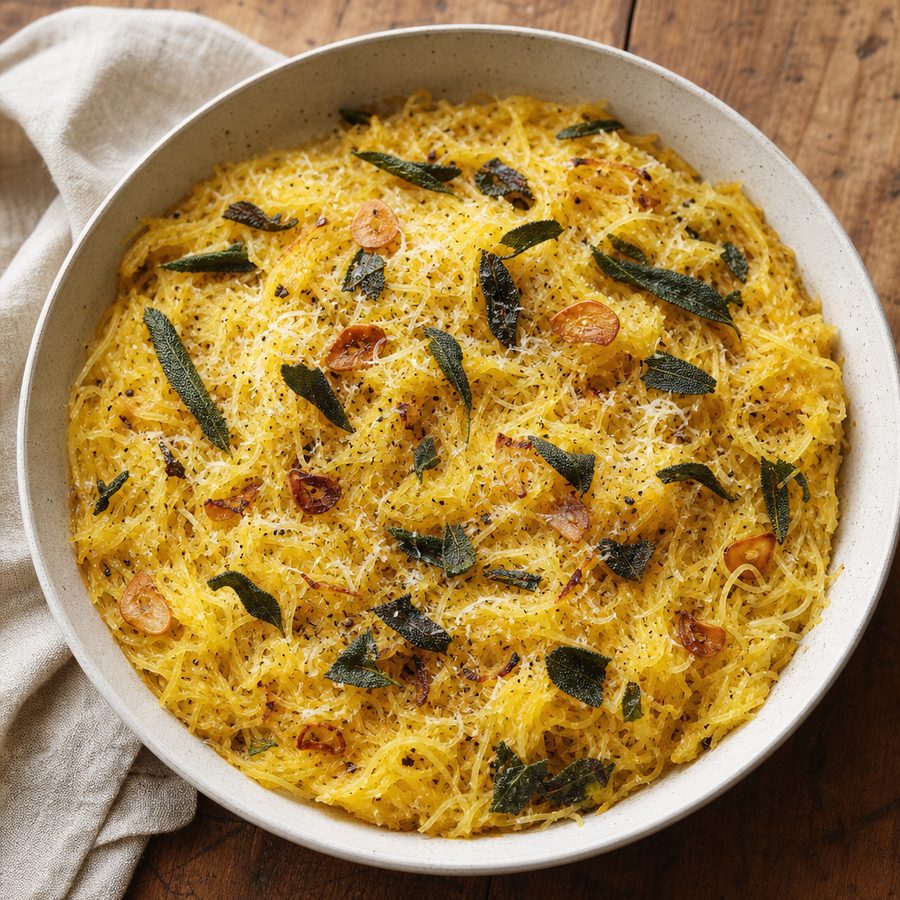
Roasted spaghetti squash strands tossed in nutty brown butter with crisp fried sage, garlic, Parmesan, lemon zest, and plenty of black pepper.
Why you'll love Roasted Spaghetti Squash with Parmesan and Sage
Brown butter and sage is one of the great fall pairings of the Italian kitchen, and spaghetti squash is the October vegetable made for it. Roasted until tender, the squash pulls apart into long, golden strands that catch the butter, the crumbled crisp sage, and a snowfall of Parmesan, and a little lemon zest keeps the whole bowl bright.
The squash roasts cut side down, and that does two jobs at once. The hollow center traps steam, which cooks the flesh through evenly, while the cut rims sit against the hot pan and caramelize. The butter is cooked past melted until its milk solids toast to a deep golden brown, which is where its hazelnut flavor comes from, and the sage leaves fry in it until crisp, mellowing their flavor and leaving the butter scented with them. Tossing the strands in the skillet over the heat drives off the water they release, so the butter and cheese cling instead of sliding off into a puddle.
Serve it next to roast chicken, pork chops, or a seared steak for a plate with protein, real fat, and a vegetable that feels like a treat.
Quick overview: This Roasted Spaghetti Squash with Parmesan and Sage takes 10 min of hands-on time and about 1 hr in all and makes 4 servings, each about 1 cup. You'll need a skillet and a sheet pan.
Ingredients
- 1 large spaghetti squash (about 3 lb)
- 1 tbsp olive oil
- 1/2 tsp fine sea salt, divided
- 3 tbsp butter
- 12 fresh sage leaves
- 2 cloves garlic, thinly sliced
- 1/2 cup finely grated Parmesan (about 1 1/2 oz), plus more to serve
- 1/2 tsp finely grated lemon zest
- 1/2 tsp freshly ground black pepper
- a small pinch of ground nutmeg
Instructions
- Heat the oven: Heat the oven to 400°F (200°C) and line a rimmed sheet pan with parchment paper.
- Halve and seed the squash: Set the squash on a folded kitchen towel so it stays put, trim off the stem end, and cut it in half lengthwise with a large, heavy knife. Scoop out the seeds and stringy pulp with a spoon.
- Roast cut side down: Brush the cut faces with the olive oil and season them with 1/4 teaspoon of the salt. Lay the halves cut side down on the sheet pan and roast for 35 to 45 minutes, until a knife slides easily through the skin and the rims are golden where they touch the pan. The trapped steam cooks the flesh through while the rims caramelize.
- Brown the butter with sage: When the squash is nearly done, melt the butter in a large skillet over medium heat. Add the sage leaves and cook, swirling the pan, for 3 to 4 minutes, until the foam subsides, the milk solids at the bottom turn golden brown and smell nutty, and the sage is crisp. Add the garlic for the last 30 seconds. Lift the sage onto a plate and take the skillet off the heat.
- Scrape the strands: Turn the squash halves over and let them cool for 5 minutes, until you can hold them with a towel. Scrape the flesh into strands with a fork, working from the rim toward the center and leaving the skin behind.
- Toss and finish: Return the skillet to medium-low heat, add the squash strands, and toss for 1 to 2 minutes, until any liquid in the pan has cooked off and the strands are glossy with butter. Take the skillet off the heat and toss in the Parmesan, lemon zest, pepper, nutmeg, and the remaining 1/4 teaspoon of salt. Adding the cheese off the heat lets it melt into the butter smoothly. Crumble the crisp sage over the top and serve with more Parmesan.
Storage and leftovers
Refrigerate leftovers in a sealed container for up to 4 days. Reheat them in a skillet over medium heat for 3 to 4 minutes, tossing, which cooks off the water the strands release as they sit. The sage softens overnight, so fry a few fresh leaves if you want the crunch back.
Roasted squash strands keep plain for 4 days, so you can roast it ahead and finish it with brown butter in 5 minutes. Spaghetti squash is best kept in the refrigerator, since thawed strands turn watery.
Variations
- Toasted walnuts: Toss in 1/3 cup chopped toasted walnuts with the Parmesan for crunch.
- Pecorino and pepper: Use pecorino romano in place of the Parmesan and double the black pepper, in the spirit of cacio e pepe.
- Rosemary: Fry two sprigs of rosemary in the butter in place of the sage, then strip the crisp needles over the top.
- As a main: Top each serving with sliced roast chicken or seared chicken thighs and a little extra Parmesan.
- Ricotta: Spoon dollops of whole-milk ricotta over the squash just before serving for a creamy, mild contrast.
Notes and tips
- Choose a heavy squash: Look for one that is firm, pale golden yellow, and heavy for its size, with no soft spots or green patches.
- Soften the rind before cutting: If the squash is hard to cut, pierce it a few times with a knife and microwave it whole for 3 to 4 minutes. Let it cool for a few minutes before halving.
- Pull it while the strands still have bite: Overcooked spaghetti squash turns soft and mushy. Start checking at 35 minutes: the knife should slide in easily, and the strands should separate with a fork while still holding their shape.
- Watch the butter closely: Brown butter goes from golden to burnt in under a minute. As soon as it smells nutty and the specks are golden brown, take it off the heat.
Nutrition and mindful eating
- Spaghetti squash cooks into tender strands that are mostly water and fiber, so a big, satisfying forkful sits light beside a protein.
- Butter and Parmesan are the real fats here. Parmesan is aged for many months, which builds savory glutamates, so a small amount seasons the whole bowl.
- Sage brings an earthy, piney aroma, and frying it in butter turns its flavor mellow and its leaves crisp.
- Served with chicken, pork, or steak, the fat and fiber in this side slow how quickly the meal leaves your stomach, which keeps your blood sugar steady through the evening.
- As you eat, notice how the nutty butter and salty cheese answer the craving for a bowl of pasta, and check in later: with a protein beside it, the plate should hold you a comfortable 3 hours or more.
Frequently asked questions
Have a question about this Roasted Spaghetti Squash with Parmesan and Sage? Start here, with the questions people ask most.
How do I know when it is done?
A knife slides through the skin and flesh with little resistance, and the flesh separates into strands when you scrape it with a fork. If the strands are still crunchy, roast it 5 to 10 minutes more.
Can I roast it ahead?
Yes. Roast and scrape the squash up to 4 days ahead and refrigerate the strands. Brown the butter with sage the day you serve it and toss the strands in it until hot.
Why roast it cut side down?
The hollow traps steam to cook the flesh evenly, and the cut rims sit against the hot pan to caramelize.
What should I serve it with?
Roast chicken, pork chops, a seared steak, or Dijon-glazed salmon. It is rich enough to make a simple protein feel like a full dinner.
You might also like
Start with the free guide
The RESET360 starter guide walks you through the plate, the daily rhythm, and your first week, sent straight to your inbox.