
Caramelized Carrots with Dukkah
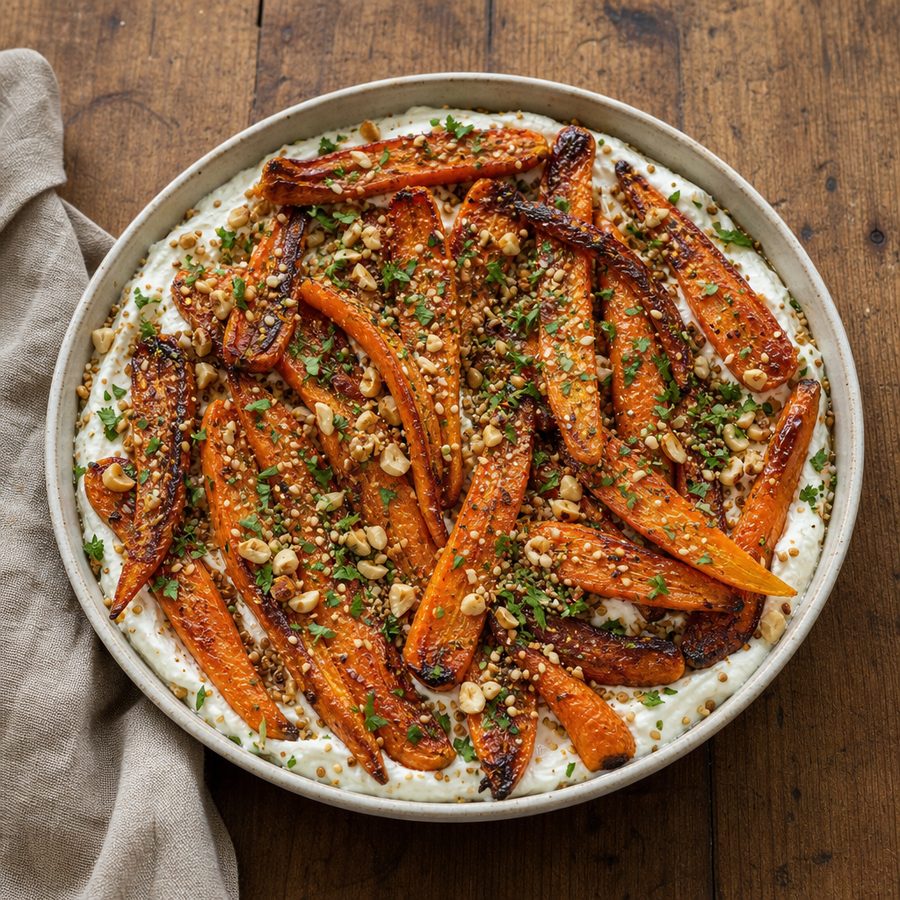
Carrots roasted until their edges caramelize, laid over lemony whole-milk yogurt and covered in a crunchy, warm-spiced hazelnut dukkah.
Why you'll love Caramelized Carrots with Dukkah
Dukkah is an Egyptian blend of toasted nuts, seeds, and spices crushed together, and it turns a tray of carrots into something people ask about. Here it is hazelnuts, sesame, coriander, and cumin, toasted until fragrant and crushed coarse enough that you still get pieces of nut. It brings crunch, warmth, and a real fat to a vegetable that is otherwise soft and sweet.
The carrots roast cut side down at high heat and stay there, untouched, until the cut faces go dark. Carrots carry more natural sugar than most non-starchy vegetables, and that sugar is exactly what caramelizes against a hot pan, so the edges taste almost like toffee while the centers stay tender. Halving them lengthwise gives each carrot a flat face to brown and lets thick and thin ends cook in the same time.
The yogurt underneath is what makes it a side worth building a plate around. Cool, tangy, and thick, it catches the dukkah that falls off the carrots, and it adds protein to a vegetable dish. Serve it next to roast chicken, lamb chops, or grilled fish.
Quick overview: This Caramelized Carrots with Dukkah takes 15 min of hands-on time and about 45 min in all and makes 4 servings, each about 4 carrot halves with yogurt. You'll need a skillet, a sheet pan, a food processor, and a mortar and pestle.
Ingredients
- 1 1/2 lb medium carrots, peeled and halved lengthwise (quartered if thick)
- 2 tbsp olive oil
- 1/2 tsp fine sea salt, divided
- 1/4 cup hazelnuts
- 1 tbsp sesame seeds
- 2 tsp coriander seeds
- 1 tsp cumin seeds
- 1/4 tsp black peppercorns
- 3/4 cup plain whole-milk Greek yogurt
- 2 tsp fresh lemon juice
- 1/2 tsp finely grated lemon zest
- 2 tbsp chopped parsley
- Make it from scratch: Hazelnut Dukkah, Herbed Yogurt Sauce
Instructions
- Heat the oven: Heat the oven to 425°F (220°C) with a large rimmed sheet pan inside.
- Roast the carrots: Toss the carrots with the olive oil and 1/4 teaspoon of the salt. Spread them on the hot pan cut side down and roast for 25 to 30 minutes without turning them, until the cut faces are deeply browned and a knife slides through the thickest piece. Leaving them alone is what lets the sugar caramelize.
- Toast the hazelnuts: While the carrots roast, toast the hazelnuts in a dry skillet over medium heat, shaking often, for 6 to 8 minutes, until the skins crack and the nuts smell toasty. Tip them into a clean kitchen towel and rub them together to loosen most of the papery skins.
- Toast the seeds: In the same skillet, toast the sesame, coriander, and cumin seeds with the peppercorns for 1 to 2 minutes, until the sesame turns golden and the cumin smells warm. Watch closely, since small seeds burn fast.
- Crush the dukkah: Crush the hazelnuts and toasted seeds with the remaining 1/4 teaspoon of salt in a mortar and pestle, or pulse them in short bursts in a food processor, until the mixture is coarse and crumbly with pieces of nut still visible. Stop before it turns to paste.
- Make the lemon yogurt: Stir the yogurt with the lemon juice and zest until smooth.
- Plate: Spread the yogurt across a platter, lay the hot carrots over it, and scatter the dukkah and parsley over everything. Serve right away, while the carrots are warm and the yogurt is cold.
Storage and leftovers
Store the carrots, yogurt, and dukkah separately. The carrots keep 4 days in the refrigerator and the yogurt for its date. The dukkah keeps 2 weeks in a sealed jar at room temperature and loses its crunch if it sits on the carrots overnight.
Reheat the carrots in a 400°F (200°C) oven for about 8 minutes, then plate them over cold yogurt with fresh dukkah, or eat them cold over the yogurt as a lunch side.
Variations
- Pistachio dukkah: Use shelled pistachios in place of the hazelnuts. They need only 3 to 4 minutes in the skillet.
- Tahini base: Swap the yogurt for tahini thinned with lemon juice and cold water for a dairy-free version.
- Rainbow carrots: Use a mix of purple, yellow, and orange carrots. The purple ones bleed a little color, which is part of the look.
- With harissa heat: Toss the carrots with a pinch of cayenne and a little paprika along with the oil before roasting.
Notes and tips
- Make a double batch of dukkah: It keeps for weeks and goes over eggs, salmon, avocado, or a bowl of yogurt.
- Match the sizes: Cut thick carrots into quarters so every piece is about the same width and they finish together.
- Use the hot pan: A pan heated with the oven browns the cut faces right away. A cold pan gives you soft carrots that never caramelize.
- Leave a few skins: Hazelnut skins that cling after rubbing are fine. Getting off most of them is plenty, since they taste slightly bitter in quantity.
Nutrition and mindful eating
- Carrots are on the non-starchy list with more natural sugar than most of their neighbors, which is why they pair here with yogurt and nuts: the protein and fat beside them slow the way that sugar reaches your blood.
- Their orange color is beta-carotene, which your body turns into vitamin A. It is fat-soluble, so roasting the carrots in olive oil and eating them with hazelnuts and yogurt helps you absorb more of it.
- Hazelnuts bring monounsaturated fat and vitamin E, and toasting them deepens their flavor so a small handful seasons the whole platter.
- Whole-milk Greek yogurt adds protein and a cool, tangy contrast, and its live cultures make it a fermented food on the plate.
- As you eat, notice the sweetness of the caramelized edges against the tart yogurt, and pay attention to whether the natural sweetness of the carrots is enough to satisfy you, without anything added.
Frequently asked questions
Have a question about this Caramelized Carrots with Dukkah? Start here, with the questions people ask most.
Can I use ground spices instead of seeds?
Yes. Use 1 teaspoon ground coriander and 1/2 teaspoon ground cumin, and stir them into the crushed nuts at the end rather than toasting them, since ground spices scorch in seconds.
Do I have to peel the carrots?
No. Scrub them well instead. The skin browns a little darker, and young carrots with thin skins barely change.
Can I make the dukkah without a mortar and pestle?
Yes. Pulse it in a food processor in one-second bursts, or put everything in a zip-top bag and crush it with the bottom of a heavy pan.
What can I serve with it?
Roast chicken, lamb chops, grilled salmon, or a steak. It also makes a satisfying lunch with a couple of soft-boiled eggs.
You might also like
Start with the free guide
The RESET360 starter guide walks you through the plate, the daily rhythm, and your first week, sent straight to your inbox.