
Hazelnut Dukkah
Toasted hazelnuts, sesame, coriander, cumin, and black pepper crushed together into a coarse, crunchy Egyptian blend for scattering over vegetables, eggs, and fish.
Why you'll love Hazelnut Dukkah
Dukkah is an Egyptian blend of toasted nuts, seeds, and spices crushed together, and this is the hazelnut dukkah from the Caramelized Carrots with Dukkah, made in a batch three times the size. It is hazelnuts, sesame, coriander, and cumin, toasted until fragrant and crushed coarse enough that you still get pieces of nut.
Toasting is where the flavor comes from. The hazelnuts toast first, long enough for their skins to crack, and the seeds toast after them for just a minute or two, since small seeds color much faster than whole nuts. Crushing them by hand or in short pulses keeps the texture crumbly, so the dukkah adds crunch instead of turning into a paste.
Keep a jar near the stove. A spoonful over eggs, avocado, salmon, or a bowl of whole-milk yogurt brings crunch, warmth, and a real fat in one move.
Quick overview: This Hazelnut Dukkah takes 10 min of hands-on time and about 22 min in all and makes 16 servings, each 1 tablespoon. You'll need a skillet, a food processor, and a mortar and pestle.
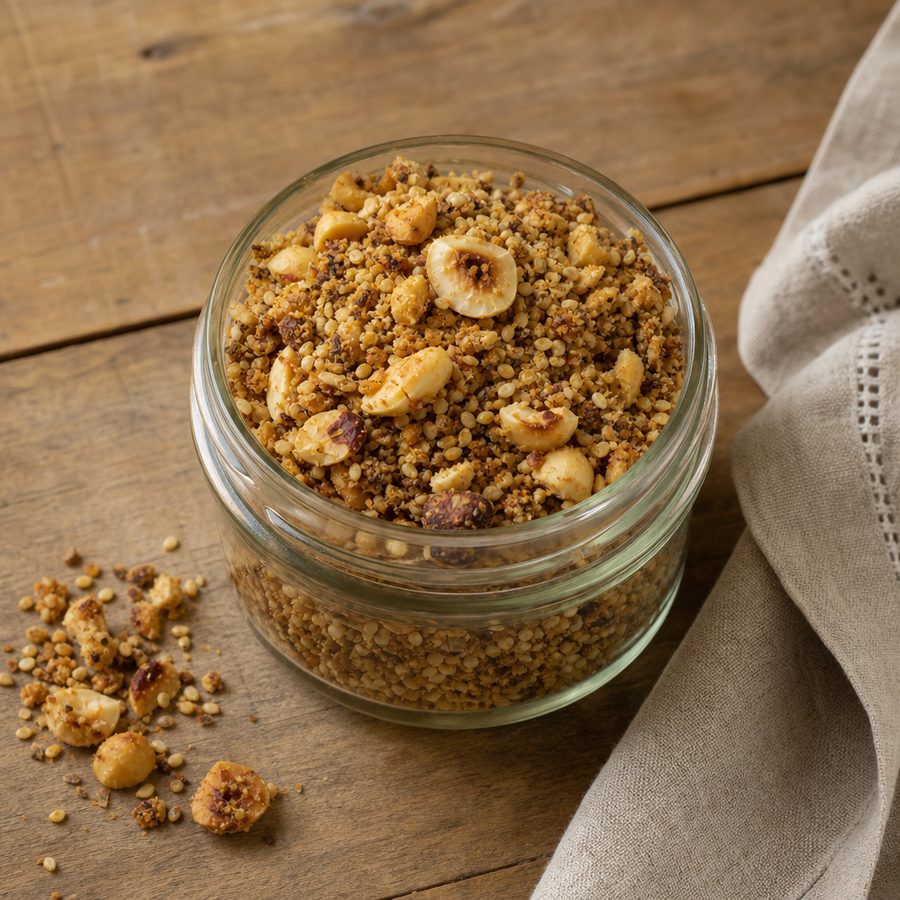
Ingredients
- 3/4 cup hazelnuts
- 3 tbsp sesame seeds
- 2 tbsp coriander seeds
- 1 tbsp cumin seeds
- 3/4 tsp black peppercorns
- 3/4 tsp fine sea salt
Instructions
- Toast the hazelnuts: Toast the hazelnuts in a dry skillet over medium heat, shaking the pan often, for 6 to 8 minutes, until the skins crack and the nuts smell toasty.
- Rub off the skins: Tip the hot nuts into a clean kitchen towel, fold it over, and rub them together to loosen most of the papery skins. Lift the nuts out and leave the skins behind; a few that cling are fine, since only a lot of skin tastes bitter.
- Toast the seeds: In the same skillet, toast the sesame, coriander, and cumin seeds with the peppercorns for 1 to 2 minutes, until the sesame turns golden and the cumin smells warm. Watch closely and tip them onto a plate the moment they are done, because small seeds scorch fast.
- Cool: Let the nuts and seeds cool for 5 minutes. Warm nuts release their oil as they are crushed and clump, while cool ones break into crisp pieces.
- Crush: Crush the hazelnuts and seeds with the salt in a mortar and pestle, in batches if needed, or pulse them in one-second bursts in a food processor, until the mixture is coarse and crumbly with pieces of nut still visible. Stop before it turns to paste.
- Jar it: Spoon the dukkah into a clean, dry jar and seal it. For the Caramelized Carrots with Dukkah, scatter about 1/3 cup over the platter.
Storage and leftovers
Keep the dukkah in a sealed jar at room temperature, away from the stove, for up to 2 weeks, or in the refrigerator for up to 1 month. The oils in toasted nuts and seeds turn stale with time, so smell it before using; it should smell nutty and warm.
Scatter it on just before serving. Dukkah left on a moist dish overnight loses its crunch.
Variations
- Pistachio: Use shelled pistachios in place of the hazelnuts. They need only 3 to 4 minutes in the skillet.
- Almond and fennel: Use almonds in place of the hazelnuts and add 1 teaspoon fennel seeds with the other seeds.
- Aleppo heat: Stir 1 teaspoon Aleppo pepper into the crushed dukkah.
- Seed only: Use pumpkin and sunflower seeds in place of the hazelnuts for a nut-free dukkah, toasting them for 3 to 4 minutes, until they puff and color.
Notes and tips
- Buy skinned hazelnuts: Blanched hazelnuts skip the rubbing step. Toast them for 5 to 6 minutes, until golden.
- Toast in order: Nuts first, seeds second, in the same dry pan. Each gets the time it needs.
- Crush in batches: A mortar works best half full. Overfilled, the nuts jump out instead of breaking.
- Use it for crudités: Dip cucumber spears or radishes in olive oil, then in dukkah, the way it is eaten in Egypt with bread.
Nutrition and mindful eating
- Hazelnuts bring monounsaturated fat and vitamin E, and toasting deepens their flavor so a spoonful seasons a whole plate.
- Sesame seeds add more fat and a little calcium, and toasting them turns them nutty and golden.
- Coriander, cumin, and black pepper bring warmth and aroma, so vegetables taste rich and finished with only a scatter of this on top.
- As you eat, notice the crunch dukkah adds to something soft, like caramelized carrots or a soft-boiled egg, and pay attention to how a little fat and texture make a simple plate feel complete.
Frequently asked questions
Have a question about this Hazelnut Dukkah? Start here, with the questions people ask most.
Can I use ground spices instead of seeds?
Yes. Use 1 tablespoon ground coriander and 1 1/2 teaspoons ground cumin, and stir them into the crushed nuts at the end rather than toasting them, since ground spices scorch in seconds.
Can I make it without a mortar and pestle?
Yes. Pulse it in a food processor in one-second bursts, or put everything in a zip-top bag and crush it with the bottom of a heavy pan.
How much should I use?
About a tablespoon a serving. The Caramelized Carrots with Dukkah use about 1/3 cup for a platter that serves four.
How is dukkah usually eaten?
In Egypt, bread is dipped in olive oil and then in dukkah. Here it goes over roasted vegetables, eggs, fish, avocado, and yogurt, or vegetables stand in for the bread.
You might also like
Start with the free guide
The RESET360 starter guide walks you through the plate, the daily rhythm, and your first week, sent straight to your inbox.