
Beef Short Ribs with Horseradish
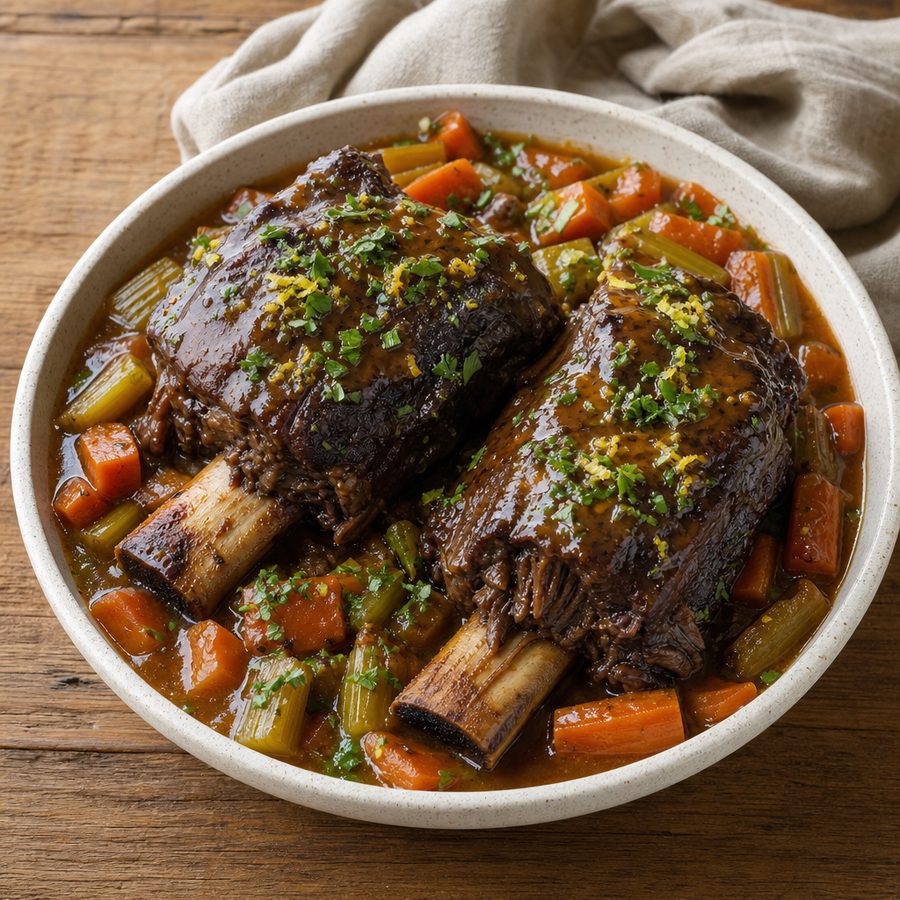
Bone-in short ribs browned hard, slow-cooked with vegetables and bone broth until tender, finished with a horseradish gravy and gremolata.
Why you'll love Beef Short Ribs with Horseradish
Short ribs are made for the slow cooker. Cut from the beef rib, they carry plenty of marbling and connective tissue, and eight slow hours turn that collagen into gelatin, so the meat goes soft and falls from the bone and the braising liquid turns rich and silky. As September nights cool, they are the first braise of fall.
Horseradish is what makes them lively. Its heat is a volatile compound that fades with cooking, so it goes in at the end, twice: whisked into the reduced braising juices to give the gravy a warm, sinus-clearing edge, and grated fresh into a gremolata of parsley, lemon zest, and garlic that goes over the top just before serving. The sharp, bright gremolata cuts right through the richness of the beef.
Browning the ribs hard and caramelizing tomato paste in the same skillet before anything goes into the slow cooker is what gives the gravy its deep color and roasted flavor. A splash of apple cider vinegar in the braising liquid brightens it the way a braising liquid needs.
Quick overview: This Beef Short Ribs with Horseradish takes 30 min of hands-on time and about 8 hr 45 min in all and makes 4 servings, each 2 to 3 ribs with about 1/2 cup vegetables and gravy. You'll need a slow cooker, a saucepan, a skillet, and a fine sieve.
Ingredients
- 4 lb bone-in English-cut beef short ribs (8 to 10 pieces), about 1 1/2 lb meat once cooked
- 1 1/2 tsp fine sea salt, divided
- 1 tsp freshly ground black pepper
- 2 tbsp avocado oil
- 1 large onion, chopped
- 4 carrots, cut into 2-inch pieces
- 2 ribs celery, cut into 2-inch pieces
- 6 cloves garlic, smashed
- 2 tbsp tomato paste Label: tomatoes, and salt if any
- 2 cups beef bone broth Label: beef bones, water, vegetables, herbs, and salt, with no sugar, natural flavors, or oil
- 1 tbsp apple cider vinegar
- 6 sprigs fresh thyme
- 2 bay leaves
- 2 tbsp prepared horseradish Label: horseradish, vinegar, and salt
- 2 tsp Dijon mustard Label: mustard seed, vinegar, water, and salt
- 1/2 cup finely chopped parsley
- 1 tsp finely grated lemon zest
- a 2-inch piece fresh horseradish root, peeled and finely grated (about 2 tbsp)
- 1 tbsp extra-virgin olive oil
Instructions
- Season the ribs: Pat the short ribs dry and season all over with 1 teaspoon of the salt and the pepper. If you have time, do this the night before and refrigerate them uncovered; salt that has time to sink in seasons the meat all the way through.
- Brown hard: Heat the avocado oil in a large skillet over medium-high heat. Brown the ribs in batches, 3 to 4 minutes on each meaty side, until deep brown all over. Do not crowd the pan, or the meat steams instead of browning. The dark crust is where the gravy's flavor comes from. Move the ribs into the slow cooker, bone side up.
- Cook the vegetables: Pour off all but 1 tablespoon of fat. Lower the heat to medium, add the onion, and cook for 4 minutes, until softened. Add the tomato paste and garlic and cook, stirring, for 2 minutes, until the paste darkens to brick red; caramelizing it deepens its flavor and color.
- Deglaze: Pour in the broth and vinegar and scrape up every browned bit from the bottom of the pan. Pour it over the ribs and tuck the carrots, celery, thyme, and bay leaves around them.
- Slow-cook: Cover the slow cooker and cook on low for 8 to 9 hours, until the meat is fork-tender and pulls easily from the bone. The ribs pass the 145°F (63°C) safe point early in the cook; it is the long hours near 200°F (93°C) that melt their collagen and make them tender.
- Make the gremolata: Shortly before serving, stir together the parsley, lemon zest, fresh horseradish, olive oil, and a pinch of salt. Grate the horseradish last, right before mixing, since its heat fades within minutes of grating.
- Skim and reduce: Lift the ribs and vegetables onto a platter and cover with foil. Pour the liquid through a fine sieve into a fat separator or a bowl and let it settle for 5 minutes, then pour or spoon off the fat; short ribs release a lot of it. Simmer the skimmed liquid in a saucepan over medium-high heat for 8 to 10 minutes, until reduced by about half and glossy.
- Finish the gravy: Take the saucepan off the heat and whisk in the prepared horseradish, Dijon, and the remaining salt to taste. Adding the horseradish off the heat keeps its warmth. Spoon the gravy over the ribs and vegetables and scatter the gremolata over the top.
Storage and leftovers
Refrigerate the ribs and vegetables in their skimmed gravy for up to 4 days. Fat that sets on top in the cold lifts off easily. Reheat covered in a saucepan over low heat or in a 325°F (165°C) oven until hot all the way through. Make the gremolata fresh.
Freeze the ribs in their gravy, without the gremolata, for up to 3 months. Thaw overnight in the refrigerator before reheating.
Variations
- Boneless short ribs: Use 2 1/2 lb boneless short ribs and start checking for tenderness at 7 hours.
- Mushrooms: Add 8 oz of halved cremini mushrooms with the carrots for a deeper, earthier gravy.
- Horseradish cream: Serve with sour cream stirred with prepared horseradish and chives in place of the gremolata.
- Pressure cooker: After browning, cook in an electric pressure cooker at high pressure for 45 minutes with a 15-minute natural release, then finish the gravy on the sauté setting.
Notes and tips
- Buy English-cut ribs: English-cut short ribs are thick pieces cut between the bones, each with one bone and a block of meat on top. They hold together through the long cook better than thin flanken-cut ribs.
- Make it a day ahead: Short ribs taste even better the next day. Chill them in their liquid overnight, lift off the hardened fat, then reduce the liquid and finish the gravy.
- Handle fresh horseradish with care: Grate it in a well-ventilated spot and keep your face back from the grater; freshly grated horseradish releases fumes as strong as raw onion. Wrap leftover root in a paper towel and a bag and refrigerate it for up to 3 weeks.
- Serve over something soft: Celery root purée or mashed cauliflower catches the gravy.
Nutrition and mindful eating
- Beef short ribs bring protein, iron, zinc, and vitamin B12, and their collagen turns the braising liquid into a rich gravy.
- The fat from the ribs is real fat, and skimming most of it off before reducing the gravy keeps the sauce glossy and balanced.
- Carrots, celery, and onion braise into the gravy and add sweetness, fiber, and body.
- Horseradish and lemon bring sharp, bright flavor that keeps a rich dish from feeling heavy.
- As you eat, notice how the warm sting of horseradish wakes up each bite of rich beef, and pay attention to how long a serving holds you: a slow-braised dinner like this should carry you comfortably through the evening, 4 hours or more.
Frequently asked questions
Have a question about this Beef Short Ribs with Horseradish? Start here, with the questions people ask most.
What is the difference between English-cut and flanken short ribs?
English-cut ribs are cut between the bones into thick pieces with one bone each, best for braising. Flanken ribs are cut thin across several bones and are best grilled.
Can I skip the browning?
The ribs will still turn tender, but browning gives the gravy its depth and color. It is worth the 15 minutes.
Where do I find fresh horseradish root?
Look in the produce section near the ginger, especially in fall. It looks like a long, rough, tan root. Peel it and grate it on a fine grater.
Can I cook them on high?
Yes, for 5 to 6 hours, though the low setting gives the most tender, evenly cooked meat.
You might also like
Start with the free guide
The RESET360 starter guide walks you through the plate, the daily rhythm, and your first week, sent straight to your inbox.