
Pork Chile Colorado
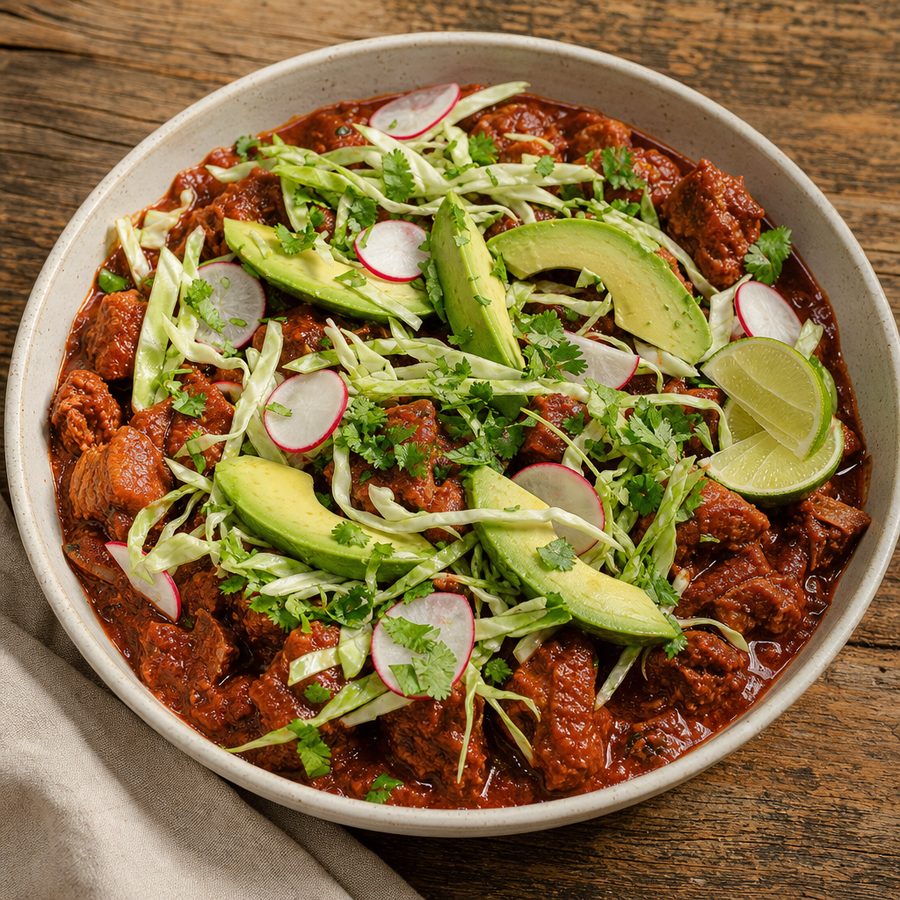
Pork shoulder slow-cooked in a brick-red sauce of toasted guajillo and ancho chiles, garlic, and cumin, topped with cabbage, radish, and avocado.
Why you'll love Pork Chile Colorado
Chile colorado is the red chile stew of northern Mexico, and colorado here means reddened, for the deep color of its sauce. Chunks of pork shoulder braise slowly in a purée of dried chiles, onion, garlic, cumin, and oregano until they are tender enough to cut with a spoon, and the sauce turns rich, earthy, and gently hot. It is exactly what you want on a cold January night.
Toasting the chiles is what gives the sauce its depth. A few seconds a side in a hot, dry skillet wakes up the oils in the skins and brings out their dried-fruit and roasted notes, and soaking them in hot broth softens them for the blender. Guajillos give the sauce its bright red color and a tangy edge, and anchos add a darker, raisin-like richness. Straining the purée removes the tough bits of skin, so the sauce is smooth and clings to the meat.
The slow cooker does the long braise while you are away, and a short reduction in a skillet at the end gives the sauce body. Pork shoulder is the right cut because its fat and connective tissue melt over hours into the sauce and keep every piece juicy. Crisp cabbage, radishes, avocado, and lime on top bring crunch and freshness to every bowl.
Quick overview: This Pork Chile Colorado takes 40 min of hands-on time and about 8 hr 55 min in all and makes 6 servings, each about 1 1/4 cups with toppings. You'll need a slow cooker, a skillet, a blender, and a fine sieve.
Ingredients
- 3 lb boneless pork shoulder, trimmed of thick fat and cut into 1 1/2-inch chunks
- 1 1/2 tsp fine sea salt, plus more to taste
- 8 dried guajillo chiles Label: dried guajillo chiles, and nothing else
- 2 dried ancho chiles
- 2 cups chicken broth, divided Label: chicken, water, vegetables, herbs, and salt, with no sugar, natural flavors, or oil
- 1 tbsp avocado oil
- 1 medium onion, roughly chopped
- 6 cloves garlic, peeled
- 1 tsp ground cumin
- 1 tsp dried oregano, Mexican if you have it
- 1 tbsp apple cider vinegar
- 2 bay leaves
- 2 cups finely shredded green cabbage, to serve
- 6 radishes, thinly sliced, to serve
- 2 ripe avocados, sliced, to serve
- 1/3 cup chopped cilantro, to serve
- 2 limes, cut into wedges, to serve
Instructions
- Salt the pork: Pat the pork dry and toss it with the salt in a large bowl. If you have time, do this the night before and refrigerate it covered. Salt given a few hours dissolves into the meat and seasons it through rather than only the surface.
- Toast the chiles: Pull the stems off the guajillos and anchos, split them open, and shake out the seeds. Heat a large skillet over medium heat and press the chiles flat against it, a few at a time, for 15 to 20 seconds a side, until they turn pliable, smell toasty, and darken slightly. Pull them right away, since a chile toasted until it scorches turns bitter.
- Soak the chiles: Put the toasted chiles in a heatproof bowl. Bring 1 cup of the broth to a simmer in the skillet and pour it over them. Set a small plate on top to keep them under and soak for 20 minutes, until soft. The hot broth rehydrates the skins and carries their flavor into the liquid you will blend.
- Sear the pork: Wipe out the skillet, add the avocado oil, and heat it over medium-high until it shimmers. Sear the pork in batches, without crowding, for 2 to 3 minutes a side, until well browned, and move each batch to the slow cooker. Browning builds a roasted, savory flavor that the moist heat of a slow cooker cannot create on its own.
- Soften the onion and garlic: Lower the heat to medium, add the onion and garlic to the fat left in the skillet, and cook for 4 to 5 minutes, stirring and scraping up the browned bits, until the onion is soft and the garlic is golden in spots.
- Blend the sauce: Scrape the onion and garlic into a blender. Add the chiles with all of their soaking broth, the cumin, oregano, and vinegar, and blend on high for a full minute, until completely smooth.
- Strain over the pork: Set a fine sieve over the slow cooker and pour the sauce through it, pressing with the back of a spoon until only a dry paste of chile skin is left. Discard the paste. Rinse the blender with the remaining 1 cup of broth, pour it over the pork, and tuck in the bay leaves. Stir so every piece is coated.
- Slow-cook: Cover the slow cooker and cook on low for 7 to 8 hours or on high for 4 to 5 hours, until the pork is fork-tender. The pork passes 145°F (63°C), the safe temperature for whole cuts of pork, early in the cook; the long, gentle heat is what melts its connective tissue until it turns soft and juicy.
- Reduce the sauce: Lift the pork into a bowl with a slotted spoon and discard the bay leaves. Skim most of the fat from the surface of the sauce, then pour the sauce into the skillet and simmer it over medium-high heat for 8 to 10 minutes, until it thickens enough to coat a spoon. Slow cookers trap steam, so the sauce needs this short reduction to gain body. Return the pork to the sauce and taste for salt.
- Serve: Spoon the pork and sauce into bowls and top with the cabbage, radishes, avocado, and cilantro, with lime wedges to squeeze over.
Storage and leftovers
Divide the pork and sauce into shallow containers so they cool quickly, and refrigerate within 2 hours of cooking, for up to 4 days. The flavor deepens overnight. Keep the cabbage, radishes, avocado, and cilantro separate and prepare them fresh when you serve.
Freeze the pork in its sauce for up to 3 months. Thaw it overnight in the refrigerator and reheat it in a saucepan over medium heat until it is steaming hot all the way through, 165°F (74°C).
Variations
- Beef chile colorado: Use 3 lb of beef chuck roast, cut into chunks, and cook 8 to 9 hours on low.
- More heat: Add 2 or 3 dried chiles de árbol to the guajillos and anchos when you toast them.
- With a tomato: Blend 1/2 cup of crushed tomatoes into the sauce for a rounder, slightly sweeter flavor.
- Lettuce cups: Spoon the pork into butter lettuce or romaine leaves and top them the same way.
Notes and tips
- Buy soft, flexible chiles: Dried chiles should be pliable, like a raisin, with no brittle spots. Brittle chiles are old and taste dusty.
- Wear gloves if you like: Chile oils stay on your fingers. Wash your hands well after handling the chiles and keep them away from your eyes.
- Mexican oregano: Mexican oregano is a different plant from the Mediterranean kind, with citrus and grassy notes. Either works here.
- Check the broth label: It should read chicken, water, vegetables, herbs, and salt, with no sugar or natural flavors.
Nutrition and mindful eating
- Pork shoulder brings protein, thiamin, selenium, and zinc, and the long braise makes it tender and juicy.
- Dried guajillo and ancho chiles carry vitamin A and the carotenoid pigments that give the sauce its red color, along with a gentle, building warmth.
- Crisp cabbage and radishes bring crunch, fiber, and vitamin C, and avocado adds the creamy real fat that cools the chile.
- Garlic, cumin, oregano, and toasted chiles build deep flavor, so the stew tastes rich, round, and full.
- As you eat, notice the earthy warmth of the chile against the cool avocado and the crunch of the cabbage, and check in through the evening: a bowl should carry you at least 3 to 4 hours with steady energy and no pull toward something sweet.
Frequently asked questions
Have a question about this Pork Chile Colorado? Start here, with the questions people ask most.
Is chile colorado spicy?
It is warm, with a gentle heat. Guajillos and anchos are mild to medium chiles, chosen more for their flavor than their heat. Add chiles de árbol for more fire.
What if I can't find guajillo chiles?
Use all ancho chiles, or a mix of ancho and New Mexico red chiles. The sauce will be a little darker and sweeter.
Can I skip searing the pork?
Yes, and it will still be tender and good. Searing adds a deeper, roasted flavor to the sauce.
Why strain the sauce?
Even a strong blender leaves small bits of chile skin. Straining makes the sauce smooth and silky so it clings to the pork.
You might also like
Start with the free guide
The RESET360 starter guide walks you through the plate, the daily rhythm, and your first week, sent straight to your inbox.